










































Africans Rising - For Justice, Peace and Sustainable Development
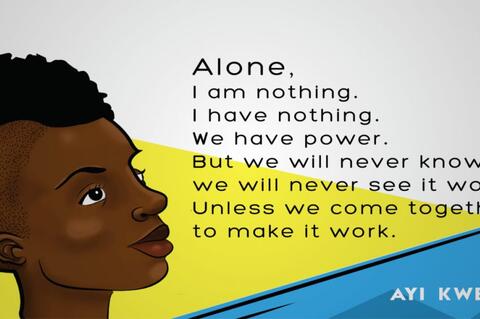
The Africans Rising is a local, national, and continental movement that seeks to unite civil society across Africa to work towards: expanding the space for civic and political action; fighting for women’s rights and equity and dignity for all; demanding good governance; and achieving more justice in addressing the effects of climate change. The movement encourages activists, regional and local networks, artists, trade unions, faith-based groups, social movements, cultural activists, intellectuals, sports people, local non-governmental organisations (NGOs), international NGOs (INGOs), and ordinary people to join. The movement seeks to be built from the bottom up, to be driven by civil society and individuals (not solely by NGOs and INGOs as has been the case with similar initiatives in the past), and be inclusive of everyone who shares its ideals.
The idea to build an African civil society movement emerged out of six months of intensive consultations across the continent by the African Civil Society Initiative with civil society organisations. Three main trends emerged in these consultations: 1) Africa is still too weak to fight climate injustice, political exclusion, and economic globalisation, 2) Too many autocratic governments continue to shrink civic space and seek to control civil society independence, and 3) INGOs continue to dominate local and national NGOs, and both are increasingly disconnected from social movements from the economically poorest and most marginalised.
Following these initial consultations, a validation conference was held in August 2016 in Arusha, Tanzania to gain broad endorsement and discuss the way forward. 272 representatives from from civil society, trade unions, women, young people, men, people living with disabilities, parliamentarians, media organisations, and faith-based groups from across Africa and the African diaspora gathered and committed to build a pan-African movement that recognises the rights and freedoms of all Africans. The conference deliberated on the structural and systematic challenges facing the African continent, as well as on how the initiative should be established and operated. The Kilimanjaro Declaration was drawn up as a call for Africans to take charge of their current affairs and define the future they want. The Declaration specifically calls on people to: join the Africans Rising movement and mobilise around the shared vision; organise and connect local struggles under this umbrella; and galvanise solidarity with all African struggles.
To give a bit of historical context and to explain how this movement differs from previous attempts at building civic unity across Africa, Kumi Naidoo, the launch director of the African Civil Society Initiative, outlines some of the reasons why past initiatives, such as the Organization of African Unity (OAU) and the Harare Caucus, have had limited success:
- “The impetus for setting them up was external to the continent and they were usually geared towards meeting short-term interests of particular (global civil society) organizations.
- There was a lack of adequate resourcing for the initiatives, from human and financial capital to ideological robustness - a long-term strategy is critical to movement building.
- Governance failings - the competing interests of individuals heading established and resourced NGOs sometimes goes against the needs of a continent wide movement. Those entrusted with leadership responsibilities of continental networks did not have the dedicated time to exercise proper governance of the management and secretariat.”
(Click here for more information on the historical context out of which the Africans Rising initiative has emerged.)
A major departure from previous attempts at mobilising pan-African solidarity is therefore that citizens will be at the centre of the Africans Rising movement - which is why it is called Africans Rising and not Africa Rising. It was agreed at the conference that intensive efforts should be made to reach out and mobilise as many people as possible, and that the movement should be built from the bottom up and be inclusive of everyone who shares its ideals.
Based on the consultation process, the initiative will focus on the following six key cross-cutting areas:
- Expanding space for civic and political action;
- Fighting for women’s rights and freedoms across society;
- Focusing civil society struggles on the right to equity and dignity;
- Demanding good governance as part of the fight corruption and impunity; and
- Demanding climate and environmental justice.
The movement will be formally launched in every country to commemorate Africa Day on May 25 2017, where civil society and those signing the pledge will mobilise and organise events that promote justice, peace, and sustainable development in Africa.
Besides the consultations and the conference, the activities, so far, have included:
- Establishing internal and external communications functionality, making use of social media platforms - such as Twitter and Facebook pages - to ensure widespread engagement of all who are interested in civil society;
- Campaigning through online and social media for people to access the Declaration and pledge to join the movement.
Governance, Gender, Economic Development, Climate Change
The work of Africans Rising is possible through the shared and distributed operational support of CIVICUS - World Alliance for Citizen Participation, Action Aid International - and MS - Training Centre for Development Cooperation.
Email from Kumi Naidoo to Soul Beat Africa on September 21 2016, and Africans Rising website and Ecowatch website on September 26 2016.
- Log in to post comments