










































Chapter 4. VMMC Communication at the Site Level and Demand - Best Practices for Voluntary Medical Male Circumcision Site Operations: A Service Guide for Site Operations
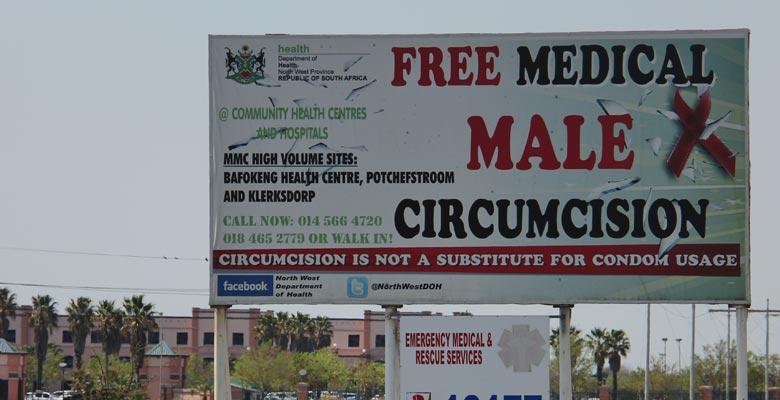
"VMMC services offer a unique opportunity to engage adolescent and adult males in high-quality HIV prevention communication and services; and to share key messages with males who otherwise might not interact with the health system. Consistent communication and counseling throughout these VMMC services is critical for capitalizing on this opportunity."
"VMMC Communication at the Site Level and Demand Creation" is one chapter in a document providing implementing partners supported by the United States President's Emergency Plan for AIDS Relief (PEPFAR) with a collection of resources for sites providing voluntary medical male circumcision (VMMC) for HIV prevention. This version is Edition 2; Edition 1, released in 2013, focused on assisting implementing partners and site staff with opening new VMMC service locations. Each chapter is designed as a standalone resource covering all aspects of the respective topic - in the case of chapter 4, with the goal of ensuring that in-service communication and counseling content is comprehensive and standardised across PEPFAR's VMMC country programmes.
After stating chapter goals, the chapter summarises key information, including referenced documents with links to the tools/instruments/resources. It explores strategies such as elements for successful demand creation, including:
- A clearly defined communication and demand creation strategy, informed by research, that outlines key barriers and motivators, primary and secondary audiences, channels, and key messages. In most countries, the communication plan will include a strategic mix of channels and approaches, such as community engagement, mass media, infection prevention and control materials, and advocacy with leadership and influential agents, among other approaches.
- Outreach scaled to align with the availability of services.
- Communication through multiple channels that engages the intended population and key influential people, including partners, parents or guardians, employers, and other individuals and groups that can influence the VMMC decision. Such channels include community radio, social media, interpersonal peer communication, and TV shows with a panel of VMMC experts.
- Tailored messages and communication channels that resonate with younger and older men, both in and outside of relationships (segmenting audience and influencers for more effective demand creation).
- Engagement of women by providing tailored information about VMMC's benefits for women and their key role as mothers and partners.
- Clearly written, attractive brochures and leaflets printed in the local language, geared toward specific audiences, such as parents and partners.
- Materials that clearly direct potential clients to local VMMC service sites.
- Recruitment of satisfied clients to encourage their peers to undergo VMMC (a tool that can add to community sensitisation and mobilisation). Male friends and peers can be strong advocates.
- Monitoring community mobilisation to ensure the quality and consistency of messages, and to follow up with potential clients who do not present for services.
- Communication campaigns that can be adjusted, as needed, to match the volume of services that can be provided; similarly, services that can be scaled up to keep pace with the demand created by advocacy, sensitisation, and mobilisation.
- Consistent reporting, collection, and analysis of data to inform demand creation.
Case studies include:
- Overcoming Seasonality in Scaling Up VMMC in Iringa, Tanzania
- Call Center Optimizes Uptake of Clinical Services in South Africa
- Integrating VMMC into Local Community Structures, Breaking Cultural Barriers in Malawi
- Partnering with Private Employers on Provision of VMMC Services in Tanzania
- Mwami Mulembe (Stylish Man) Campaign in Uganda
The chapter also: embeds links to additional relevant content into the body of the text; provides additional details on the topic for those that want more; and lists all the resources referenced in the chapter.
The guidance presented in this manual supports VMMC 2021, as articulated in the policy brief A Framework for Voluntary Medical Male Circumcision: Effective HIV Prevention and Gateway to Improved Adolescent Boys' & Men's Health in Eastern and Southern Africa by 2021. This framework, developed by the World Health Organization (WHO) and the Joint United Nations Programme on HIV/AIDS (UNAIDS), includes VMMC as part of a package of essential interventions to decrease annual new HIV infections to 500,000 by 2021 - a 75% reduction relative to 2010. These new strategic directions are a follow-on to the Joint Strategic Action Framework 2012-2016. The updated manual also reflects PEPFAR's Phase 3 (PEPFAR 3.0) goals of achieving sustainable control of the HIV epidemic and reaching the globally accepted 90-90-90 goals by 2020. PEPFAR endorses a data-driven, strategic approach that seeks to accelerate the scale-up of HIV prevention, in part by engaging all social resources (government, communities, and the private sector) in partnerships to address HIV and improve social wellbeing.
21 (chapter 4); 180 (full guide)
AIDSFree News, October 26 2017; and AIDSFree website, October 26 2017. Image credit: Avert.org
- Log in to post comments