










































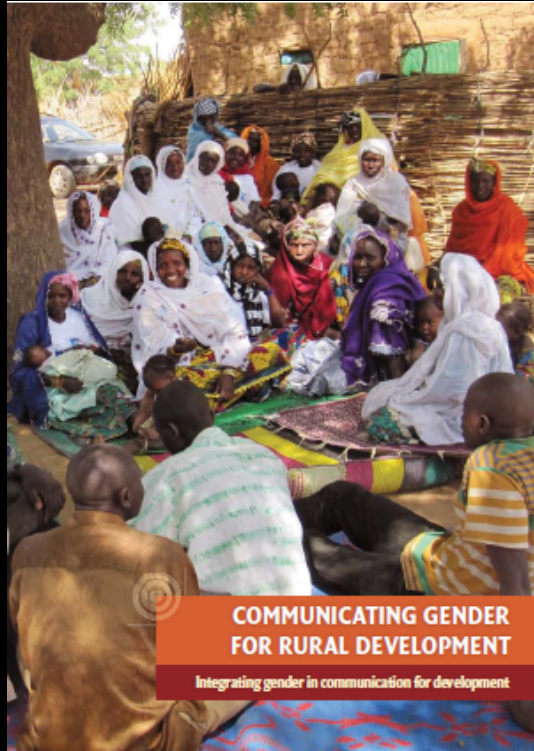
Communicating Gender for Rural Development: Integrating Gender in Communication For Development
Image
SummaryText
In 2009, the Dimitra Project of the Food and Agriculture Organization of the United Nations (FAO) led a series of participatory workshops in Senegal, Democratic Republic of Congo, and Niger to examine the failure to take gender into account in communication initiatives, and the poor communication capacities of organisations engaged in gender issues. The process also sought to promote meaningful communication between organisations dealing with gender issues and communication for development projects and programmes. Activities were looked at, concepts were developed, and links were clarified between the gender for development and communication for development approaches. This publication is the culmination of that process.
The publication is meant to help development practitioners (rural communicators, staff of community radio stations, and development organisations) examine communication for development programmes in rural areas to ensure that they become more inclusive of men and women while respecting the specific needs and capacities of each individual/group. It is designed for those interested in eliminating gender inequalities in development processes by promoting the introduction of a gender perspective into communication for development initiatives and providing practical suggestions on how to do this. As such, it aims to change attitudes and working practices so that projects and programmes take greater account of the needs and aspirations of men and women.
The first section, "A Dynamic Approach for Rural Communities", focuses on key concepts and guidelines relating to gender on the one hand and communication for development on the other and reviews the powerful synergy between them. The second section, "From Words to Action", focuses on the various stages of a communication initiative, "revisiting" them from a gender perspective.
The publication is meant to help development practitioners (rural communicators, staff of community radio stations, and development organisations) examine communication for development programmes in rural areas to ensure that they become more inclusive of men and women while respecting the specific needs and capacities of each individual/group. It is designed for those interested in eliminating gender inequalities in development processes by promoting the introduction of a gender perspective into communication for development initiatives and providing practical suggestions on how to do this. As such, it aims to change attitudes and working practices so that projects and programmes take greater account of the needs and aspirations of men and women.
The first section, "A Dynamic Approach for Rural Communities", focuses on key concepts and guidelines relating to gender on the one hand and communication for development on the other and reviews the powerful synergy between them. The second section, "From Words to Action", focuses on the various stages of a communication initiative, "revisiting" them from a gender perspective.
Publication Date
Languages
English and French
Number of Pages
76
Source
FAO Dimitra Project website on February 2 2012.
- Log in to post comments