










































Community-based Surveillance Manual for CORE Group Partners Project Targeted Priority Diseases in South Sudan
"To change behavior, parents, caregivers, and community members need support and encouragement rather than just information. Provide support to overcome barriers such as personal fear and religious and social beliefs."
The CORE Group Partners Project (CGPP), formerly the CORE Group Polio Project, is a multi-country, multi-partner initiative that was initiated in South Sudan in 2010. CGPP believes health resilience is created by building the capacity of the community structures to timely detect, respond to, and manage health threats. This community-based surveillance (CBS) manual details the work of CGPP in South Sudan, describing the communication strategies and steps for reporting suspected cases of priority diseases from the community to the established government diseases surveillance structures.
As outlined in the manual, one of the principal advantages of CBS is that it can ensure effective communication of unusual health events or changes in health status of the community to the relevant authorities. The CBS network also acts as a voice to the community where health services are inaccessible, especially in fragile settings, mobile communities, and hard-to-reach areas. The communication objective in the CBS structure is to increase awareness regarding the roles of behaviours in causing diseases and injuries and identification of high-risk and vulnerable communities.
Over a 13-year period, CGPP South Sudan built community structures to support polio eradication through a network of 5,866 community health workers (CHWs), which include 553 home health promoters (HHPs) and 5,313 community key informants(CKIs). CGPP South Sudan has leveraged this polio CBS infrastructure and integrated measles, Ebola virus disease, yellow fever, COVID-19, and adverse effects following immunisation (AEFIs) into the ongoing polio eradication interventions using the polio CBS networks. In 2024 CGPP South Sudan integrated Global Health Security (GHS), focusing on selected zoonotic diseases for surveillance, risk communication and community engagement (RCCE), partnership and coordination, and water, sanitation and hygiene (WASH), including hygiene promotion and behaviour change communication.
This manual is meant to standardise CBS activities across South Sudan. Its contents are intended for a 5-day, in-person training for project officers, project supervisors, and project assistants. Sections of the document could be used during refresher training of community volunteers. In addition, sections of the manual are being used to develop flipbooks and posters (some translated into local languages) for use by HHPs and CKIs.
Following front matter, the main body of the manual includes these sections:
- Background
- The Work of CGPP in South Sudan
- Definitions and Key Terms
- Roles and Responsibilities of Community Volunteers
- Effective Communication
- Vaccine-Preventable Diseases
- Viral Hemmorhagic Fevers
- Priority Zoonotic Diseases
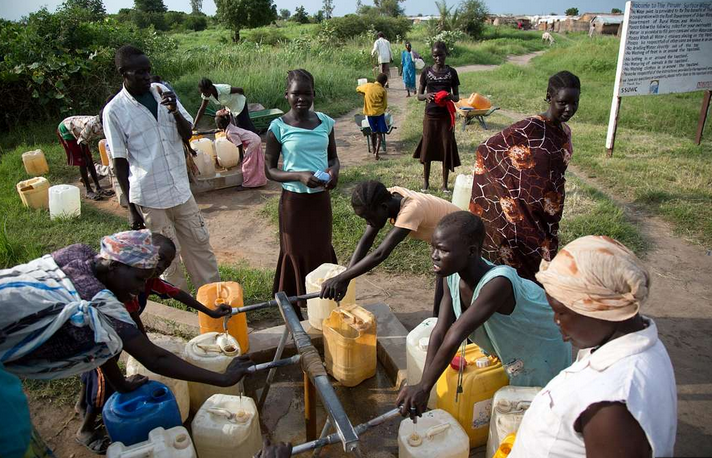
CGPP website, December 6 2024. Image credit: © Medair / Albert Gonzalez Farran (public domain)
- Log in to post comments