










































Correcting HPV Vaccination Misinformation Online: Evaluating the HPV Vaccination NOW Social Media Campaign
College of Charleston (Sundstrom); Clemson University (Cartmell); Medical University of South Carolina (White); South Carolina Cancer Alliance (Well); University of South Alabama (Pierce); St. Jude Children's Research Hospital and Comprehensive Cancer Center (Brandt)
"...extends recent research on the importance of developing a community management strategy to facilitate dialogue about HPV vaccination..."
Despite having been available since 2006 in the United States (US), uptake of the human papillomavirus (HPV) vaccine remains lower than other adolescent vaccines. Approximately half of adolescents in the US state of South Carolina (SC) have not completed the vaccination series, representing a missed opportunity to prevent six HPV-related cancers. The statewide HPV Vaccination NOW: This is Our Moment social media campaign aimed to increase parental awareness of and build vaccine confidence around HPV vaccination in SC. This study was designed to answer two questions: What myths and misinformation about HPV vaccination emerged through the campaign? How did the campaign correct misinformation to help mitigate its impact?
Formative audience research and a pilot campaign guided the development and implementation of HPV Vaccination NOW: This is Our Moment. An initiative of the South Carolina Cancer Alliance (SCCA) and Hollings Cancer Center at the Medical University of South Carolina (MUSC), the 10-week campaign was implemented between June and August 2019 to encourage HPV vaccination at back-to-school medical appointments. Facebook and Twitter were used to provide parents with information and to address misinformation, and a newly created MUSC website also offered information about making an appointment to get the HPV vaccine. The campaign slogan was "South Carolina is gaining momentum. We have made significant improvements in HPV vaccination rates. This is our moment. #HPVvaxNOW #OurMoment." A social media editorial calendar was created with 3-5 posts per day on Facebook and Twitter with a different theme each week, and a partner toolkit was disseminated to likeminded organisations who shared the posts with their networks to amplify the campaign's messages.
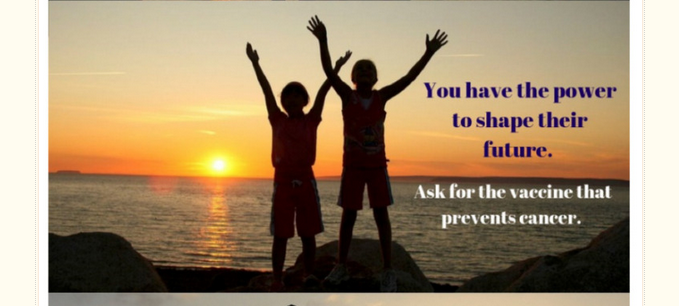
Messaging emphasised cancer prevention, normalising HPV vaccination as a routine part of the vaccination series, and conveying the safety, effectiveness, and long-lasting protection of the HPV vaccination. The tone was one of compassion and understanding, recognising that parents want to do what is best for their children and families. This approach was designed to empower parents and appealed to their moral responsibility and personal choice to protect children from cancer.
A process evaluation showed that the campaign resulted in over 370,000 total impressions, reached over 33,000 individuals, and culminated with over 1,122 followers. There were over 2,700 engagements on Facebook and Twitter. The campaign avoided message fatigue by monitoring engagement in relation to reach. Split-testing revealed a preference for messages paired with a photograph, instead of a graphic.
Content analysis revealed that the top social media posts uniformly engaged trends and current conversations. For example, the social media post that received the most engagement was a part of the #FF hashtag conversation, "It is Follow Friday #FF! Each week, we will be highlighting HPV vaccination successes around the world." The content analysis also revealed myths and misinformation about the HPV vaccination, including concerns about safety and side effects, effectiveness, and sexual activity. Two primary themes emerged related to how the campaign corrected misinformation to help mitigate its impact, including:
- Addressing misinformation: Researchers replied to all posts featuring misinformation with empathy and provided credible information from third-party sources. Responses started with an acknowledgment that researchers welcomed engagement with the campaign and reinforced the core value of compassion. However, researchers mostly kept responses to the post level, avoiding amplifying individual anti-vaccine comments. Table 5 in the paper includes standard responses to the most frequent misinformation topics encountered during the campaign.
- Stimulating peer-to-peer dialogue: Campaign followers on Facebook and Twitter often provided direct rebuttals to misinformation. In response to parents who posted about adverse vaccine events, many parents shared their reasons for vaccinating their children and talked about positive experiences. Per the researchers: "By encouraging dialogue, the HPV Vaccination NOW campaign fostered message co-creation with the target audience....By empowering parents to share accurate information and supporting parents as spokespeople in support of HPV vaccination, the campaign leveraged peer-to-peer dialogue to mitigate the spread of misinformation."
After learning about the HPV Vaccination NOW social media campaign through a series of invited expert panels, the US Department of Health and Human Services (HHS)' Office on Women's Health (OWH) launched the HPV VAX NOW campaign to increase HPV vaccination rates among young adults ages 18-26 in Mississippi, SC, and Texas in January 2021.
Vaccines 2021, 9, 352. https://doi.org/10.3390/vaccines9040352.
- Log in to post comments