

























Development action with informed and engaged societies

After nearly 28 years, The Communication Initiative (The CI) Global is entering a new chapter. 

Following a period of transition, the global website has been transferred to the University of the Witwatersrand (Wits) in South Africa, where it will be administered by the Social and Behaviour Change Communication Division. Wits' commitment to social change and justice makes it a trusted steward for The CI's legacy and future. 

On the transfer, co-founder Victoria Martin expressed her pleasure to see this work continue under Wits' leadership, knowing that co-founder Warren Feek (1953–2024) would have felt deep pride in The CI Global's Africa-led direction. 

As Wits, we honour the team and partners who sustained The CI for decades and look forward building from that strong base. This includes co-founders Warren Feek (1953-2024) and Victoria Martin as well as La Iniciativa de Comunicación (CILA), which continues independently at lainiciativadecomunicacion.com with links to The CI Global site. We are also eager to forge new partnerships and entertain new ideas as we consider how best to contribute to social and behaviour change in our rapidly evolving environment.

If you are joining the International Social and Behaviour Change Communication (SBCC) Summit in Panama, please join Wits and CILA on Monday, 22 June, to share your thoughts and suggestion for the relaunch of the Communication Initiative. We will be in Pacifica 5 from 12-1:25 for the Refuel, Reflect, and Renew Lunch Series: The Communication Initiative: celebrating a driving force for Communication for Social Change and the way forward. We will reflect on the legacy of Warren Feek and family in creating the Communication Initiative, consider the contributions of CI over the years and then turn our attention towards the future in this dynamic session. 

If you are unable to join us in Panama, we still want to hear from you. Please contribute your thoughts by following this link: https://redcap.link/CommunicationInitiative2026 or reaching out to ci_surveys@commint.com

You can also follow the QR Code:

 https://redcap.link/CommunicationInitiative2026

Time to read
less than
1 minute
Read so far

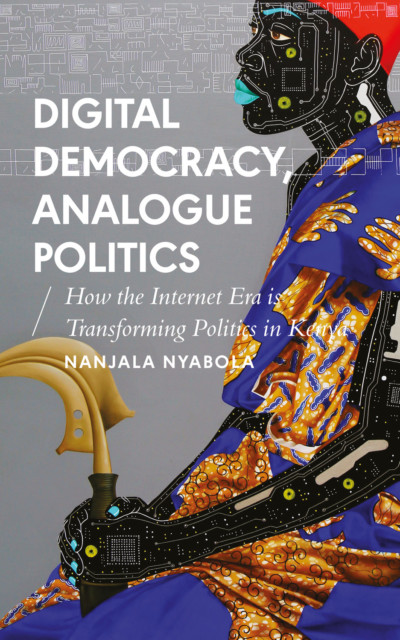
Digital Democracy, Analogue Politics: How the Internet Era is Transforming Kenya (African Arguments)
0 comments
Image
Publication Date

Kenya is the most digitally advanced country in sub-Saharan Africa, where Twitter, Facebook, WhatsApp, and other online platforms are part of everyday life. And, as in Western nations, the digital age has had dramatic effects on society and politics. Yet, while we hear about the #MeToo movement and the Russian bot scandal, there is little appreciation for the feminist movement #MyDressMyChoice and the subversion of state-run political propaganda by social media.
Digital Democracy, Analogue Politics aims to change this by presenting a unique contribution to the debate on digital democracy. For traditionally marginalized groups, particularly women and the disabled, digital spaces have provided vital platforms that allow Kenyans to build new communities that transcend old ethnic and gender divisions. Covering attempts by political elites to prevent social movements from translating online visibility into meaningful offline gains, Digital Democracy, Analogue Politics explores the drastic efforts to contain online activism and new methods of feminist mobilization, as well as how “fake news,” Cambridge Analytica, and allegations of hacking contributed to tensions around the 2017 elections. Reframing digital democracy for the first time from the African perspective, Nanjala Nyabola’s groundbreaking work opens up new ways of understanding our current global online era.