










































Esquadrão da Prevenção (Prevention Squad)
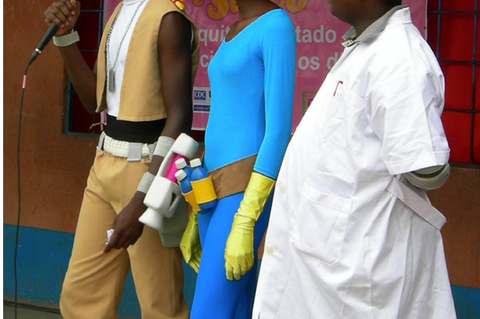
Esquadrão da Prevenção (Prevention Squad) is a multimedia campaign that features cartoon superheroes on television and radio, in print materials, and in person, who protect children from malaria and water-borne illness. Launched in 2010 by Population Services International (PSI) Angola, the campaign is designed to raise awareness about malaria and water-borne illness prevention among children by encouraging parents to more consistently follow healthy practices with their children, such as using bed nets, treating water, and washing hands with soap.
The characters appear on television, on the radio, as live action superheroes (played by actors), as well as in posters and comic books. Each member of the superhero team has a different superpower they use to fight childhood illness.
- Comandante Seguro e Salvo is faster than the speed of light and has a magic arm band that discharges the mosquito net, Seguro e Salvo, just in the nick of time to cover children's beds before they go to sleep.
- Capitã Certeza has an enchanted belt with bottles of the water treatment, Certeza, which makes water safe to drink.
- Tenente Sabonete plays with soap bubbles and clean water to encourage children to wash their hands with soap.
- Doutor Maguxi is the inventor behind the heroes and makes sure they arrive on time to prevent children from getting sick. He also makes sure that if prevention fails for some reason, treatment is provided at health centres.
According to organisers, the cartoon characters have already reached the hearts of children, who are "playing" the superhero roles and telling their mothers they can't drink the water because Capitã Certeza hasn't made it clean. Organisers hope that through the influence of children, parents will learn about protecting their children from malaria and water-borne illness.
Malaria, Water-borne illness, Children
According to PSI, qualitative studies in Angola have looked in-depth at behavioural determinants for using a mosquito net to prevent malaria and for treating water to prevent water-borne illnesses. Results from both studies indicate that mothers know the importance of both of these behaviours when it comes to the health of their children; however, they are not consistent in either net use or water treatment. To influence these practices in order to change these important behaviours with mothers, PSI/Angola is using children as an entry point to get the message across.
Population Services International (PSI)
PSI website on August 31 2011.
- Log in to post comments