










































Ethical Issues Related to Human Papillomavirus Vaccination Programs: An Example from Bangladesh
Bangabandhu Sheikh Mujib Medical University (Salwa); Independent Consultant (Al-Munim)
"Studies suggest that effective and thorough social mobilization with accurate and complete knowledge about HPV ultimately results in successful vaccination programs in the long run..."
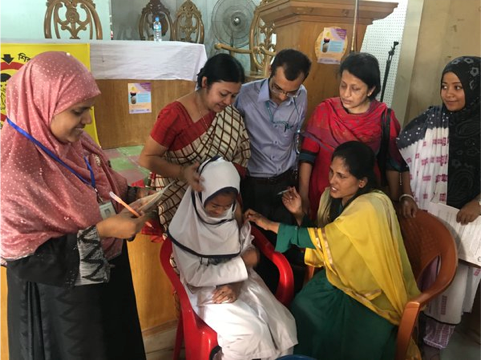
Institutionalised vaccination programmes have become part of routine health care services for the Bangladeshi masses. The success of polio and smallpox vaccination programmes has greatly increased trust in the system to protect the population from debilitating or deadly diseases. In that context, human papillomavirus (HPV) vaccine was introduced in Bangladesh through the arrangement of a demonstration project in Gazipur district in 2016, designed to reach grade 5 female students and non-school-going girls (age range 10-12 years). HPV vaccination is expected to be eventually included in the nationwide immunisation programme if the demonstration project is successful. This review paper includes a step-by-step assessment of ethical concerns surrounding HPV vaccination implementation in Bangladesh. It is based on interviews with policymakers, vaccine implementers, vaccine recipients, and an ethics specialist in Bangladesh, as well as searches of electronic databases and websites for relevant published literature and government statements.
After describing the HPV vaccination demonstration programme, the researchers explore some pertinent ethical issues.
Ethical issues related to tailored information dissemination about HPV and cervical cancer: Most HPV vaccine recipients, through the health education they received prior to being vaccinated, were made aware about the vaccine and its importance in preventing cervical cancer. However, information about HPV infection, its route of transmission, and the cofactors related to its spread, along with other cervical cancer prevention strategies, were left out of this health education. In Bangladesh, even though cervical screening programmes began in 2004, the coverage rate remains very poor and is limited to opportunistic tests. In this local context, conveying tailored and incomplete information about HPV and cervical cancer to the population raises ethical concerns:
- The fact that sexual contact is the main route of transmission of the vaccine-preventable HPV serotypes is seemingly not openly disclosed to the vaccine recipients, their parents/guardians, or teachers. There may be scenarios where incomplete information is provided to avoid sociocultural controversies for the greater good. However, accurate and complete information is proven to be effective against rumour and misinformation.
- There is a risk that overemphasis on HPV vaccination may divert the recipients' attention from the perceived importance of cervical screening; it is anticipated that some vaccinated women may forgo the recommended screening due to this false sense of security.
- Communications around the HPV vaccination programme convey the impression that cervical cancer is 100% preventable if the vaccine is taken. Even for the two serotypes for which the vaccination is effective, protection from HPV infection is assumed to be long-lasting, but the accurate duration of protection is yet to be evaluated. This is an ethical concern, as there is a clear lack of accountability that risks the loss of public trust regarding preventive health services.
Ethical issues related to making autonomous and informed choices: Many HPV vaccination programmes around the world, including in Bangladesh, use an implied consent procedure. Implied consent means parents/guardians are informed about imminent vaccination through social mobilisation and communication, and, thus, if they send their child/ward to the vaccination session, it is assumed they want them to receive the vaccine, and vice versa. Yet whether consent is implied or written, it should be well informed. Studies suggest that involving parents/guardians in the discussion at the time of vaccination enhances communication about cervical cancer prevention and the particular role of the HPV vaccine. However, this important issue seems to be ignored in the current vaccination programme.
In fact, as reported here, in Bangladesh's HPV vaccination demonstration programme, "the social mobilization carried out in the vaccination areas has been very poor, both in quality and quantity. Many parents/guardians are unaware of the vaccine their daughters/wards have received at school. One positive feature of the program is that the girls are taught about the HPV vaccine and cervical cancer through a health education session before receiving the vaccine. Although partial, this education helps girls to know something about the vaccine they are going to receive. However, given the regimented way in which the vaccination is administered in schools, all selected girls feel obliged to accept it, either due to peer pressure or to please school teachers. They have no opportunity to take an informed and independent decision regarding the matter. This creates an ethical dilemma, given that no choice, in its truest sense, is available to the recipients or their parents/guardians when deciding whether to take the vaccine. For adolescent girls not attending school, coming to the EPI centres for vaccination is considered as giving implied consent. In reality, however, they are lured into taking the vaccine by hearing it referred to as the 'cervical cancer vaccine' during community mobilization, and complete information about the vaccine and its limitations is not disclosed."
Ethical concerns related to follow-up of the vaccinated cohort: Any adverse effect following immunisation (AEFI) with HPV vaccine is recorded using an existing Expanded Program on Immunization (EPI) form. HPV vaccinations may not necessarily result in short-term adverse effects, but in long-term ones yet to be evaluated, which cannot be recorded on the current EPI form. Furthermore, there is still a lack of data - e.g., on how long the vaccine will give immunity or on the need for any booster dose.
Ethical impact of a female-only strategy on society: "Females are already victimized for many medical conditions that are unexplained or result from their male partner's behaviour. Any additional intervention that may aggravate victimization and stigma against women would, in this context, be unethical and counterproductive. Furthermore, in Bangladesh, especially in the rural context, vaccinating only females may lead people to dismiss the disease as a women-related concern. The corollary of this view would be that any woman in whom the disease is identified would be considered at fault."
In conclusion, the researchers observe that, in Bangladesh, the immunisation programme still holds the public's trust. Hence, to preserve ethical standards, adding any new vaccine to the existing programme requires thorough investigation of its compatibility, necessity, and fit-for-purpose. To alleviate the concerns raised in this paper, the researchers offer the following recommendations:
- Adolescent health education imparted in the scope of vaccination should contain adequate information about HPV infection and cervical cancer, as well as other measures to prevent cervical cancer. Any misleading or partial information should be identified and prohibited.
- The procedure for obtaining parental/guardian consent while ensuring adolescents' autonomy and assent to vaccination should be established and well circulated among health service providers.
- The vaccinated cohort should be kept under long-term follow-up.
- Adolescent boys should also be given health education regarding HPV-related infection.
"More ethical discussion and debate are needed among public health professionals in Bangladesh to increase awareness about ethical issues related to human health."
BMC Medical Ethics 2018, 19 (Suppl 1):39. https://doi.org/10.1186/s12910-018-0287-0. Image credit: Vaccines work
- Log in to post comments