










































The Girl Effect: What Do Boys Have to Do with It?
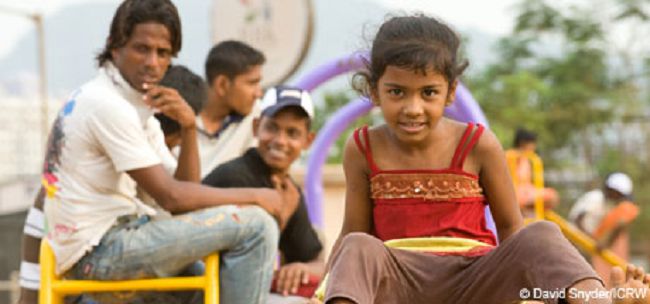
"Boys, too, are 'gendered' - that is, affected and shaped by gender norms - and have an interest in changing rigid, inequitable and harmful gender norms."
From October 5-6 2010, the International Center for Research on Women (ICRW) with support from the Nike Foundation convened a gathering of experts to share research and programmatic experiences of working to engage girls and boys as "change agents" for a more equitable world. This briefing note for that meeting explores "the girl effect", defined as "the unique potential of 600 million adolescent girls to end poverty for themselves and the world". As argued here, without the involvement and commitment of men and boys to girls' empowerment and gender equality, the impact of the "girl effect" may fall short. The paper advocates for a gender and developmental perspective to explore what boys have to do with the "girl effect". This approach seeks to combine the lenses of gender and developmental psychology to better understand gendered behaviour in adolescents over their life cycle, with a focus on adolescence (generally defined as ages 10 to 19).
The paper first reviews theories explaining the development of adolescent gender identities, drawing from developmental biology, psychology, and sociology. It then reviews available programme data to identify promising approaches to promote gender equality and to explore programmatic issues, including: identifying points of entry for reaching adolescents, both male and female; tailoring interventions to adolescents at different ages, developmental stages, and cultural contexts; deciding when and how to use sex-specific or mixed programming; and evaluating the short and long-term effects of various interventions. Finally, it identifies some priorities and unanswered questions for future investments in research and practice.
Conclusions from the programme review examined in the report include:
- Some programmes address gender directly, but most programmes tackle gender norms through discussions of other issues such as sexual and reproductive health or violence prevention.
- School-based and community-based programmes are the most common points of entry for adolescent programmes.
- Sports programmes are an increasingly popular venue for challenging norms around masculinity and femininity.
- Popular and local media can be a powerful platform to counteract the negative gender norms pervasive in society and provide alternative examples: "Media can be used to provoke critical thinking or behavior change around harmful gender norms. Advertising campaigns and social media can reduce stigma and open up dialogue on sensitive subjects..."
- Only a limited number of programmes explicitly reach out to the parents of adolescents, but a great number incorporate adult mentors into their programmes.
- Including discussions of gender norms within vocational training or income generation activities remains a seldom-used but potentially important avenue for engaging adolescents of both sexes.
- More programmes are attempting to reach boys and girls together, though doing so effectively has proven challenging.
- Few programmes reaching adolescents explicitly mention a developmental perspective, but many implicitly and intuitively do so.
- Most programmes reaching adolescent boys and girls have not been evaluated in terms of applying a developmental perspective or following young people over time to determine the long-term effects.
- There is a need to better define outcome indicators and to affirm from the beginning what we expect and want from adolescent boys.
Based on this review of the literature and consultation with programme planners, ICRW affirms that:
- There is a strong base of programme experiences to build on in terms of engaging adolescent boys, as well as both adolescent boys and girls, in a relational experience.
- There is a need to move beyond a perspective that there is a single developmental stage or age to reach boys or girls with specific themes. Instead, these issues require ongoing work to work to appreciate that these issues require ongoing work with developmentally and gender-specific messages and approaches.
- Programmes reaching young people on gender issues should not assume they have to intervene or work with adolescents over the entire adolescent phase; rather, they should have the larger developmental perspective in mind when they design and evaluate their programming.
- Programmes could be improved if they had a clearer articulation of what it is they expect from boys and young men.
- "The near-universal socialization of boys as economic providers suggests that including gender sensitization activities in established vocational training programs may prove particularly attractive to boys, particularly as employment for youth becomes increasingly scarce. However, to achieve true gender equality, boys and girls should both be included in vocational training, income generation and livelihoods activities that avoid traditional gendered occupations (boys in carpentry and mechanics and girls in sewing and hairdressing, for example). Furthermore, such programs should have the explicit goal of socializing young women and men to be both being co-providers and co-caregivers. In other words, programs should acknowledge and affirm that both girls and boys should arrive at adulthood with the skills necessary to earn a dignified living and should know and appreciate the importance of providing care for others, including children."
ICRW website, November 4 2011.
- Log in to post comments