










































Guide to Designing Sexual and Reproductive Health Programs for Youth in Egypt
The purpose of this guide from the Health Communication Capacity Collaborative (HC3) is to provide a selection of "Essential Elements" and tools to guide the creation, or strengthening, of sexual and reproductive health (SRH) social and behaviour change communication (SBCC) programmes for youth aged 15 to 24 in Egypt. The guide is designed to teach these essential SBCC elements and to help users apply the elements to their own work using a set of included worksheets. It is derived from the Urban Adolescent Sexual and Reproductive Health Social and Behavior Change Communication Implementation Kit (see Related Summaries, below), adapted to the Egyptian context for youth living in both urban and rural contexts. The guide also has broader information and application for the Middle East and North Africa (MENA) region, and the Essential Elements described can be used for other geographic settings, health topics, or age groups.
The Essential Elements that form the structure of the guide are:
- Collecting Helpful Information about Youth
- Navigating the Environment for Youth
- Segmenting Your Audience
- Creating an Audience Profile
- Establishing Behavioral Objectives and Indicators
- Identifying Communication Channels in the Community
- Developing Messages for Youth
The guide, which can be used as a self-facilitated learning tool or as part of a training, includes:
- Context and Justification: This section provides basic information about SBCC, youth health and development, and the elements for successful SBCC programme design. A sub-section on SBCC and theory focuses on:
- What Is Social and Behavior Change Communication?
- The P Process
- Social Marketing
- What Influences People's Behavior?
- Guide to Designing SRH Programs for Youth in Egypt: Part 1
- SBCC Theories
- Health Belief Model
- Theory of Planned Behavior
- Stages of Change
- Social Learning Theory
- Diffusion of Innovation
- Lessons Learned from Successful SBCC Adolescent Programs
- Essential Elements and Worksheets: These sections describe important themes and components of SBCC SRH programmes for youth. Each Essential Element includes key considerations, short examples, and worksheets, which are designed to help users learn how to apply the SBCC element. The worksheets can be used for practice or with real data in the planning or strengthening of an existing programme. Sample completed worksheets are included to guide the user through filling out the blank worksheets, which may be photocopied so that an entire team can use them as they review the kit together.
- Resources: Both in the text and in the Resources section at the end of each Essential Element, there are additional tools on SBCC and programme design.
- A multi-page chart explores some common challenges the practitioner might face when implementing SRH SBCC programmes for youth and suggested strategies for dealing with them.
English; Arabic
192 (English); 193 (Arabic)
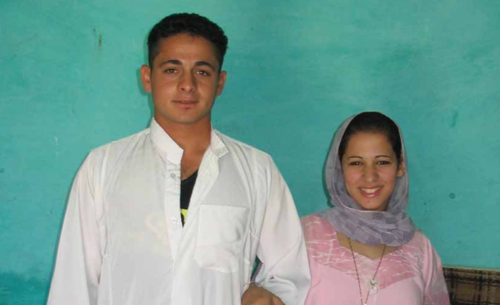
HC3 website, October 10 2017. Image caption/credit: A newlywed couple in Minya, Egypt, during a Newlywed Initiative home visit, an outreach programme of the USAID-funded Communication for Healthy Living project. © 2005 Amrita Gill-Bailey, Courtesy of Photoshare
- Log in to post comments