










































Community feedback and validation of formative research: findings in 5 countries in Africa
Summary:
Netherlands Red Cross (NLRC) presents the results from a community health programme in 5 countries: Mali, Ethiopia, Sudan, Zambia and Ivory Coast (2017-2020). The overall objective of the programme is contributing to the reduction of infant mortality related to pneumonia. The behaviour change strategy in this programme has been informed by a comprehensive formative research. The cross-cutting problem identified in the formative research that affects all countries is the delay in seeking health care rather than the knowledge of symptoms and danger signs or treatment compliance. Physical, financial, cultural and gender barriers for the delay in health care seeking have been identified and findings validated with community members and local authorities through community information and feedback sessions. These sessions provided a channel for community members to easily raise questions, suggestions and concerns about the findings and agree on how those would be carried onto the BCC workshop to be translated into behaviour change objectives. This has created a space for engagement fostering transparency and participation of community members in the design of the BCC strategy helping to tailor the strategy to what people need and desire. It has also helped to address sensitive issues that are clearly barriers to health seeking such as gender relations and co-existence of traditional and modern medicine. Validating those findings with the community prior to the BCC workshop has helped to integrate more efficiently those sensitive aspects in the BCC strategy.
Background/Objectives:
NLRC presents the results from a community health programme in 5 countries: Mali, Ethiopia, Sudan, Zambia and Ivory Coast (2017-2020). The overall objective of the programme is contributing to the reduction of infant mortality related to pneumonia. This programme has been designed following the Social Ecological Model, so it considers the complex interplay between individual, community and societal factors.
Description of Intervention and/or Methods/Design:
The programme is focused at training parents and caretakers to identify danger signs for pneumonia in their sick children, influence health seeking behaviour and promote full compliance with treatment. Risk factors for pneumonia are addressed through the promotion of handwashing with soap, breastfeeding, vaccination, proper nutrition and access to improved cooking stoves. The behaviour change strategy in this programme has been informed by a comprehensive formative research, using similar qualitative data gathering methods such as key informant interviews, direct observation and focus group discussions. The strategy has been devised in a participatory workshop gathering a group of stakeholders (MOH, community members / chiefs, local NGOs, influencers e.g. traditional healers, and partners representing communication channels). Discussions held in the workshop were articulated around a BCC plan in each country identifying the audience groups, barriers and motivators for behaviour change, message briefs and communication channels and approaches.
Results/Lessons Learned:
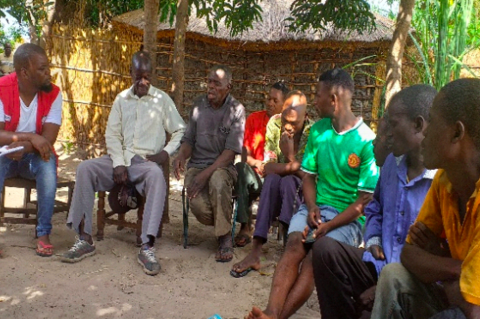
The cross-cutting problem identified in the formative research that affects all countries is the delay in seeking health care rather than the knowledge of symptoms and danger signs or treatment compliance. Main barriers for the delay in health care seeking are: physical barriers (long distance, reduced opening hours), financial barriers (pay for transport or for medical care), gender barriers (to obtain permission from husband / male / family member) and cultural (use of traditional medicine). Cote d'Ivoire, Mali and Zambia validated these findings on the barriers with community members prior to the BCC workshop, through community information and feedback sessions. These sessions provided a channel for community members to easily raise questions, suggestions and concerns about the findings and agree on how those would be carried onto the BCC workshop to be translated into behaviour change objectives.
Discussion/Implications for the Field:
There is a need to be more systematic in our efforts to be accountable to the people we serve and in the Red Cross we believe this can be done by presenting the findings from baseline and formative research in community feedback session. This has created a space for engagement, fostering transparency and participation of community members and helping to tailor the strategy to what people need and desire. It has also helped to address sensitive issues that are clearly barriers to health seeking such as gender relations and co-existence of traditional and modern medicine.
Abstract submitted by:
Libertad Gonzalez - Netherlands Red Cross (NLRC)
Approved abstract for the postponed 2020 SBCC Summit in Marrakech, Morocco. Provided by the International Steering Committee for the Summit. Image credit: Netherlands Red Cross