










































Influenza and Pertussis Vaccination in Pregnancy: Portrayal in Online Media Articles and Perceptions of Pregnant Women and Healthcare Professionals
University Hospital Southampton NHS Foundation Trust (Wilcox); St George's, University of London (Bottrell, Jones); London School of Hygiene & Tropical Medicine (Paterson, Schulz, Larson); Kingston University (Vandrevala); University of Southampton and University Hospital Southampton NHS Foundation Trust (Jones)
Vaccine availability is not a guarantee of vaccine uptake, particularly among pregnant women. The aims of this mixed-methods study were to: (i) examine the portrayal of maternal influenza and pertussis vaccination in online media over recent years and consider what influence this may have had on women's vaccine confidence, and (ii) compare these findings with the perceived target of vaccine protection as viewed by maternity healthcare professionals (HCPs) and pregnant women, as well as their reported current, or intended, uptake of vaccination.
A search was conducted in the Vaccine Confidence Project's database at the London School of Hygiene & Tropical Medicine, using the keyword "pregnan*". This database collects online news articles relating to vaccination (published from any country), as part of a surveillance system to monitor public confidence in vaccination. News articles for the study were deemed eligible if they related to influenza or pertussis vaccination in pregnancy, and were published in the English language during 2 different time periods: July to December 2012, or November 2015 to April 2016. Two separate questionnaires were developed for pregnant women and maternity HCPs and administered to 314 women (aged 16 years or older) attending routine pregnancy clinics/wards and 204 midwives or obstetricians at 4 study sites in the United Kingdom (UK).
Of 203 articles identified, 60% related to pertussis vaccination, 33% to influenza, and 6% both. The majority positively portrayed vaccination in pregnancy (97%), but inaccurate, negative articles persist that criticise pertussis vaccination's safety and efficacy. The majority of these negative articles claimed that there was inadequate trial evidence to support claims of the vaccine's safety and efficacy, despite the growing amount of high-quality evidence from observational and randomised controlled trials. A minority of the pregnant women surveyed intended to decline influenza (22%) or pertussis (8%) vaccination. However, according to the researchers, HCPs should be prepared to provide advice to vaccine hesitators, including specifically addressing any negative media they may have come across, and to consider novel educational strategies which may help counteract any inaccurate negative information.
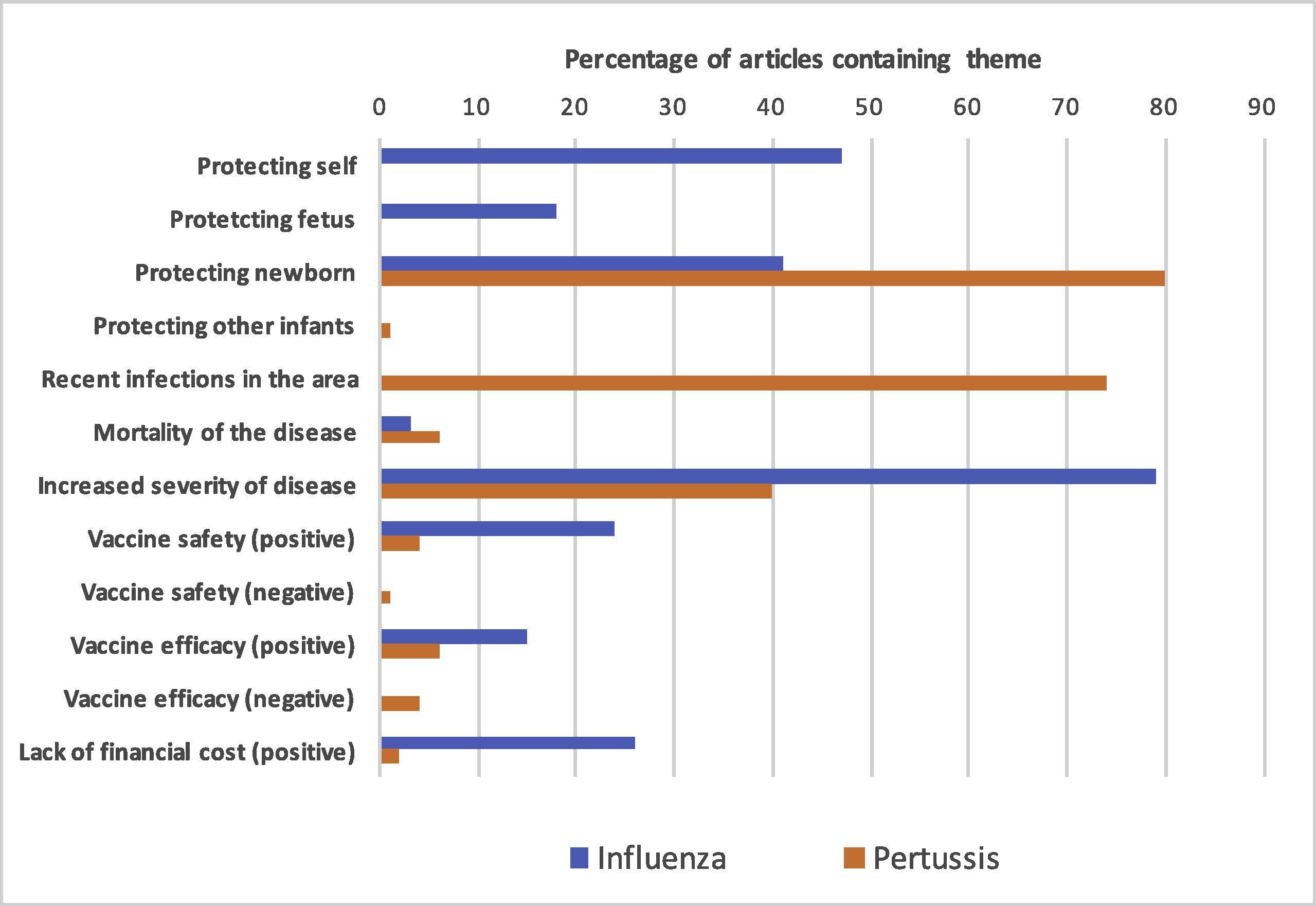
Positively worded articles about pertussis tended to focus on infant protection and highlight examples of recent cases, whereas positively worded articles about influenza focused on maternal protection. These themes were reflected in questionnaire responses, which indicated perception pertussis vaccination as protecting the baby and influenza vaccination as protecting the mother or mother and baby equally. These findings provide support for the idea that framing vaccine information towards the benefits for the child (ideally using specific examples of real cases) may improve vaccine uptake, in line with recent studies demonstrating that information emphasising the protective benefits for infants is a motivator for pregnant women to accept vaccination and improve their health behaviours. It may also be worth placing an emphasis on the interconnectedness of health interests during pregnancy (particularly for influenza vaccination); while mothers may not consider themselves at risk, it should be highlighted that any decline in their health could be detrimental for the health of their child.
In terms of implications for clinical practice, the researchers note that encouragement from a familiar HCP has been shown to increase vaccine acceptance by up to 20 times. Successful innovative strategies to educate women and combat negative media have included the use of social media and webcasts, smart phone apps (such as MatImms), and mobile phone text messages (such as Text4baby). Outside traditional media channels (which seem to generally support vaccination), it is important to be aware of social media and video-sharing sites that contain large communities of users critical of vaccination, as gathering information from these has been associated with lower vaccine uptake. HCPs could therefore consider counteracting these by uploading positive educational material to these forums.
Future qualitative studies might establish which platforms pregnant women would typically use and trust when gathering information, and consider how their views might be modified by such information (both positive and negative). Research conducted over a greater span of time from the vaccine confidence database would also provide a more comprehensive overview of the links between vaccine confidence and media themes. Future projects should also assess non-English language media sources, particularly as previous studies have demonstrated significantly lower vaccine acceptance amongst ethnic minorities.
Vaccine (2018). https://doi.org/10.1016/j.vaccine.2018.10.092
- Log in to post comments