











































Learning from Egypt's Environmental Monitoring and Reporting Systems
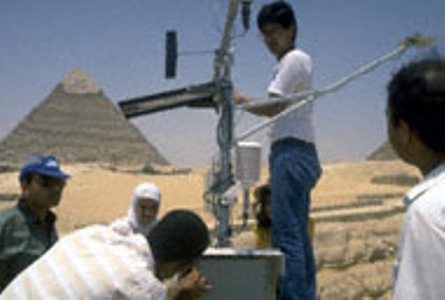
"The Egyptian experience shows that it is relatively easy to set up the technical side of the system - the ICTs [information and communication technologies] - but that this is not sufficient to ensure an efficient, integrated and sustainable tool for collecting, analysing and tracking climate change-related data and indicators that support decision making."
This case study from the University of Manchester, United Kingdom (UK)'s "Climate Change, Innovation and ICTs" research project, funded by Canada's International Development Research Centre (IDRC) and managed by the University's Centre for Development Informatics (CDI), describes a developing country trying to set up its monitoring and reporting (M&R) system, particularly with a view to meeting its United Nations Framework Convention on Climate Change (UNFCCC) obligations. The difficulties faced by Egypt in setting up its general climate change M&R system are contrasted with of two much more specific environmental information systems which have some climate change relevance: one monitoring water quality, one monitoring air quality. The study includes recommendations for higher impact of the general reporting system.
Because Egypt does not have a national, integrated climate change monitoring and reporting system, the United Nations Development Programme (UNDP) Global Environment Facility has been facilitating the Strengthening the Monitoring and Reporting Systems (SMRES) project. That central system of each of the M&R projects - water quality, air quality, and SMRES - is ICT-based and stores, processes, and communicates the environmental data. More specifically, geographic information systems (GIS) are used within the systems to display the data (sample maps are shown in the study).
As stated here, the air and water quality reporting has worked to the degree that the information they produce has been turned into decisions and action. "For example, the number of air pollution episodes in Cairo fell from 31 to 4, lead levels have been reduced, and buses converted to natural gas." However, the SMRES has not had sustainable funding and has struggled with standardising data and managing it, as well as obtaining data from stakeholders who treat it as proprietary.
The study cites the following enablers and challenges related to communication:
- Where stakeholders share common objectives, monitoring systems seem to have performed relatively well.
- Although knowledge and skills were lacking initially for the air and water systems, donor funds helped create the absent capacity through staff capacity development.
- The water and, especially, the air quality monitoring systems have been results-led, i.e., ICT was seen as the means to obtaining action on clean-up of pollution. SMRES, in contrast, was ICT-focused.
- "Intersectoral climate change systems often pay significant sums for resources that sit between, rather than within, organisations; and that - more importantly - support activities those organisations regard as peripheral, " i.e., stakeholder initiative is low because of lack of involvement. This also leads to lack of interest in sharing data.
- "Effective implementation of climate change information systems requires a 'hybrid' perspective that combines both the technical and the organisational. It requires sociotechnical expertise that understands data, technology, people and context."
Recommendations include:
- Put human and organisational design ahead of ICT design.
- Create political will towards climate change. "Often the ratification of a Convention leads directly to production of a shopping list for funds and loans, rather than being reflective of a serious interest in climate change."
- Keep it simple. "Successful climate change information systems are those that keep the technology fairly simple, have quite focused objectives, require more limited funding and involve relatively few stakeholders."
- "Have an answer for the "golden question". The golden question - the one that everybody involved with a climate change information system asks - is 'what's in it for me?'."
Email from Richard Heeks and Angelica Ospina to The Communication Initiative on February 26 2012, and the Nexus for ICTs, Climate Change and Development website on March 27 2012, accessed April 20 2012.
- Log in to post comments