










































LubutoMentoring Programme
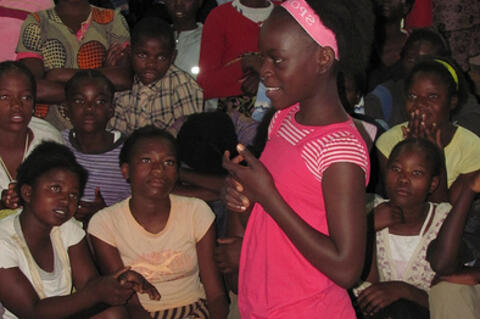
Using the dual approach of direct intervention and community-level capacity building, LubutoMentoring works to create a sustainable, needs-driven platform for improving the quality of life of orphans and vulnerable children (OVC) in Zambia. From September 2009 to July 2010, the Lubuto Library Project offered a one-year pilot programme to OVC from 16 communities in Lusaka. The programme was structured in cycles of 12 sessions focusing on key concepts: purpose, honesty, faith, courage, perseverance, self-confidence, responsibility, persistence, self-motivation, self-empowerment, friendship, self-discipline.
Organisers explain that the Programme is integrated with other library programmes and open to all children through the accessible, indigenous environment of a Lubuto Library.Organisers say this exposes participants to a wide range of holistic programmes and services and increase use of the library for literacy and other educational purposes.The mentoring programme uses storytelling of local and foreign tales selected for their instructive morals about life skills and positive mental attitude. The process combines techniques designed to enlighten, educate, entertain, inspire, and motivate children to retell stories and discuss the morals among their peers, family, and communities. The LubutoMentoring sessions are conducted in Zambian languages, and are based on traditional ways in which values are passed down from generation to generation. According to Lubuto, this has proven not only more effective than "foreign" approaches, but gives children a sense of connection to their roots and society.
Boys and girls participate in the 3-month programme of weekly sessions, offered yearround in Lubuto Libraries. After each weekly session, the youth are interviewed to determine mastery of the message and to determine its and previous weeks' sessions' impact on their lives. A large number of participants are street children, and all come from highly vulnerable circumstances.
To support the work with children and youth, LubutoMentoring also works to improve communication and engagement between children and their caregivers, by encouraging active caregiver involvement in the program. Teachers also receive training in participatory teaching methods, which the incorporate into their classroom teaching, as well as their communication with parents.
Children and Youth, Education, Literacy
"Lubuto" is a word in the Bemba language (of Zambia and the Democratic Republic of the Congo) that signifies knowledge, enlightenment, and light. According to the organisation, Lubuto Libraries are internationally recognised as model library services for disadvantaged children, with specially designed programmes, led by Zambian professionals, that support children in developing their talents, skills, and self-esteem. In July 2009, at the American Library Association (ALA)'s annual conference in Chicago, Illinois, United States, the Lubuto Library Project was recognised for its "excellence and impact with the ALA President's Award for International Innovations."
According to Lubuto, during the pilot project the programme reached 831 children (438 boys and 393 girls) from vulnerable circumstances, many of whom were street children, through 316 mentoring sessions. Each child participated in about 13 sessions, totaling 10,892 interactions. Many became regular readers at the library and joined other Lubuto programmes, and dozens decided to return to school. The programme also trained 17 male and 15 female caregivers from the participating communities, trained 92 parents, and offered orientation to 100 more parents. most programme participants indicate dramatic changes in their lives and what they see possible in their futures. They express appreciation for the opportunity to discuss their lives and problems with someone who cares and can help them, in the safe and supportive environment of the Lubuto Library. In the initial sessions, children already feel empowered to express their thoughts and even offer solutions to their peers' problems. The lessons children have found most meaningful have focused on the values of self-acceptance, honesty, and perseverance.
Lubuto Library Project (LLP), United States Agency for International Development (USAID), Project Concern International
Email from Jane Kinney Meyers to Soul Beat Africa on January 7 2011 and Lubuto Library Project website on April 22 2011.
- Log in to post comments