











































Making India Free of Polio: The Back Story
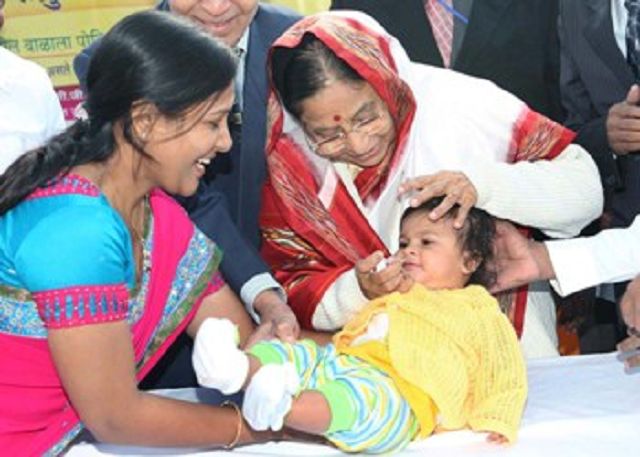
"[I]n India, evidence-based communication strategies - including through interpersonal communication and through social channels - made a marked difference in delivering effective health communication for the polio eradication programme."
In this column, Gupta and Agarwal reflect on the communication strategies that they say led to the fact that, in January 2014, India was officially recognised as being polio-free by the World Health Organization (WHO). The authors ask: What were the factors that contributed to this historic outcome? They point to the strong partnership between the Ministry of Health and Family Welfare, WHO, the United Nations Children's Fund (UNICEF), Rotary International, and the United States Centers for Disease Control and Prevention (CDC).
As the authors explain, in early days of India's polio eradication effort, "communication" was used in a very limited way because the effort of administering polio drops was being addressed by public sector immunisation teams. A planned communication strategy later came into the picture; the country "has been particularly recognised for the success it saw in the innovative use of epidemiological data and the application of multiple communication channels for the programme." Efforts have included participation of community organisations as well as government at the national, state, and local levels, along with professional organisations and the media. "Mass media campaigns combined with sustained political will contributed to reducing the incidence of the disease, which in turn led to a stage where no fresh cases of wild-polio virus infections were spotted since Jan 11, 2011." For example, campaigns included "brand" and "basic message promotion", especially using sound-bites from well-known celebrities ("Do boond zindagi ki", which means "two drops of life"). "In this way, interpersonal communication and social mobilisation piggy-backed on the mass-media and that proved invaluable in reaching the unreached."
Gupta and Agarwal assert that the polio eradication programme in India effectively used various communication for development (C4D) approaches in designing community-based interventions. Strong elements of formative research supported the design of the communication strategies that guided these activities. However, the entire focus of the programme remained on promoting use of the oral polio vaccine (OPV), as and when announced by the Government, without missing a single dose. Therefore, while the polio eradication programme has succeeded for now in attaining a polio-free status for India, multiple research scientists have established that the Indian populace, including high-risk communities spread across the country, are still not fully informed on primary causal factors that lead to the oral-faecal transmission of the polio virus among children. Therefore, the actual risk of polio transmission continues to loom large.
Over a period of time, the authors explain, C4D has evolved strategically in addressing varied health and development issues in developing and the developed countries alike. However, the polio eradication programme in India, when technically studied at various stages of its evolution, has employed three primary theoretical conceptual frameworks in development communication, namely: Theory of Diffusion of Innovations (Everett M. Rogers); the Theory of Planned Behaviour (Icek Ajzen); and the Stages of Change Theory (J.O. Prochaska, C.C DiClemente, and J.C. Norcross). These theoretical models served as common denominators at various stages and levels of the communication interventions, while among the approaches, what the authors call an "Integrated Approach" has emerged as a sustained approach to reach out to more than a billion Indians. The polio eradication programme combined a strong presence of mass media for awareness and branding and strategic use of interpersonal communication and an "extension approach" in reaching out to individual households and caregivers in the communities.
The polio programme in India "showed the power of synergistic communication activities. Integrated social mobilisation, interpersonal communication, gender and culturally-sensitive interventions, mass/folk media and political advocacy together greatly contributed to the overall success of the polio programme. Clearly, such a model could also be adopted for other public health programmes and initiatives."
However, according to the authors, while the medical experts/immunisation specialists have deemed the health communication advances that led to polio eradication in India to have been very effective, many communication scientists argue that the use of communication for polio eradication has not been strategic. "While it was widely used to promote the polio vaccine drops, the factors responsible for the spread of the polio virus - like low rates of routine immunisation, poor sanitation and lack of clean drinking water - were not publicised through behaviour change tools. This remains a gap, because even now a large number of communities have very little knowledge about the causes behind polio transmission."
The authors conclude by noting that the current polio communication content is largely based on promoting the OPV. "Therefore, a scientific campaign in promoting behavioural change with regard to sanitation, safe drinking water, routine immunisation and good nutrition is now the need of the hour."
Kashmir Times, February 4 2014; and email from Anusha Agarwal to The Communication Initiative on October 13 2014. Image credit: Women's Feature Service (WFS)
- Log in to post comments