











































Measuring Social and Behavior Change in Nutrition Programs: A Guide for Evaluators
"Without strong nutrition SBC considerations in evaluations, donors, programmers, and planners lack evaluative data to make strategic decisions or adaptations that could be helpful to improve nutrition outcomes."
In order to improve nutrition outcomes, nutrition programmes use social and behaviour change approaches (SBC) to change behaviours by addressing factors such as access, knowledge, and social norms. Therefore, behavioural metrics can and should capture a broad range of information, measuring across the full behavioural pathway. From the United States Agency for International Development's (USAID) flagship multi-sectoral nutrition project, USAID Advancing Nutrition, this guide supports implementing partners who are involved with conducting an evaluation of an activity that uses SBC to improve multi-sectoral nutrition outcomes.
At the core of the guide is an 8-step process to evaluating SBC approaches for improving nutrition outcomes:
- Confirm Understanding of the Nutrition SBC Evaluation Question(s)
- Review SBC-Appropriate Documentation
- Select Team Members
- Select Appropriate Evaluation Methods to Answer the SBC Evaluation Question
- Determine the Range of Appropriate Respondents for SBC Evaluations
- Collect Data
- Analyze and Interpret Data
- Write SBC-Specific Recommendations
To improve staff skills, the document explores the nuances of evaluating SBC approaches to improving nutrition outcomes, offering guidance such as:
- Improving actors' behaviours is the foundation of any nutrition SBC approach. SBC activities should be designed to strategically address the relevant factors. It is important to understand which societal, political, and environmental factors have the strongest influence on which people for any given behaviour. Those people should be defined in terms of groups whose members should receive the same SBC activity.
- The social context of a programme underpins the outcomes of any approach. Identifying how the social context might influence the success of the programme is essential. Changes in influencing factors should also be highlighted in the evaluation.
- When using SBC to tackle multi-sectoral nutrition challenges, consider the behaviours of a range of individuals within the food system as well as the behaviours of actors in other sectors such as water, sanitation, and hygiene (WASH); social protection and early childhood development; and civil society. Nutrition-sensitive programming may promote behaviour change in actors other than household members, and evaluations should be designed to evaluate this. Peer networks, cultural and religious leaders, and community ambassadors are all important potential respondents.
- Multi-sectoral nutrition programmes usually involve a variety of stakeholders who can have an impact on an SBC programme's outcomes. Thus, all stakeholders should be included when conducting the evaluation and especially when interpreting the findings.
- When gathering data to build the evaluation, evaluators should aim to use mixed methods. Routine monitoring data combined with qualitative data, such as produced from interviews, can help develop an understanding of the programme.
Annexes include:
- Glossary of Terms
- The Nutrition Evaluation Planning Tool for USAID Missions
- How SBC Helps Improve Nutrition
- Factors that Influence Multi-Sectoral Nutrition Behaviors
- Behaviors to Improve Nutrition
- New Tools for High-Quality Nutrition Social and Behavior Change Programming
- Illustrative SBC Indicators
Publishers
37
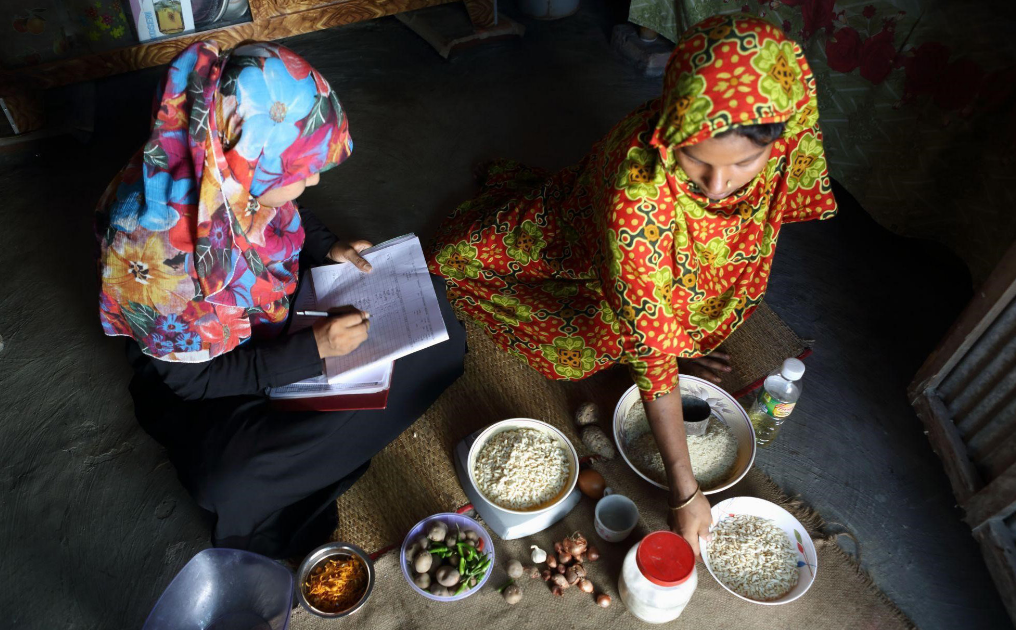
FSNetwork, May 17 2022; and email from John Nicholson to The Communication Initiative on May 17 2022. Image credit: Shafiqul Alam Kiron, Data Analysis and Technical Assistance (DATA) Limited
- Log in to post comments