










































The Mtumba Approach to Sanitation and Hygiene: Evaluating the Participatory Approach in Tanzania
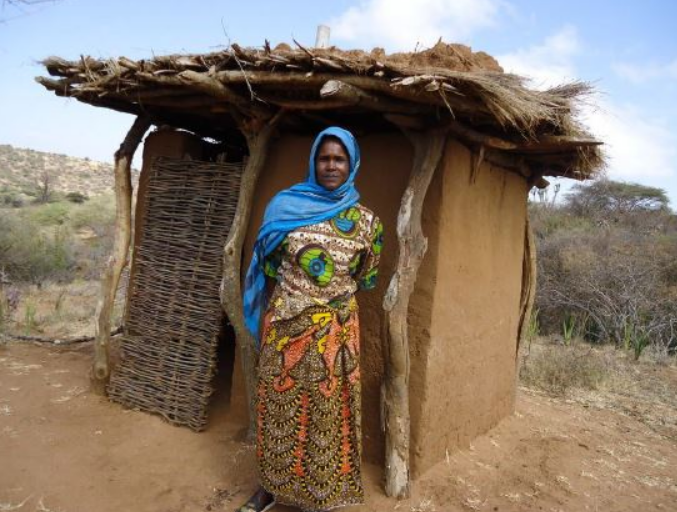
This 7-page brief shares information about the Mtumba Approach, which draws on a range of established sanitation promotion approaches, such as the Participatory Hygiene and Sanitation Transformation (PHAST), Community-Led Total Sanitation (CLTS), and Participatory Rural Appraisal (PRA), and adapts them to the social, economic, and cultural context in Tanzania. Named after the village where the approach was devised, the Mtumba approach focuses on improving the standard of latrines and empowering the community to ensure sustainability of the approach outcomes once the implementation project is complete.
The evaluation exercise was based on an Irish Aid-funded pilot of the Mtumba approach in Mtoa ward in Iramba district, Singida region; Mambali ward in Nzega district, Tabora region; and Masieda ward in Mbulu district, Manyara region, all in Tanzania which took place between March 2008 and March 2011. The evaluation was based on data gathered through in-depth interviews with policy and decision makers and implementers at district, ward and village levels; a desk review of ward sanitation and hygiene activitie; focus group discussions; surveys with over 1,200 households across the three districts; and analysis of programme cost data to estimate the costs per person at household level.
Of the 1,203 households visited, only 27 households had their own or privately shared water source. Therefore, the majority of households collect their water from community owned sources. Results indicated that 80% of respondents were aware of the Mtumba approach. Additional findings included the following:
- Increased latrine coverage:Desk reviews of ward health data and information gathered in the surveyed areas prior to the Mtumba approach pilot indicated that sanitation coverage was low. In-depth interviews with local government officials in the surveyed areas revealed that, the district health departments in the surveyed areas have enacted bylaws that penalises households for not having a latrine. By the end of the pilot period of the Mtumba approach from 2008 to 2011 in the three study sites, an average of 50% of surveyed households either made improvements to their existing latrines or built new sanitation facilities, while 50% either continued with their previous sanitation habits. This resulted in 90% of surveyed households across all three communities having some form of sanitation facility. However, only 24% of surveyed households reported having an improved form of sanitation such as improved pit latrines, ventilated pit latrine, pour-flush latrine (although this is above the national average of 12%), while 64% of sanitation facilities are defined as traditional latrines.
- Behaviour change: The focus group discussions, key informants, and the in-depth interviews in all three wards consistently indicated that during and since the piloting of the Mtumba approach in their communities, there have been positive changes in behaviour regarding the construction of new toilets, improving existing toilets, and increased handwashing with soap. This observation of positive behaviour change was also noted by 80% of respondents to the household survey; 63% of respondents associated these improvements in sanitation and hygiene behaviour with the introduction of the Mtumba approach in their wards, noting that the timing of these significant behaviour changes coincided with the intensive investment in the piloting of the approach in their area. Other respondents noted that the triggering component of the Mtumba approach, in the form of community meetings, had sensitised the community regarding the importance of sanitation and hygiene and had motivated households to improve their sanitation facilities.
- Health indicators: Data collected from health facilities serving Mambali and Masieda wards between 2006 and 2010 indicate a broad trend in the reduction of diarrhoeal disease in these communities during a period overlapping with the Mtumba approach pilot period from 2008 to 2011. Broader district picture shows stable and/or increasing diarrhoeal episodes. The impact of Mtumba approach could be meaningful if the whole district is covered as the health gains will be at maximum able to show overall reduction in diarrhoeal diseases.
- Cost and sustainability of sanitation: The total average economic cost for construction of an improved pit latrine in the surveyed areas, which was calculated to reflect the opportunity costs of resource use, was calculated at just over 53,000TSh. The evaluation indicated that the cost of constructing latrines recommended as part of the Mtumba approach were affordable for the majority of households in the study sites as there were a range of safe sanitation options available. The Mtumba approach is argued to be sustainable as it focuses on demand creation and empowers community people with skills to advocate and construct improved latrines using locally available materials which are appropriate for the community contexts.
The study showed that there were a number of challenges. Environmental factors such as type of soil, level of the water table, and scarcity of water in some of the study areas presented challenges in constructing latrines to the correct specifications. Another reported challenge was the low political will and policy support from local government structures. There was a disjunctive relationship at district level between the health and water departments which jointly implement water, hygiene and sanitation activities in that there were no joint meetings, plans, supervision, monitoring, and evaluation or reports. The key issue was that the district health departments were focussed on latrine coverage and not the quality of latrines.
Based on the research results, the report makes the following recommendations for the future:
- Multisectoral coordination: The positive outcomes of the Mtumba approach could be increased by closer integration with the activities of the Ministry of Health and Social Welfare and Ministry of Water at district level. This will require working closely with local government departments to adjust attitudes and goals to create a more enabling internal environment that collaborates and works together on programme planning, implementation, and monitoring and evaluation. Local government authorities should be involved from the beginning to foster shared ownership of the behaviour change programme and its successes.
- Resources: Scaling up the Mtumba approach will require the development of a uniform comprehensive behaviour change training guides that can be adapted to new areas. It will also rely heavily on skilled artisans and animators. The evaluation study noted that Artisan Groups in the pilot area often had inadequate financial, technological or facilitation capacity. It is vital to strengthen these Artisan Groups to become strong community organisations.
- Local Partners: The strength and uniqueness of the MTUMBA approach are its innovations in latrine options and technology, community mobilisation, scaling up, institutional capacity building, and programme management by local partners. If the programme continues to expand substantially, local partners will need to be provided with continued institutional support.
This evaluation indicates that the Mtumba approach is effective in promoting hygiene, sanitation, and community-led construction of improved latrines that are affordable and suitable to the local environment, and therefore has the potential to be scaled up beyond the pilot area.
Share Research website on August 30 2013.
- Log in to post comments