










































One Light, One Tunnel: How Commitments to COVID-19 Vaccine Equity Can Become Reality for Last Mile Communities
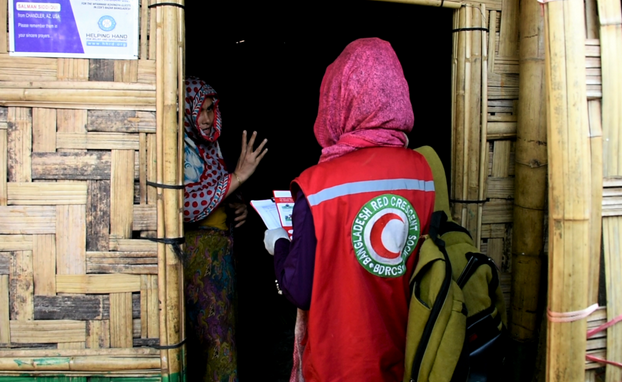
"In addition to delivering vaccines to countries, further crucial steps are needed to ensure that those vaccines reach communities and commitments so COVID-19 vaccine equity can become a reality within each country."
According to the International Federation of Red Cross and Red Crescent Societies (IFRC), inequities in access to COVID-19 vaccines are pronounced and damaging for people living in countries affected by severe or very severe humanitarian crises. IFRC also highlights vaccination inequities within countries that increase the vulnerabilities of marginalised people to COVID-19. In this report, IFRC provides analysis and shares country-specific examples in an effort to encourage national authorities and donors to:
- Pursue equitable distribution of and access to COVID-19 vaccines to the most vulnerable, the underserved, and the unseen.
- Promote the role and safety of community health workers and volunteers.
- Engage communities in two-way dialogue.
- Continue building upon established trust between IFRC volunteers and their communities.
- Partner with IFRC and National Red Cross and Red Crescent Societies.
Opening sections of the report make the case for vaccine equity between and within countries. For instance, within countries, migrants face barriers to accessing COVID-19 vaccination, including language, lack of information, lack of identity documentation, lack of affiliation to a social security system, and fear of enforcement by migration authorities. "National authorities are encouraged to eliminate those barriers and ensure that effective access is provided to vaccines irrespective of migrants' status, whilst taking care to balance the needs of migrants and the host communities in which they reside. Through their community reach and neutral, independent humanitarian nature, National Red Cross and Red Crescent Societies are in a strong position to gain the trust of vulnerable migrants as well as other hard-to-reach or marginalised population[s] and support them in obtaining the COVID-19 vaccine."
Furthermore, National Red Cross and Red Crescent Societies engage in dialogue between providers and affected populations, in languages which are spoken and trusted by marginalised communities, to ensure that vaccination-related interventions are relevant and contextually appropriate and that trust is built with all community members. Risk communication, community engagement and accountability, and health and hygiene promotion activities are at the centre of IFRC's commitment to ensure that no one gets left behind. Rolling out the COVID-19 vaccine in an inclusive and community-centred manner can help promote acceptance by the most at-risk populations.
In particular, social mobilisers engage with communities to explain the benefits of health interventions, including vaccination. For instance, the IFRC and its Red Crescent Societies are vaccinating some of the most remote and isolated groups in Pakistan and in Afghanistan, where community resistance to vaccination is high. In those contexts, Red Crescent social mobilisers promote two-way communication by not only explaining the interventions but by listening to the concerns of communities, addressing doubts, and adapting actions accordingly. Established already through their work on routine immunisation, social mobilisers' access to and knowledge of communities can be leveraged in support of COVID-19 vaccinations.
Community feedback mechanisms are a tool social mobilisers and other trusted community members, such as Red Cross and Red Crescent volunteers, use not only to promote dialogue and community participation but also to identify sources of information and track misinformation. Listening to communities in this manner, then adjusting actions to their needs, is key to ensuring life-saving information and actions reach different groups within communities. As vaccine hesitancy increases around the globe, access to reliable information ensures that information gaps do not become misconceptions or rumours. Once concerns are identified, Red Cross and Red Crescent teams address them with communities by emphasising vaccine safety based on available evidence. For example, in Africa, "Ask Dr Ben" factsheets and TV spots have been developed to address rumours during community outreach activities, and Q&A guides on vaccination support volunteers in their outreach.
Summary of recommendations:
- States with full access to vaccines, and the companies producing the major COVID-19 vaccines, must do more to bridge the geographical gap in access.
- Traditionally marginalised groups, such as undocumented migrants and refugees, must be given equitable and effective access in national rollout of vaccine campaigns.
- Red Cross and Red Crescent Societies should be included in all phases of national vaccination roll-out plans, leveraging their experience with community engagement during routine and campaign immunisations.
- Red Cross and Red Crescent volunteers, who are often the first responders within their communities, must be prioritised within national vaccination roll-out so they can safely continue to provide their services to communities.
- States that have announced interest in developing an international treaty for pandemic preparedness and response must ensure that this treaty structurally incorporates equity in interventions, community engagement from the planning phase, and support for health workers and community responders. This work entails addressing the barriers to access that have been identified and leveraging the experience of the IFRC and its National Societies on disaster laws and policies. The Collective Service for Risk Communication and Community Engagement (RCCE) can provide a common community engagement framework in undertaking this endeavour.
IFRC website, August 27 2021. Image credit: Ibrahim Mollik/IFRC
- Log in to post comments