










































Participant-Centred Active Surveillance of Adverse Events Following Immunisation: A Narrative Review
Hunter New England Population Health (Cashman, Durrheim); University of Newcastle (Cashman); The Children's Hospital at Westmead (Macartney); University of Sydney (Macartney, Khandaker); University of South Asia (Khandaker; University of Adelaide (Gold); Hunter Medical Research Institute (Durrheim)
"Vaccine hesitancy and public concern about vaccine safety is a global issue....Actively seeking the input of consumers renders the gathering of AEFI data more transparent to the public and trustworthy."
With accelerating introduction of underutilised vaccines in low- and middle-income countries (LMICs) and the development of novel vaccines for neglected diseases, such as malaria and dengue, the need for flexible, low-cost, and integrated adverse events following immunisation (AEFI) surveillance systems in LMICs has emerged. This article explores the potential of active, participant-centred monitoring of AEFI, especially through the use of e-technology.
As the researchers explain, passive reporting is the cornerstone of post-licensure AEFI surveillance because of ease of implementation, relatively low cost, and ability to capture unexpected events. However, these types of passive systems under-report, have low sensitivity, and do not allow risk estimate calculation.
So, they conducted a narrative review of 6,060 articles of active AEFI surveillance systems from around the world published from 2000 to September 2016, which elicit data directly from the vaccinee or their parent or carer after vaccination. The goal was to catalogue methods of active, participant-centred AEFI monitoring and describe how these approaches improve the understanding of vaccine safety.
After the application of screening inclusion and exclusion criteria, 25 articles describing 23 post-marketing AEFI systems were identified. Most countries had a single system: Ghana, Japan, China, Korea, Netherlands, Singapore, Brazil, Cambodia, Sri Lanka, Turkey, and Cameroon - except the United States (2), Canada (4), and Australia (6). Data were collected from participants with and without AEFI in all studies reviewed, with denominator data enabling AEFI rate calculations. All studies considered either a single vaccine or specified vaccines or were time limited except the SmartVax project in Australia system, which provides continuous automated participant-centred active surveillance of all vaccines.
Data collection methods used to contact the participant after vaccination included using diary cards (n=5), postcards (n=1), a computer assisted telephone survey (CATI) (n=1), an unanswered phone call signal (n=1), an online survey (n=8), short messaging service (SMS) contact alone (n=6), and development of a mobile app (n=1). Many of the systems also used telephone calls for survey or for case follow-up if alerted by a SMS or web mechanism. Response rates to surveys varied. The high return rate of the Sri Lankan study of 96% was achieved by the trained surveyors, who distributed and explained the questionnaire to parents/guardians, visiting the house of each participant to collect the questionnaires. Response rates for SMS contact had a narrower range from 72% to 91%.
The researchers say: "Given the explosion in e-communication technology it is possibly surprising that there have only been 15 e-technology based attempts using 10 different systems at active AEFI surveillance found in this review. This appears to be an under-utilised opportunity for signal detection and deserves acceleration and scaling up based on the experience of the systems reviewed here, and also local context and resources."
Regardless of the method chosen, the concern is that "[u]nder reporting of AEFI by medical professionals may lead to doubts about vaccine safety reassurances by public health authorities....It is possible that safety data, which is actively sourced from consumers improves public perception that the data is trustworthy because the data collection process is more transparent and potentially less subject to health professional positive bias towards vaccination. The AusVaxSafety and the CANVAS programmes of participant-centred automated active surveillance make the data publically available on the web to close the feedback loop and further improve transparency aiming to bolster public trust in immunisation....The timely collection of AEFI data and potential signal detection occurring in the public gaze enable and ensure an appropriate and timely public health response."
In conclusion: "By having active surveillance, which directly surveys the consumers in near real time and makes the results publically available, active surveillance systems address transparency concerns and contributes to public confidence in the whole immunisation programme."
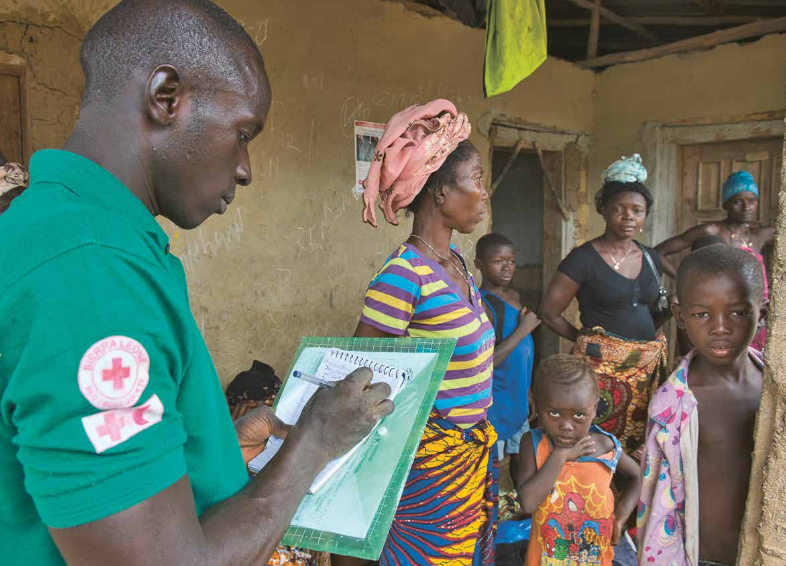
International Health, Volume 9, Issue 3, 1 May 2017, Pages 164–176, https://doi.org/10.1093/inthealth/ihx019. Image credit: Victor Lacken/International Federation of Red Cross (IFRC)
- Log in to post comments