










































Planning a Post-Polio Future
Global Health Policy Center (GHPC) at the Center for Strategic and International Studies (CSIS)
"Developing a concrete future for U.S. polio assets that is clearly communicated to government agencies, Congress, polio program stakeholders, and partner countries is the best way to ensure valuable polio assets are used effectively in the future."
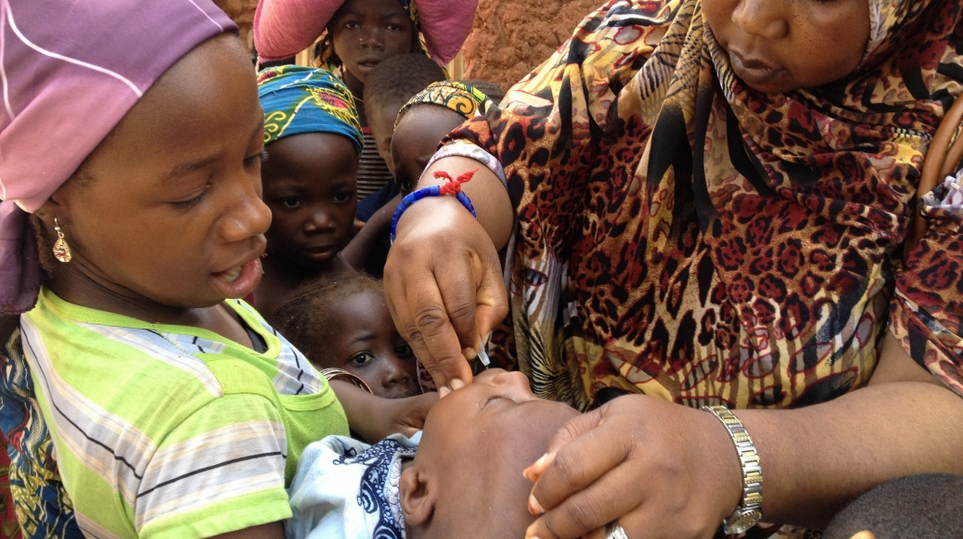
While ensuring focus on polio eradication until the goal is achieved and certified, Nellie Bristol here urges the United States (US) government to begin working with partner countries to repurpose successful polio programme interventions toward mutual global health goals. As global polio eradication grows nearer, US leaders will be under increasing pressure to plan the transition of the US$228 million a year now earmarked for the programme; the US has provided technical, financial, and strategic support to the effort for more than 30 years. Polio programme resources can enhance surveillance, immunisation delivery, laboratories, and response capabilities that aid prevention and control of a variety of diseases in countries with weak health systems.
As a major donor and global health actor, the US will be a key player in encouraging partner governments, the Global Polio Eradication Initiative (GPEI), and other organisations to remain actively involved in transition planning and ensure implementation. Bristol explain that the State Department's Office of International Health and Biodefense (IHB) is coordinating the US government polio transition plan. IHB officials have communicated with embassies in each of the priority countries to alert them to a need for transition planning, encourage them to catalogue US-funded polio assets in their purview, and start to think through how they could be repurposed, following the GPEI guidelines for transition planning. "However, the office [IHB] does not have the resources or the political clout to move polio transition to a higher profile. Therefore, the National Security Council should be brought in to the process as it progresses to ensure both White House backing and full reach to all agencies that could contribute to the planning process."
During interviews Bristol conducted in the first half of 2016 with officials from the Centers for Disease Control and Prevention (CDC), US Agency for International Development (USAID), State Department, Bill & Melinda Gates Foundation, Rotary International, World Health Organization, Gavi, the Vaccine Alliance, John Snow International, PATH, and with Capitol Hill staff, participants were asked where they thought polio assets would provide the most benefit among an array of existing US global health programmes. Given their high degree of programmatic overlap with polio eradication efforts, first of all, measles and rubella (M/R) elimination and immunisation system strengthening and, secondly, the Global Health Security Agenda (GHSA) are logical health initiatives to consider for transitioning of polio assets post global eradication, Bristol suggests. She outlines opportunities and challenges for each of these directions. For example, with regard to the option of transitioning CDC's and USAID's current polio earmark to M/R, Bristol notes that disease-specific programmes are an easier sell but run the risk of furthering a "siloed" approach that can hamper global health activities. "The polio program began its work within immunization systems, but then ultimately ran parallel to them in some countries as it became clear they could not reach enough children to ensure eradication. The approach engendered resentment in some communities and among those involved in immunization systems work. M/R program implementers would need to take special care that they work within national immunization systems and improve them overall rather than conducting separate M/R activities."
Having further explored transition planning options and offered recommendations for the US government, Bristol concludes that "[c]ommunicating strong U.S. interest in polio asset transition will help motivate other stakeholders to develop a similar approach by signaling the importance of the activity. It also will help ensure that the public health boost offered by polio eradication is purposefully harnessed for other health activities that will help improve global stability and protect Americans from infectious disease."
Global Health Policy Center (GHPC) Monthly Update: January 2017. Image credit: CSIS
- Log in to post comments