










































A Practical Guide to Conducting a Barrier Analysis
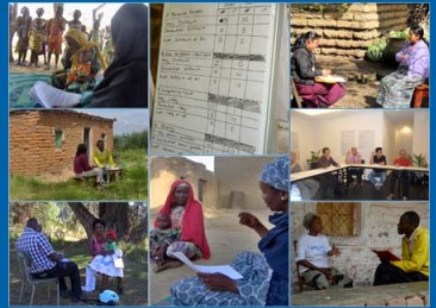
"Trainees will be able to effectively plan and implement a Barrier Analysis survey and use the results to inform their behavior change strategy."
A Practical Guide to Conducting a Barrier Analysis is a training curriculum designed to build skills to plan and carry out a Barrier Analysis survey. This survey is a step in the process of developing new behaviour change (BC) strategies, including through designing a BC framework. Exercises are designed to help learners "answer the most common and frequently perplexing questions that arise during implementation. The use of the survey as a behavior change tool is made clear by first introducing the Designing for Behavior Change [DBC] framework and the determinants of behavior change. The manual uses a step-by-step approach starting with the definition of the behavior to be studied and development of the Barrier Analysis questionnaire. As part of the training course, a Barrier Analysis survey is conducted. The guide covers topics including sampling, interviewing techniques, coding, tabulation and data use."
The training details planning and implementation of a study using the survey as its tool: developing survey questionnaires for different behaviours, practicing interview techniques, and conducting a survey. It then has participants learn to code, tabulate, and analyse the data. "After having participated in this course, participants are expected to be fully capable of planning and implementing a Doer/Non-Doer Study or Barrier Analysis and of using the results to develop a more effective behavior change strategy." The training uses the Learner-Centered Adult Education (Dialogue Education) methodology.
This curriculum, with resources, covers the following topics:
- "The DBC Framework
- Determinants of behavior change
- A Doer/Non-Doer and Barrier Analysis Survey
- The behavior statement
- A Doer versus a Non-Doer
- The survey questionnaire
- Interviewing
- The field work
- Tabulating the results
- Using the data"
For example, the template for Doer/Non-Doer questionnaire development includes questions such as: "With your present knowledge, resources, and skills do you think that you could [put behavior here]?" For those who use the behaviour, "Doers", the follow-up would be this question: "What makes it easy for you to [put behavior here]?" And for those who don't, Non-Doers, the follow-up would be: "What would make it easy for you to [put behavior here]?" Questions proceed to probe perceived difficulties, advantages, disadvantages, social norms, and perceived access, actions, and reminders regarding the behaviour.
In other sessions, for example: doers and non-doers are classified; coding for responses is learned through the example of a question on toothbrushing; results tallying and tabulation analysis are practiced; and decsionmaking based upon results is discussed.
Editor's note: From the second edition: "Since its first publication in 2015, A Practical Guide to Conducting a Barrier Analysis has been used to train hundreds of people. During that time, many lessons were learned and those have been incorporated into this second edition....[It] includes many new handouts, exercises and references to websites and resources." Contents of this second edition include:
Acknowledgements
Abbreviations and Acronyms
What's the Difference?
The Eight Steps of Planning
Lesson 1: Opening Session
Lesson 2: Overview of the Designing for Behavior Change Framework
Lesson 3: The "Exercise" Exercise
Lesson 4: Identifying Determinants that Influence Behavior
Lesson 5: The Barrier Analysis Study
Lesson 6: Introduction to the Questionnaire
Lesson 7: Step 1: Writing the Behavior Statement
Lesson 8: Step 2: Writing the Behavior Screening Questions
Lesson 9: Step 3: Writing the Research Questions
Lesson 10: Learning to Interview the Doer/Non-Doer Way
Lesson 11: Step 4: Organizing the Field Work (Including Sampling)
Lesson 12: Step 6: Coding, Tabulating, and Analyzing the Data
Lesson 13: Step 7: Using the Results to Make Decisions
Lesson 14: Closing Session
Annex 1: Learning Needs and Resources Assessment
Annex 2: Answer for the Pre-/Post-Test
Annex 3: Answers for Lesson 4 Handout 2: Learning about the Determinants of Behavior Change
Annex 4: Answers for Lesson 4 Handout 3: Match the Determinant to the Question
Annex 5: Answers for Lesson 5 Handout 4: Barrier Analysis Game
Annex 6: Answers for Lesson 6 Handout 2: Examine the Questionnaire
Annex 7: Alternative Format for BA [Barrier Analysis] Questionnaire
Annex 8: Answers for Lesson 7 HO 3: Behavior Statement Exercise
Annex 9: Answers for Lesson 8 Handout 1: Behavior Relaxing Worksheet
Annex 10: Answers for Lesson 8 Handout 3: Practice Writing Screening Questions
Annex 11: Answers for Less
Annex 12: Answers for Lesson 12 Handout 3: Tabulation Sheet
Annex 13: Computerized Tabulation Instructions for Barrier Analysis A Practical Guide to Conducting Barrier Analysis
Annex 14: Answers for Lesson 13 Handout 1: Writing Bridges to Activities
Annex 15: Answers for Lesson 13 Handout 2: Match the Determinant to the Activities
Annex 16: Possible Review Activities
Annex 17: Barrier Analysis Review Questions
Annex 18: Daily Evaluation Form (Flip Chart)
Publishers
Arabic, English, French (first edition); English (second edition)
186 (first edition); 220 (second edition)
CORE Group website, January 23 2015 and March 20 2018.
- Log in to post comments