
























Development action with informed and engaged societies

After nearly 28 years, The Communication Initiative (The CI) Global is entering a new chapter. 

Following a period of transition, the global website has been transferred to the University of the Witwatersrand (Wits) in South Africa, where it will be administered by the Social and Behaviour Change Communication Division. Wits' commitment to social change and justice makes it a trusted steward for The CI's legacy and future. 

On the transfer, co-founder Victoria Martin expressed her pleasure to see this work continue under Wits' leadership, knowing that co-founder Warren Feek (1953–2024) would have felt deep pride in The CI Global's Africa-led direction. 

As Wits, we honour the team and partners who sustained The CI for decades and look forward building from that strong base. This includes co-founders Warren Feek (1953-2024) and Victoria Martin as well as La Iniciativa de Comunicación (CILA), which continues independently at lainiciativadecomunicacion.com with links to The CI Global site. We are also eager to forge new partnerships and entertain new ideas as we consider how best to contribute to social and behaviour change in our rapidly evolving environment.

If you are joining the International Social and Behaviour Change Communication (SBCC) Summit in Panama, please join Wits and CILA on Monday, 22 June, to share your thoughts and suggestion for the relaunch of the Communication Initiative. We will be in Pacifica 5 from 12-1:25 for the Refuel, Reflect, and Renew Lunch Series: The Communication Initiative: celebrating a driving force for Communication for Social Change and the way forward. We will reflect on the legacy of Warren Feek and family in creating the Communication Initiative, consider the contributions of CI over the years and then turn our attention towards the future in this dynamic session. 

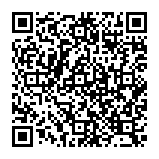
If you are unable to join us in Panama, we still want to hear from you. Please contribute your thoughts by following this link: https://redcap.link/CommunicationInitiative2026 or reaching out to ci_surveys@commint.com

You can also follow the QR Code:

 https://redcap.link/CommunicationInitiative2026

Time to read
1 minute
Read so far

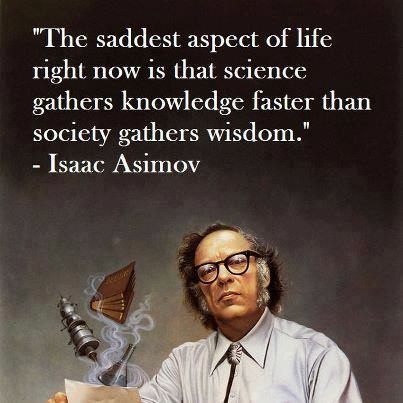
Preserving the "I don't know" within big data
0 comments
Image
Your Blog
Author: Jennifer Lentfer, May 28 2013 My main concern with an increasing reliance on big data is that the space for possibility and the need for control or certainty too often operate in an inverse relationship. In international aid and philanthropy, our work is often focused on unanswered questions. But there are some unanswerable questions?

We have conditioned tendencies that are a result of education, our training, or organizational processes, that make "I don’t know" an unacceptable answer to a question these days. Yet "I don’t know" is found in imprecise information, in unseen or undetectable outcomes. It’s found in our trust in people, in their innate capacities and energy.

I’ve worked extensively in building the M&E capacity of grassroots organizations in Africa. What I have found is that abstract metrics and "big data" often don’t often help people understand their relationship to improving the well-being of those around them. Rather local leaders, as members of a community, read real-time trends via observation of what’s happening on the ground. This, in turn, drives intuition, much like entrepreneurialism. They seem to know what we have forgotten - that this ephemeral life is governed by a multitude of forces.

Most important to me is that our ability as “thinkers” to gather and use data and high-mindedly question everything about “what works” can insulate us and can greatly remove us from the realities of those we’re serving. In practice, this can mean imposing risk-averse procedures on people who are in the process of organizing at grassroots levels.

Undoubtedly, soundly-gathered and -interpreted data can provide important new perspectives for us all to consider. But now more than ever, having more information at our disposal than ever before in our history means that we will need to employ a rigorous humility to increase our tolerance for the risk of "not knowing." I could not agree more with Cukier and Mayer-Schoenberger in "The Rise of Big Data" in the May/June issue of Foreign Affairs, that:

"There will be a special need to carve out a place for the human: to reserve space for intuition, common sense, and serendipity."

Consider the Arab Spring - could big data have predicted that? From where we sit, there remains quite a lot we cannot know about how social change occurs.

And I, for one, am okay with that.

***

This post originally appeared at: How Matters