










































ProVIC Champion Communities: Preventing Mother-to-Child Transmission of HIV in the Democratic Republic of Congo
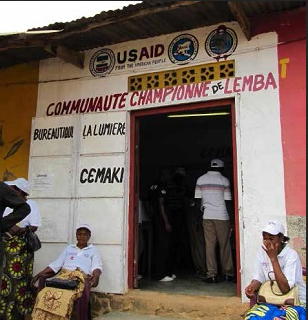
This 41-page case study discusses the experience of the Integrated HIV/AIDS Project (ProVIC) in the Democratic Republic of Congo (DRC) in using a Champion Community approach to rebuild communities by helping them to reorganise, identify their assets, and capitalise on the population's determination to reduce the incidence of HIV and mitigate its impact on people living with HIV and their families. The model is flexible to allow for strategies that are tailored to the specific needs of communities and vulnerable groups, and uses a clear rewards system — most importantly, visible returns on discrete investments — to quickly initiate and then sustain activities.
ProVIC is a five-year project funded by the President's Emergency Plan For AIDS Relief (PEPFAR) through the United States Agency for International Development (USAID) that began in 2009. Led by PATH in partnership with the Elizabeth Glaser Pediatric AIDS Foundation, the International HIV/AIDS Alliance, and Chemonics International, the project engages communities in five of the DRC's provinces (Bas Congo, Katanga, Kinshasa, Province Orientale, and Sud Kivu) in a participatory process that links community and health facility services. The integrated HIV project is designed to help communities to self-organise, self-assess, plan, and self-evaluate tailored, community-level responses to HIV. Through annual action plans, the communities lead HIV prevention, care, and support activities and become "Champions" upon reaching their targets and goals.
The strategies used are the following:
- Champion Community steering committees: The steering committee is the project's gateway into the community and is responsible for ensuring that the community achieves its goals. In partnership with supporting NGOs, the steering committees engage community leaders in action planning to identify community priorities related to HIV and activities to address them. From there, the committees coordinate activities with other volunteers and help maintain a strong referral network to essential health and social services. Champion Communities include diverse stakeholders who play an important role in achieving community goals.
- Community health workers: Each Champion Community has 40 community health workers. They represent neighbourhoods or specific populations and are selected for their willingness to volunteer, their level of education, and their credibility in the community. Following a monthly calendar of activities, they lead community awareness sessions, provide referrals, and conduct home visits to inform couples and families about HIV transmission and the importance of HIV testing and counselling (HTC) and help combat stigma around the disease. They identify pregnant women during door-to-door visits and tailor HIV messages to address vertical transmission as well as recruit the male partners of pregnant women, regardless of their HIV status, to health facilities for HTC and counsel them on family planning.
- Community caregivers: Supporting people living with HIV is the community caregivers’ primary concern. They receive referrals from community health workers and conduct regular home visits with people living with HIV. Using socio-medical forms to document the status of people living with HIV, the caregivers monitor their health and refer them back to the clinic when problems arise. Case workers also help women share their HIV status with their husbands and link men to testing services and care. Caregivers also facilitate self-help groups for people living with HIV, which meet once a month and provide each other with social and economic support.
- PMTCT activities: ProVIC is working to build the capacity of community health workers and health care professionals as a driving force for improving PMTCT activities in the DRC. Providers receive integrated, in-service trainings on the national integrated HIV training module, on the delivery of other health services, and on collecting and analysing their own data to evaluate and improve their services. ProVIC also provides technical guidance for the revision of national PMTCT data collection tools to comply with new clinical protocols and standardise data collection.
- Mobile HTC: As an extension of the project's community-based HIV prevention interventions, ProVIC uses innovative mobile HTC units that circulate day and night in HIV "hotspots" to reach most vulnerable groups where they live and operate. These units aim to help reduce stigma around getting tested and encourage couples to get tested together. ProVIC has two mobile testing tents in each province: in rural areas, the mobile units make HTC more accessible to communities. In urban areas, the tents are parked in popular nightclub areas on the weekends.
The challenges found are outlined as follows:
- The Champion Community approach takes time: Once communities are mobilised and trained, they effectively plan and implement their activities. Getting to this point, however, requires buy-in and collaboration among local leaders and the larger community. The decentralised approach also requires community members to be proactive and results-focused.
- Rural and urban communities have different challenges: The Champion Community approach differs among rural and urban communities in some important ways. Rural communities are often already cohesive and tend to have strong traditional communication channels, leadership, and structure. However, access to health services and resources is difficult. Conversely, urban areas are more challenging to organise with a more transient, heterogeneous population and less defined community boundaries.
- Demand exceeding capacity: Awareness has increased demand for HTC and PMTCT services exponentially in the Champion Communities. Health facilities are sometimes overwhelmed by the number of people seeking care, not only for HIV-related services but for other health issues as well. Because the project operates in only 29 of the DRC's 515 health zones, the demand for expansion also continues to increase. Periodic stockouts in the supply of antiretroviral drugs and reliance on the DRC's one lab for PCR (HIV test using polymerase chain reaction) analysis are particularly difficult.
Recommendations for future Programme:
- Strengthen PMTCT in Champion Communities’ action plans: Addressing PMTCT specifically in community HIV prevention efforts helps reinforce information about vertical transmission given to mothers at points of care. In addition to general HIV prevention awareness activities, it is important to include specific messages about services available, early testing for infants, and psychosocial support for mothers living with HIV.
- Engage youth: Work with youth to engage their peers in discussions on topics such as responsible sexual behaviour and using community services. Messages adapted for individuals thinking about becoming sexually active will help youth adopt safe and healthy behaviours for their adulthood. Youth groups and associations have tremendous influence in the communities and can be used as safe and reliable sources of information on sensitive issues.
- Establish coordinated laboratory infrastructure and logistics systems: Creating and maintaining an efficient and reliable system for collecting, transporting, and returning PCR tests is essential for successful early infant diagnosis. As ProVIC expands its services and other HIV programmes begin to integrate early infant diagnosis at their sites, the DRC's national laboratory will experience an increase in demand and burden. Similarly, coordinating the timely transport of samples through ProVIC’s offices may become unsustainable with greater volume.
- Develop mechanisms early for ensuring the continuum of care: The programme trains providers to accompany children to paediatric facilities and provides stipends to caregivers to cover the cost of transportation, since many PMTCT sites are located far from the clinics. Raising awareness about the importance of follow-up visits could strengthen the linkage to care for infants as well. At points of care, providers should discuss this issue with mothers and share materials and resources that reinforce messages. In the communities, giving more responsibility to groups such as churches, local associations, and women’s groups to monitor mothers living with HIV could help bolster follow-up rates and reduce stigma.
Click here to download the full paper in PDF format in English.
AIDSTAR-One website on May 19 2013
- Log in to post comments