











































Radio show 'hatches' a plan
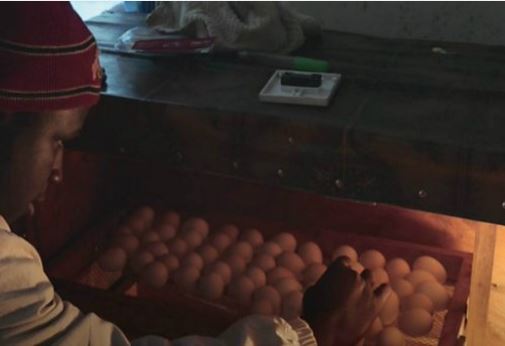
Author: BBC Media Action blogger Elizabeth Mbwana, January 20 2016 - Listening to radio programme Nyakati Zinabadilika (Times are Changing) inspired three young unemployed men to approach the district veterinary officer, helping them to start a chicken farm in Tanzania.
A tiny chick cocked his head, flapped its fluffy wings and looked up at me from its box. It was time for feeding.
I’m visiting a chicken farm to meet Ramadhan Boli and his two friends. Until recently, the three young men were unemployed and passed their time sitting idly in the streets hanging out with friends. Ramadhan, known to his friends as Rama, told me, "I wanted to do better in life, but didn’t know where to start."
One evening, Rama was at home with his family listening to Nyakati Zinabadilika (Times are Changing), a programme produced by local radio station Ulanga FM. The show helps listeners become more resilient to changing weather patterns by exploring "climate-smart" farming and livestock practices - like drought-resistant crops, honey production and terracing. This particular episode focused on keeping chickens as an alternative source of income.
Rama had listened to a number of Nyakati Zinabadilika programmes in the past but this one inspired him because the person featured had managed to make money without investing too much to begin with. He also heard the district veterinary officer, Juma Kapilima, answering listeners’ questions about keeping chickens and thought it didn’t seem too difficult, maybe even he could start a business too!
The next day, Rama spoke to his friends about the programme and they went to visit Juma Kapilima, who answered questions about where they could buy chickens, how to take care of eggs, vaccinate and feed chickens. Juma also gave the boys a brochure on how to identify chicken diseases. Within a few days the three boys had found someone who was willing to invest in their business idea and they purchased 14 chickens and built a chicken coop in Naloukou village, near to Mahenge.
Rama explains how Juma, who he calls “the farm doctor”, comes to visit their chicken farm regularly and arranged for the district to grant them a small egg incubator in recognition of their hard work. Rama said, “Though we’re now selling some eggs, we’re focusing on rearing more chickens. We have huge ambitions and want to start selling chickens when we reach 1,000 - and hope to sell them in [the capital] Dar Es Salaam.”
Radio not only helped ‘hatch’ an idea in Rama’s head – but also helped connect him with the people who could help his business grow. I’m certain his story will inspire many more to follow in his footsteps.
Click here to access this BBC Media Action blog and related links on their work in radio.
Image credit: BBC Media Action
Contact:
BBC Media Action
BBC Media Centre, MC3A, 201 Wood Lane
London
W12 7TQ
United Kingdom (UK)
Phone: 44 (0) 20 8008 0001
Fax: 44 (0) 20 8008 5970
- Log in to post comments