










































Rapid Access Expansion 2015 Programme
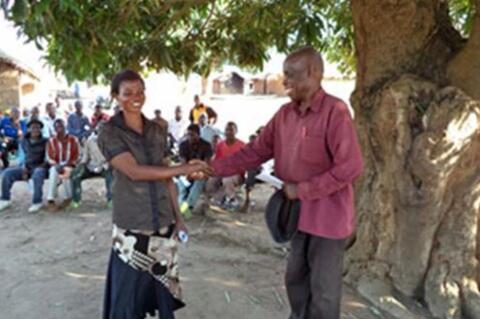
Launched in April 2012, the World Health Organization (WHO)'s 5-year Rapid Access Expansion 2015 (RAcE 2015) programme is working to strengthen integrated community case management (iCCM) of malaria, pneumonia, and diarrhoea, as well as to increase coverage of diagnostic, treatment, and referral services for these major causes of childhood mortality, thereby accelerating progress toward the health-related Millennium Development Goals (MDGs). With funding from the Government of Canada, WHO has awarded grants of up to US$ 2 million annually to institutions and organisations (as of March 2014, the call for proposals has closed), focusing on working with community volunteers living in remote villages and training them to identify and treat the 3 diseases named above. The project is taking place in Malawi, Mozambique, Democratic Republic of Congo (DRC), Niger, and Nigeria - countries with many remote villages located far from the closest health station.
The core strategy shaping this project is the use of interpersonal, face-to-face communication to build capacity and equip community volunteers to recognise, diagnose, and treat diseases that can kill children. Specifically, community volunteers are being trained to recognise the symptoms of malaria in children under the age of 5 years, diagnose them with a rapid test, and treat affected children with an artemisinin-based combination therapy (an antimalarial treatment). The volunteers are also being trained to treat diarrhoea with oral rehydration salts plus zinc, as well as how to recognise pneumonia and treat it with the antibiotic amoxicillin. The programme provides all the tests, medication, and storage equipment needed.
The first step of the programme was to sensitise the communities on the new set-up by teaming up with churches, schools, and community groups, which RAcE 2015 organisers hoped would lead to word-of-mouth awareness. Following their training, the volunteers will be expected to set up practice in their homes and also reach out actively to villagers and to communities living in nearby forests. District nurses will supervise community health workers and back up their efforts, for example, by handling referrals. Other district health personnel, including the Head of District Health Management Team, are involved.
This project also has an advocacy component, in that a key objective is to stimulate policy review and regulatory update on disease case management to include the community level. To that end, in September 2013, the WHO Global Malaria Programme and the WHO Regional Office for Africa held a joint planning meeting on malaria, reviewing progress on all key areas of work, including the implementation of the RAcE 2015 project. WHO's national and international professional officers working on RAcE gave presentations on progress and challenges in the 5 countries where the programme is being rolled out. Lessons learned will be reviewed at annual WHO regional meetings to share experiences and identify best practices for the scale-up of iCCM programmes in malaria-endemic countries. The project will also serve as a foundation for a policy review on case management in the 5 countries and the updating of WHO's policy guidance on iCCM.
Malaria, Children, Health
The RAcE 2015 project is being implemented in approximately 1,000 villages in all beneficiary countries, covering areas with a total population of about 1 million in each country, including at least 150,000 children under 5. According to WHO, in the course of the project, a total of 7,500 community health workers will be supported and trained, and approximately 1.2 million children will be covered annually. "The project is expected to save between 4,200 and 6,200 lives per year of project implementation at full scale."
WHO and the Government of Canada. The project is being implemented through non-governmental organisations (NGOs) (sub-grantees), with Ministries of Health in a leadership position in each country.
RaCE page on the WHO website, "Putting Malaria Treatment in the Hands of Communities" on the WHO website, and Overview of the Rapid Access Expansion (RAcE) 2015 project [PDF] - all accessed on January 6 2014 and March 26 2014.
- Log in to post comments