










































Realising Rights, Protecting Forests: An Alternative Vision for Reducing Deforestation

From the Accra Caucus on Forests and Climate Change, a network of southern and northern non-governmental organisations (NGOs) representing civil society and Indigenous peoples’ organisations from 38 countries, this document highlights problems linked to the implementation of "Reducing Emissions from Deforestation and Forest Degradation" (REDD) and suggests ways in which policies to reduce deforestation can actually work on the ground. "Through case studies from selected countries the report highlights three critical components: full and effective participation (Indonesia, Ecuador, Democratic Republic of Congo [DRC]); secured and equitable land rights (Brazil, Cameroon, Papua New Guinea) and community-based forest management (Tanzania, Nepal). This report is intended primarily for opinion-formers and decisionmakers with a role in making and influencing national policy and legislation on REDD."
As reported here, REDD was "welcomed into the United Nations Framework Convention on Climate Change (UNFCCC), on the basis of the double urgency to halt deforestation and address climate change." The case studies address "concerns that REDD may allow polluters in the North to continue ‘business as usual’ while removing land and resource rights from forest-dependent peoples in the global South. Furthermore, depending on the definition of ‘forest’ adopted, REDD may perversely favour logging activities and tree plantations over the protection and restoration of natural forests." The case studies gathered in this report are intended to show what the elements of a rights-based approach to reducing deforestation would be.
Analysis of the case studies shows that the full and effective participation of forest communities is a key condition for tackling the economic forces and institutional biases which lead to deforestation. "In order for full and effective participation to take place, there must be effective and functioning platforms which enable indigenous peoples, civil society and, specifically, local forest-dependent communities to bring their concerns to the attention of decision-makers at a national level. A proper consultation process will improve policy outcomes and enhance trust between governments and other stakeholders. Conversely, rushed processes and the use of arbitrary deadlines, will fail to address the concerns and rights of indigenous peoples and local forest dwellers, lead to ineffective policies, and breed conflict....Civil society organisations have a key role to play in ensuring that those directly affected by policy proposals can be involved in the decision making process. The case studies of DRC and Ecuador demonstrate that even well-intentioned government-led processes or constitutional frameworks may not achieve a high enough level of consultation and participation to ensure that proposals and plans are rooted in the local context. Respecting the principle of free, prior and informed consent involves ensuring that rights-holders have the information they need about what REDD is and how it will affect them. "
The case studies also focus on the need for formalised forest ownership among forest-dependent communities and Indigenous peoples with ensured land rights and effective community forest management systems. As stated in the document, common ingredients for the prevention of de-forestation that are necessary in all cases are: “a rights-based approach with full participation of forest-dependent communities, security of land tenure, and the community management of forests." The conclusion states that instead of a focus on carbon and finance, an international agreement on forest protection "...should concentrate on addressing the drivers of deforestation, confronting the forces that seek to destroy forests, and empowering the communities who are best placed to protect, maintain and enhance them."
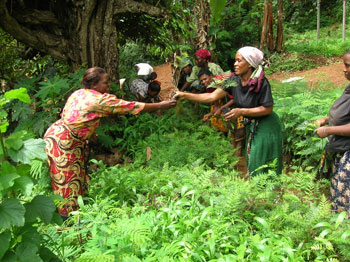
CARE Climate Change Information Centre website, October 27 2010. Image: CARE Climate Change Information Centre website
- Log in to post comments