










































Sachay Sawal: Connecting Citizens and Political Candidates in Pakistan 2013 General Elections
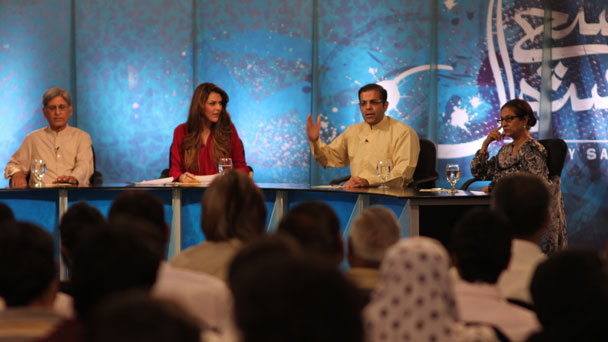
BBC Media Action's Sachay Sawal (True Questions) was a series of four electoral debates broadcast in Pakistan during the May 2013 general elections. "The debates were designed to create an opportunity for ordinary Pakistanis to question political candidates on key issues of concern. BBC Media Action research reflects the appetite of Pakistanis for the programme, and its particular appeal to groups that are typically marginalised from the political process - women and youth." This document describes research done in June 2013 which surveyed 4,095 people across all provinces. "The survey was nationally representative of Pakistan’s population aged 15+ and measured media consumption habits in the country as well as the reach and audience response to Sachay Sawal. In addition, studio audience feedback was collected through questionnaires completed at the end of each programme."
The television and radio debates, filmed on location in different places across the country with live audiences, hosting candidates from all major political parties, specifically focused on engaging younger voters (24% of Pakistanis are 15-24 years old) in the electoral process. "By inviting mainly young audience members to participate in the debates, and focusing on a new generation of political candidates as panellists, the programme aimed at mainstreaming the views of young people and empowering them to participate in the political process."
Key findings include the following:
- "8.8 million people in Pakistan watched or listened to at least one episode of Sachay Sawal, equivalent to 7.5% of the adult population. More than half of the audience, constituting 3.8% of the adult population of Pakistan (4.5 million people) watched or listened to more than one debate. In the context of a short-running series and a competitive and saturated pre-elections media environment, this level of exposure is a positive indication for the interest Pakistanis had in these debates.
- The audience profile reflects that women, youth, urban and more educated people were particularly likely to watch the debates, indicating that the debate format was particularly appealing for groups typically marginalised from the political process. Specifically, 54% of the national audience of Sachay Sawal were women, and 61% were youth (36% aged 15-24 years, and 25% aged 25-34 years old).
- The majority of the audience at home (73%) felt that the programme provided an opportunity for ordinary people to interact directly with politicians and question them about issues important to them. The audience both at home (72%) and in the studio (74%) agreed that the programme is likely to make Pakistani leaders more accountable and to contribute to holding the government responsible for its actions.
- The audiences were pleased with the topics chosen for the four debates. 82% of the respondents who had watched the debates on TV or the web, or listened to them on the radio, and 79% of the live studio audience members, said the information they received from Sachay Sawal was relevant to their lives.
- However, audiences were less pleased with the quality of the answers offered by some panel members, which were described as "the usual politician speak" (Woman, 20–30 years old, Karachi)."
Implications and impacts include: "It is clear from the research that there was an appetite for the Sachay Sawal debates, and it resonated with audiences in a highly saturated media market during the election period. Feedback has stressed the importance of the opportunity that the debates provided for Pakistanis to interact directly with their political candidates during the election period. Furthermore, the research showed that the majority of Sachay Sawal’s home audience members were youth and women, reflecting the programme’s success in engaging groups that are typically marginalised in political discourse."
Click here to read the full text of this document online on the BBC Media Action website.
BBC Media Action website, January 31 2014.
- Log in to post comments