










































School Parliament Program Angola
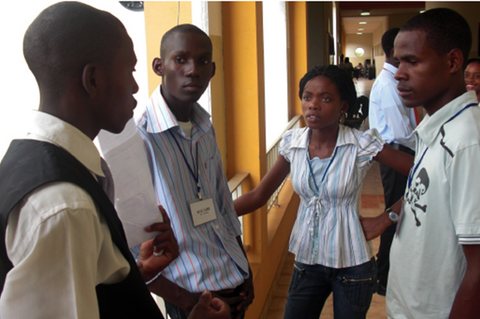
Search for Common Ground (SFCG) launched this project in 2009 in an effort to foster a culture of democracy and civic engagement in Angola by involving youth in a School Parliament Program. The civic education programme includes face-to-face activities, dialogues, and debates among students and with government leaders, as well as community radio and television broadcasts.
SFCG is working with 50 secondary school students drawn from the 10 municipalities that make up Luanda province. Student Deputies meet monthly to debate current issues and make policy decisions. Since the project started, SFCG has organised school parliament preparatory meetings for students, convened a school parliament forum, and held parliamentary commission sessions.
The School Parliament Program includes the following activities:
- Seminars: Students participate in seminars on constitutional rights, government institutions, and conflict resolution. They also put what they have learned into practice by going through the election process to choose school parliamentary leadership according to the guidelines of the National Electoral Commission.
- Media: SFCG is using its weekly radio programme Baza Madie to provide information on democracy, governance, and participation to a broader youth audience beyond the student participants in Luanda. The programme spotlights different emerging themes in the projects, sharing them with young people of diverse backgrounds across Luanda. In addition, School Parliament students were featured during a live broadcast on TV Zimbo, the second biggest Angolan TV channel, viewed by millions of people.
- Cooperation with local and national government authorities: The project also involves local and national government authorities, and students have opportunities to learn from their experiences. This strategy is intended to show that when people with different perspectives work together, good governance is not only promoted, but enhanced.
- Exchanges: SFCG is looking to expand the programme through youth exchanges with more established programmes. The National Infantile Parliament from Guinea-Bissau took part in an exchange with Angola so that Youth Parliamentarians from both countries had an opportunity to share best practices and approaches.
Political Empowerment, Youth
The School Parliament project is based on a model that SFCG introduced in Burundi in 2005. The organisation adapted the project to fit the Angolan context in 2009, stressing the importance of participation so that the participants needs and voices are represented in government. After Angol's elections in 2008, which resulted in victory for the ruling People's Movement for the Liberation of Angola Labour Party (MPLA), the door was opened for new policies and reforms as well as increased dialogue between the government, civil society, and civilian representation. However, according to SFCG, many young people see elections as a quick road to change without taking in the political and structural realities on the ground. SFCG believes that the way to enhance youth participation is through this delicate balance is through civic education.
SFCG is planning to expand the project to include "conflict resolution centres" in schools and mobilising the school parliamentarians to also serve as mediators amongst their peers. SFCG also hopes to institutionalise the Student Parliament in Angolan curricula and to expand similar programmes regionally, specifically in Portuguese-speaking African countries.
TheCommonGroundBlog and SFCG website on December 6 2011.
- Log in to post comments