










































Sesame Workshop's Research Model: Inform, Improve, Measure...Repeat
This video describes the strategic approach of Sesame Workshop, a nonprofit educational organisation based in the United States (US) and working in 150 countries around the world to entertain while educating preschool children in the areas of literacy and numeracy, emotional wellbeing, health and wellness, and mutual respect and understanding. The video features various Sesame personnel describing the research-driven approach they have pursued since the first episode of Sesame Street aired in the US in 1969.
The underlying message that emerges from the video is that cracking the code of learning is a continuous process as well as a collaborative one. First, Sesame brings experts around the table to find out how best to address the needs of children in that particular area of focus. Educators, producers, and researchers all work together to explore, test, and refine content before Sesame projects hit the airwaves. Research is woven into the total fabric of every show - each episode is tested and evaluated by children themselves. Hoping to help children reach their highest potential through content that is relevant to their lives, Sesame realises that the needs of children are constantly changing; thus, Sesame must continuously evolve.
So, they ask questions like: What are the critical educational needs of children? For example, when US President Barack Obama spoke out, as many others had, about the need for US children to catch up in the areas of math and science - they fall behind in these areas as compared to children in many other countries - Sesame strengthened its focus on these areas in its programming. Featured in the video are images from a STEM (science, tech, engineering, math) writers' meeting, which involves problem solving: how to communicate engineering concepts to a 3-year-old? What has emerged is a concept called "Super Grover 2.0", which models the process of STEM but gives children a language for these concepts. Sesame works with children to understand what they know (what's a lever? what's a pulley? what's a hypothesis?) before developing content, then show them the created content - the educational messages are embedded in funny scenarios. Next, Sesame finds out what they have learned.
When entering another country, Sesame works with local partners to find out what types of priorities are most important (e.g., girls' education, intercultural understanding, or specific health initiatives such as HIV) and develops and revises curriculum, then creates, revises, and evaluates content.
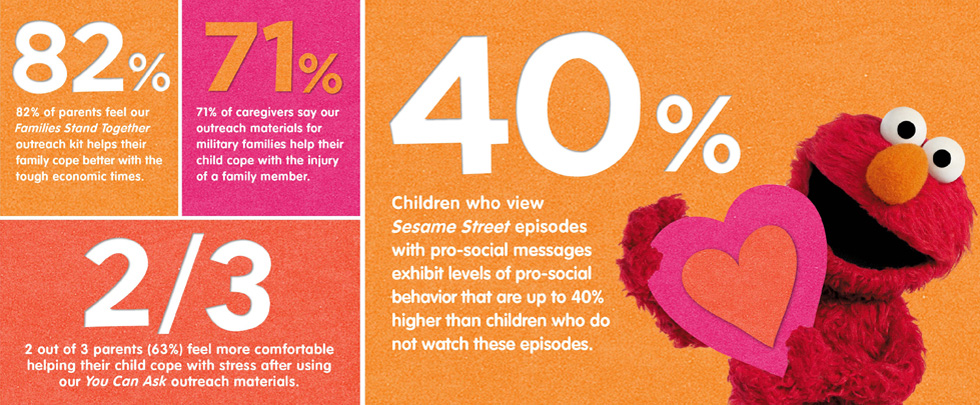
Also, academic researchers have focused on gathering and communicating evidence to show impact on learning from Sesame programming in the US and around the world.
Email from Charlotte Cole to The Communication Initiative on February 15 2013. Image © 2013 Sesame Workshop. "Sesame Street" ® and associated characters, trademarks, and design elements are owned and licensed by Sesame Workshop. All Rights Reserved.
- Log in to post comments