










































Sitting on the fence: Is the new Government pro or anti poor?
Author: Priya Anand, January 20 2015 - With an overwhelming victory for the Bhartiya Janata Party (BJP) and its allies in 2014, the then newly elected Prime Minister Narendra Modi promised to focus on people-centered policies and effective governance. Has the Government considered the needs of disadvantaged minorities and lived up to its pre-election inclusive manifesto or will its promises fall short and disappoint the millions who placed their trust and hope on the new Government?
In May 2014, the newly elected Government, consisting of the BJP Government and its allies, promised that it would be ‘a government of the poor, marginalized and left behind’ and will directly reach out to the people, especially the weak and marginalized and the girl child, and ensure a basic level of Infrastructure, i.e., home, electricity, water, toilets, etc., and access to all.
Communicating policy changes
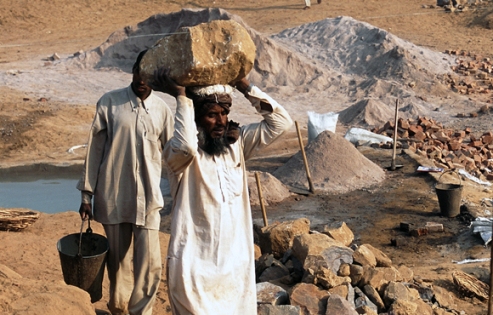
As soon as the Government assumed power, it announced that it would restructure the previous Government’s flagship programme MNREGA (Mahatma Gandhi National Rural Employment Guarantee Act) by linking employment with development in rural areas.[1] Under this programme, unemployed people are offered a pre-fixed wage to work on government projects for asset creation. The scheme will now be available only in undeveloped areas of the country. as construction is leading to a shortage of unskilled labour.[2] The Government said it plans to link MGNREGA expenditure to asset creation to improve outcomes, cut wasteful expenditure and free up fiscal resources for capital allocations.
Electronic banking for the underserved
Under the Jan Dhan Yojana programme, the government seeks to provide banking services to all un-banked individuals in India. This entails providing a bank account with an overdraft facility of INR[Indian rupees]5,000, a debit card, and INR100,000 accident insurance coverage. The target for the first phase, ending 26 January 2015, is 75 million bank accounts. The latest report states that many as 115 million bank accounts have been opened under the Pradhan Mantri Jan Dhan Yojana, exceeding the enhanced target of 100 million and covering 99.74 per cent of households targeted.[3] The government has proposed a pension scheme for identified individuals in the informal sector and the offer of micro-finance products through government-owned insurance companies.
Media on budget shortfalls
However, all is not well, and the much touted budget in late 2014 reveals that social services spending in the Central Plan, which includes education, medicine, family welfare, sanitation, housing, minority and marginalized groups welfare, social security, etc., fell from Rs.27 billion to Rs.13 billion, a fall of ten percentage points from 27% in 2013-2014 to 16% in in 2014-2015.[4]
If media reports are to be believed, health sector plan expenditure is to be cut by much as Rs.70,000 million. The hugely important spending of departments such as Rural Development, Panchayati Raj and Drinking Water and Sanitation is to face cuts of around 25 per cent. This is particularly ironic given the publicity surrounding the Prime Minister’s much publicised the Swachh Bharat campaign.[5]
MGNREGA, National AIDS Control, Security for Women, Environment - programmes threatened
The MNGREGA flagship programme was passed in Parliament with the consent of all MPs, including those of the Bharatiya Janata Party (BJP) and other National Democratic Alliance constituents based on the assumption that the MGNREGA is providing demand-driven employment. A cut in budget would hurt the deepest and affect the poverty stricken and marginalized. Budgetary allocation caps and the resulting delayed payment to the States leave the programme unable to pay wages to those who have obtained work under the scheme. This, in turn, will result in the failure of the scheme and in workers migrating to urban areas in search of jobs. A cut in the National AIDS Control Programme may result in a decline of nearly a quarter of its budget in nominal terms. Similarly, the project to create "one-stop crisis centres" for women, which was one of the official responses in the wake of the public outcry over the "Nirbhaya case" of gang rape and murder of a young woman in Delhi is apparently now to be abandoned. There have been no major developments in the environmental sector; rather, a possible weakening of protections of the existing environment and land acquisition laws of India in order to promote industrialization and ensure high economic growth. Environmental experts allege that the Indian Government is all set to enact changes to weaken the existing environment and land acquisition laws of India, in order to promote industrialization and ensure high economic growth, [6]
To conclude, the policies of new regime have been a mixed bag. The Government appears serious about ensuring good governance and comes with the reputation of having ministers at the top who are free from the taint of corruption. It has tried to maintain continuity with the previous Government in terms of policies and programs. However, the subtle and not so subtle signals especially in pruning MNREGA, and Healthcare spending are worrisome. Another worrisome feature is loosening of environmental controls; the Government needs to understand that the poor are the first to pay a price when it comes to environmental disasters.
Image credit: MNGREGA website
- Log in to post comments