










































Thank You Mandela
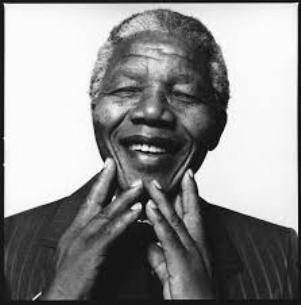
Author Handel N. Mlilo, originally posted December 6 2013, cross-posted January 30 2014: I feel empty today with Nelson Mandela gone from us. All of us as human beings experience a time or actually several times when we know that a relative or friend is about to leave us but that when it actually happens, the pain is hard. I never knew Mandela personally but when this news came, it hit me hard. As a result of his death, I and many others have lost a political leader who will give us the personal comfort and pleasure of telling the world the hard truth about any of the issues facing the world, from health and social problems to politics. It was such a pleasure for me to watch Mandela look anybody in the eye (through the media of course) and tell it like it is. For more than 3 decades of his public life you could count on him being forthright even when it was painful for you to hear. You could also be comforted by the fact that what came from his mouth carried a universal moral force and truth, even if you were on the receiving end of his utterances.
As an African, two such examples come to mind. After being sworn in as President of South Africa he gave a speech (in Cairo, I think) in which he said we all need to face up to the fact that many parts of Africa have been misgoverned for years. Sitting in that audience were many of those African leaders who had misgoverned their own countries or inherited countries in political and economic shambles as a result of bad governance. He was bluntly telling them that he had learned from their mistakes and would by implication steer South Africa in a different direction. And while he tried to do so during his stewardship of South Africa’s affairs for five years, many of those attending that Cairo speech or hearing about it through the media seem to have missed the message. I can recount here several examples of such countries and you readers can too. From economic mismanagement, corruption, rigged elections and renegade judiciaries, the continent of Africa crawls in hunger, disease, lack of opportunity and political slavery, as a result. Civil war and conflict are taking its toll on ordinary people yearning to live freely and peacefully. Yet Mandela’s South Africa is such a contrast to all of this misery. Sure, South Africa’s economic and social problems are legion but through Mandela’s leadership and example that country is an island of political stability on that continent. They will find it easier to solve their problems under a free and democratic dispensation. For a country that lived under 300 years of raw racism and racial oppression, South Africans are a shining example of what human beings are capable of building from the ashes of their own past. Can other African countries learn this simple lesson?
To me, Mandela’s lasting legacy is his determined refusal to let anger and bitterness become the guiding principle on how a new South Africa would be established. There is no doubt that deep inside him was an angry and bitter man for what the apartheid regime had done. Who wouldn’t? But he was determined not to let his former tormentors say “we told you so” in order to excuse their evil deeds. Again what a contrast with some current African leaders. After 30, 40 or 50 years, you still hear some of these African leaders blaming the colonial powers for everything. You have heard such ridiculous statements as lack of efficient agriculture, industry or access to health being the fault of colonial legacies, even after at least a quarter century of so called independence. And you still hear justification of lack of democracy and political freedom on ‘foreign’ influences intent on ‘destabilizing’ society. Mandela took responsibility for molding a new nation and he said he would do it the right way, including abandoning political power after one term in office because, as he implied, there were more important things about political stability for a society than one person staying in office despite his or her popularity. You can count on your first two fingers (Nyerere of Tanzania and Chissano of Mozambique) where an African leader has done this.
Since Mandela’s death was announced I have watched television commentaries from around the world, all of them telling the story of a great, good and modest man who was revered all over the world. One commentator said that he may be a son of Africa but he belongs to the whole world because of who he was and the public and private examples he set in his life. Yes, he belongs to the world and “for the ages” as President Obama said, but for Africans he is one of us. One of us was capable of being a good leader, plain and simple. To you the other African leaders what is your excuse for not following in his footsteps?
- Log in to post comments