

























Development action with informed and engaged societies

After nearly 28 years, The Communication Initiative (The CI) Global is entering a new chapter. 

Following a period of transition, the global website has been transferred to the University of the Witwatersrand (Wits) in South Africa, where it will be administered by the Social and Behaviour Change Communication Division. Wits' commitment to social change and justice makes it a trusted steward for The CI's legacy and future. 

On the transfer, co-founder Victoria Martin expressed her pleasure to see this work continue under Wits' leadership, knowing that co-founder Warren Feek (1953–2024) would have felt deep pride in The CI Global's Africa-led direction. 

As Wits, we honour the team and partners who sustained The CI for decades and look forward building from that strong base. This includes co-founders Warren Feek (1953-2024) and Victoria Martin as well as La Iniciativa de Comunicación (CILA), which continues independently at lainiciativadecomunicacion.com with links to The CI Global site. We are also eager to forge new partnerships and entertain new ideas as we consider how best to contribute to social and behaviour change in our rapidly evolving environment.

If you are joining the International Social and Behaviour Change Communication (SBCC) Summit in Panama, please join Wits and CILA on Monday, 22 June, to share your thoughts and suggestion for the relaunch of the Communication Initiative. We will be in Pacifica 5 from 12-1:25 for the Refuel, Reflect, and Renew Lunch Series: The Communication Initiative: celebrating a driving force for Communication for Social Change and the way forward. We will reflect on the legacy of Warren Feek and family in creating the Communication Initiative, consider the contributions of CI over the years and then turn our attention towards the future in this dynamic session. 

If you are unable to join us in Panama, we still want to hear from you. Please contribute your thoughts by following this link: https://redcap.link/CommunicationInitiative2026 or reaching out to ci_surveys@commint.com

You can also follow the QR Code:

 https://redcap.link/CommunicationInitiative2026

Time to read
1 minute
Read so far

Tools for Designing and Conducting Social and Behavior Change Evaluations
0 comments
Image
SummaryText

"Social and behavior change (SBC) is a key component of effective multi-sectoral nutrition activities. High-quality evaluations of SBC components are essential to identifying what went well, what could have been done differently, and how to improve future program design."

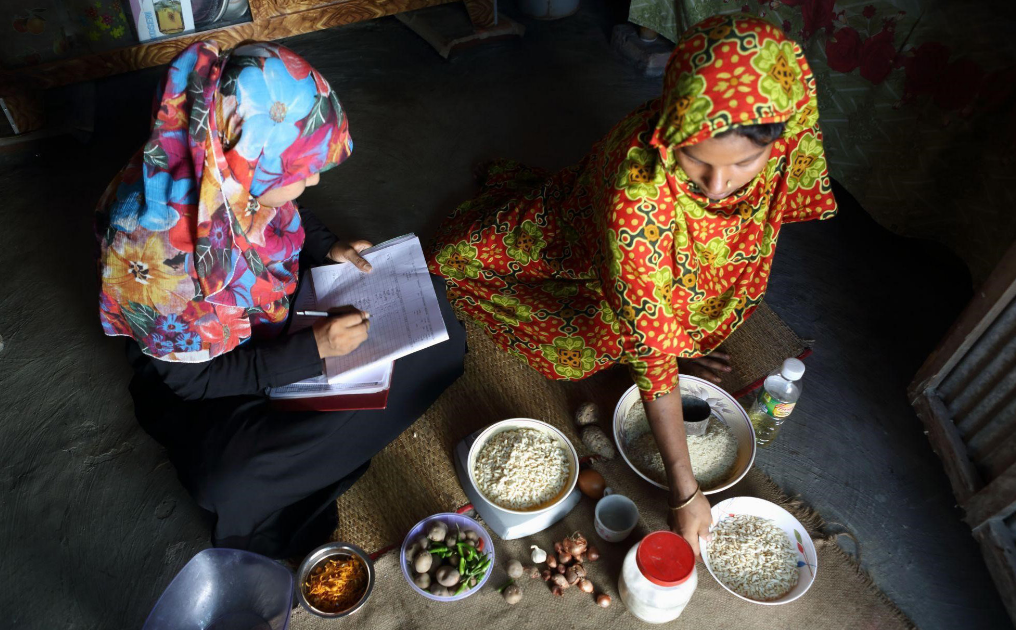
From the United States Agency for International Development (USAID)'s flagship multi-sectoral nutrition project, USAID Advancing Nutrition, this guide provides practical tools for improving nutrition social and behaviour change (SBC) evaluations.

The first two tools show how to develop an evaluation statement of work (SOW) and evaluation questions to guide evaluation design. Tool 1 provides a framework for drafting an SOW. Each section of the framework outlines considerations to support SBC adaptations and includes sample language that can be adapted to reflect the specifics of the evaluation being proposed. Tool 2 consists of three illustrative nutrition SBC activity examples and related evaluation questions. These tools accompany the guide Evaluating Social and Behavior Change Components of Nutrition Activities: A Design Guide for USAID Staff [April 2022], which covers planning an evaluation, identifying evaluation objectives, and building a SOW.

Tool 3: How to Choose Respondents and Other Sources of Data accompanies the guide Measuring Social and Behavior Change in Nutrition Programs: A Guide for Evaluators [April 2022]. Tool 3 helps evaluation teams determine the most appropriate respondent(s) for a given activity, taking into consideration the evaluation questions, common evaluation constraints, and behaviours being promoted. Although caregivers and pregnant and lactating women are often the focus of SBC activities, they are not the only option when determining respondents due to the influence that other people and systems have on their behaviour.

Publication Date
Number of Pages

21

Source

USAID Advancing Nutrition website, January 4 2023. Image credit: Karen Kasmauski/MCSP