










































Understanding the Information and Communication Needs among IDPs in Northern Iraq
Internews (Quintanilla, Ahrens); UNOCHA (Sicotte-Levesque); World Vision International (Hettiarachchi); UNHCR Iraq (Nuri); NRC Iraq (Dbouk); IOM Iraq (Megy)
"The key finding of the assessment is that displaced people in northern Iraq live in an information vacuum which is hindering their ability to cope with the catastrophe in which they find themselves."
To understand the communication needs of Iraqis and Syrians who have been displaced by the violent advances of the so-called Islamic State in Iraq and Syria (ISIS), an inter-agency team comprised of United Nations (UN) agencies, World Vision International, Internews, International Organization for Migration (IOM), and the Norwegian Refugee Council carried out a rapid assessment from August 17-22 2014 with displaced populations and host communities.
This inter-agency mission was undertaken following a request by humanitarian partners operating in Iraq to the Field Coordination Community of Practice of the Communicating with Disaster Affected Communities (CDAC) Network, which is a cross-sector initiative between aid agencies, UN organisations, the Red Cross Movement, media development organisations, and technology providers. The team held focus group discussions with women and men among displaced communities in Erbil, Dahuk, and Suleymaniyah Governorates in the Kurdistan Region, while also meeting with aid agencies, local government authorities, and representatives from local media and telecommunication companies. The inter-agency mission also mapped current activities on Communication with Communities (CwC) in Iraq and has formed the basis for proposed next steps, including how CwC can support the humanitarian system in Iraq.
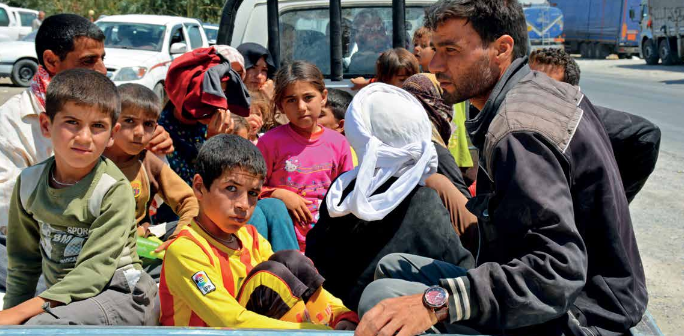
The assessment found that the priority communication needs among internally displaced people (IDPs) are information about home and family members, how to access aid and future plans such as emigration and resettlement. Yet there is lack of access to reliable news and information from the local media, particularly satellite TV and radio, and lack of access to information about existing and planned aid services. Many of the people consulted in camps stated that when they do approach the camp administration to seek information they receive little information; very few reported having experienced action or feedback following their requests. This is creating confusion and mistrust and is increasing their feeling of isolation. The situation for displaced communities staying in unfinished buildings, schools, mosques, churches, and public spaces is substantially worse. Women have far less access to information than men and, in some locations, they report a general state of anxiety and helplessness, as they had no access to some services, limited access to others, and overall no information about assistance, including schooling for their children.
Access to communication channels is clearly regarded as a key priority by those affected. For example, at the height of the crisis in early August, displaced people reportedly stranded on Sinjar Mountain called the Office for the Coordination of Humanitarian Affairs (OCHA) Operations Centre hotline requesting that mobile phone chargers be included as part of air drops delivering humanitarian aid. Phones are used for conventional call services and SMS (text messaging) and also sometimes to listen to the radio and to access the internet. Access to satellite TV, radio, or print media are still very limited among displaced communities. While the capacity of local media to report on the humanitarian crisis is limited by events on the ground, particularly in ISIS-controlled areas, and their own ability to report on complex humanitarian issues, local media and the main Iraqi and regional channels can be accessed in areas hosting displaced populations. People staying in camps also suggested installing information boards and complaints boxes (literacy rate is generally high) to facilitate communication between them and the humanitarian community as well as using loudspeakers for announcements. Women recommended tent-to-tent communication as a way to ensure that vital information reaches the intended audience, including elderly and people living with disabilities.
The report recommends two main areas of work: increasing information flow and dialogue with displaced communities; and supporting existing communications channels, including local media, and establishing new channels if necessary. "At the cornerstone of the humanitarian assistance must be a coordinated, multi-platform, multi-channel suite of CwC services which will both help affected communities communicate with aid agencies and each other, and improve the capacity of responders to listen to and connect with those affected This will require aid agencies to improve their own work in information sharing and listening to those affected. It will also require standalone investment in CwC initiatives that will serve as common service vehicles for sharing information and collecting feedback, such as newsletters, radio shows, and hotlines, which supported by an online platform, community feedback can be channelled, analysed and, where necessary, responded to. Properly managed, such platforms can also act as secure complaint referral mechanisms. In designing these vehicles, the needs and languages of both those in camps and in host communities must be considered....Humanitarian partners need to engage local capacity and understand the local information ecosystem while ensuring that affected communities are active participants in decision-making affecting their daily lives and their future. Overall, any specify CwC work in Iraq, and globally, need to aim at fulfilling the right that people have to know, ask questions and participate in their own relief and recovery."
The report includes a number of annexes, such as a proposed CwC structure for North Iraq and CDAC Network common needs assessment tools.
Internews Website, June 24 2016. Image credit: (UNHCR/N. Colt)
- Log in to post comments