










































Vaccine Decision-Making Begins in Pregnancy: Correlation between Vaccine Concerns, Intentions and Maternal Vaccination with Subsequent Childhood Vaccine Uptake
Murdoch Childrens Research Institute (Danchin, Hoq, Perrett, O'Keefe); The Royal Children's Hospital (Danchin, Costa-Pinto, Perrett); The University of Melbourne (Danchin, Perrett); Telethon Kids Institute (Attwell); Murdoch University (Attwell); University of Sydney (Willaby, Leask); National Centre for Immunisation Research and Surveillance (Wiley, Leask); Royal Women's Hospital and Monash Health and Monash University (Giles); The University of Adelaide (Marshall)
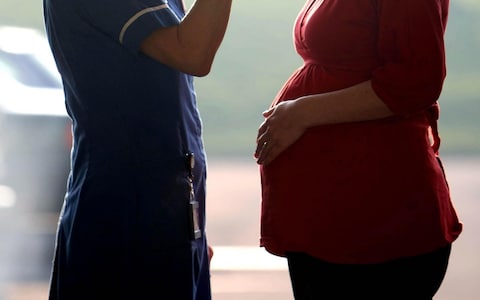
"New interventions to improve both education and communication on childhood and maternal vaccines, delivered predominantly by midwives in the Australian public hospital system, may reduce vaccine hesitancy for mothers in pregnancy and post delivery."
Childhood vaccine decision-making begins prenatally. Evidence suggests that information alone is not enough and that provision of vaccine information using effective communication skills as part of the healthcare encounter during pregnancy is what is needed to address vaccine concerns. This Australian study sought to ascertain whether and how vaccine information is received in pregnancy and post-delivery, mothers' attitudes and concerns regarding childhood vaccination, and maternal immunisation uptake. The researchers also aimed to determine correlations such as that between intentions and concerns regarding childhood vaccination.
Between October 2015 and March 2016, 464 parents in Victoria (Vic), 231 parents in South Australia (SA), and 280 in Western Australia (WA) attending public antenatal clinics completed surveys on iPads. The PINA-A (Parental Immunisation Needs and Attitudes - Antenatal) survey items were developed by the study team, comprised of social scientists, vaccine experts, and general paediatricians, and based on the Health Belief Model (HBM). Follow-up phone surveys were done 3-6 months post delivery, and infant vaccination status obtained via the Australian Childhood Immunisation Register (ACIR). The researchers used the Vaccine Communication Framework (VCF) to group parents into 5 categories based on their level of vaccine hesitancy and intention to vaccinate: the 'unquestioning acceptor'; the 'cautious acceptor'; the 'hesitant'; the 'late or selective vaccinator'; and the 'refuser'.
The survey found that there was strong overall support for vaccination, with 72% and 24% of respondents strongly and generally supportive respectively, with little variation between the states. However, 73% of mothers pregnant with their first child had made a decision regarding vaccination of their unborn child, compared to 89% of mothers with children (difference in proportion 15%; 95% confidence interval (CI) 10-21%; p-value < 0.001), and 6% of first-time mothers reported having not heard of vaccinations, compared to 1% of mothers with children. Mothers pregnant with their first child were more likely to classify themselves as hesitant on the VCF continuum (5.2 vs 1.7%), with a a total of 8.6% first-time mothers classified as either hesitant, delayed, or selective or refusing compared with 4.9% of mothers with children. Only 50% of mothers 'strongly agreed' and 32% 'moderately agreed' that they had enough knowledge to make a decision about vaccinating their child, with no significant difference between first-time and current mothers.
Just over half of parents (56%) had discussed or accessed information about childhood vaccination during pregnancy, with higher information-seeking amongst WA mothers (74%) compared to SA (54%) and Victoria (46%). Overall, midwives (66%), particularly in WA (80%), and general practitioners (GPs) (58%) were the most highly accessed resource in pregnancy, with only 38% of respondents discussing vaccines with their obstetrician. Family and friends (34%), the internet (26%), and Department of Health websites (20%) were also commonly accessed. Mothers' satisfaction and trust was highest in healthcare providers (HCPs) (93-95%), especially midwives (96%), compared to family and friends (90%), the Department of Health websites (88%), and the internet (82%). Parents also perceived their HCPs as highly supportive of vaccination: midwives (94%), GPs (94%), and obstetricians (96%). Two-thirds of mothers wanted more information on vaccine safety (65%), particularly on how vaccines are tested (66%), possible risks (64%) and side effects of vaccines (64%). Fewer mothers wanted information on vaccine-preventable diseases (VPDs) (58%) and risks of not having vaccines (50%).
In the follow up-survey, only 190 (66%; 95% CI 60-72) of 290 mothers felt they had received enough information regarding childhood vaccination during pregnancy, with Vic mothers (50%) reporting receiving less information compared to SA (92%) and WA (78%). Apart from birth dose Hepatitis B vaccine, many mothers stated that there was little or no discussion about childhood vaccines in pregnancy. Post delivery, only 152 (52%) of 289 mothers reported discussing childhood vaccination with their main HCP, whilst pregnant and 122 (80%) reported that their HCP made a recommendation to follow the NIP schedule and vaccinate their baby. In response to open-ended questions, many mothers felt they had to initiate the discussion for both childhood vaccines and vaccines in pregnancy, and HCPs assumed the mother would vaccinate without making explicit recommendations. The majority of mothers wanted balanced, simple information on NIP and maternal vaccines early in pregnancy during routine antenatal appointments or midwife-led childbirth education classes, with many also requesting information on non-scheduled vaccines such as the meningococcal B vaccine and selective schedules.
When asked post delivery, 190 (66%) of 290 mothers planned to give all recommended vaccines, with 256 (88%) of 290 mothers deciding to give Hepatitis B vaccine at birth compared to 96-100% for the vaccines at 2 months of age. Concerns around birth Hepatitis B vaccine centred on potential effects on breast feeding, low risk of exposure to Hepatitis B infection, and the perception that the vaccine was given too early in life.
The mother's level of hesitancy according to the reported VCF during pregnancy was correlated with vaccine uptake post delivery. Infants of mothers who reported "a lot of concern" in pregnancy were less likely to be up to date compared to mothers who had no concerns (difference in proportions of vaccine uptake was 58%: 95% CI 1-41%, p = 0.035). Two attitudinal factors were also correlated with vaccine uptake: belief that "vaccines are safe for my child" (vaccine uptake 91% in those who agreed compared to 44% in mothers who did not agree; difference in proportion 47%: 95% CI 14-79%, p = 0.005) and being prepared to give any new vaccine that was available, even if it was not on the NIP (vaccine uptake 94% compared to 84% in mothers who did not agree; difference in proportion 10%: 95% CI 1-18%, p = 0.025).
Reflecting on the results, the researchers argue that "A maternal and childhood immunisation platform needs to be developed and delivered in pregnancy to normalise vaccine education, communication and practice among antenatal care providers....Work is needed to identify how midwives can best be supported in advocating for immunisation, given that some midwives are hesitant to promote vaccines due to concerns about safety and the idea that an overt recommendation clashes with the midwifery philosophy of patient empowerment and the prerogative of choice....However, by framing vaccination as a means for mothers to protect their babies even before birth, midwives' discussion and promotion of vaccination could be couched as patient empowerment."
Vaccine, Volume 36, Issue 44, 22 October 2018, Pages 6473-6479. Image credit: The Telegraph
- Log in to post comments