










































"Voices 2.0" - Revolutionizing Participation within Development Cooperation
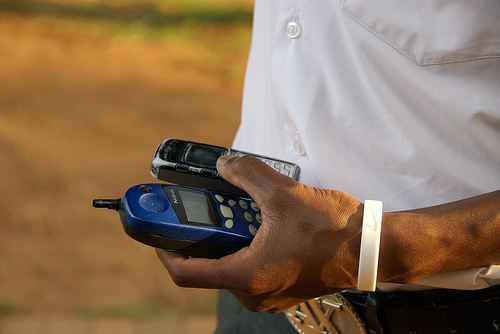
"Scanning the news reveals that Information and Communication Technologies (ICTs) such as mobile phones, Internet, Satellite television and social media are having an effect on events in the so-called Arab Spring. The “Facebook Revolution” is becoming a buzzword."
In this blog published on the People, Spaces, Deliberation website of CommGAP, the World Bank, Patrick Kalas asks: "Does this have any practical significance for our operational activities in projects or programs aiming to increase participation in socio, economic and political change processes?" He answers the question with a “Yes”, based upon the shift in traditional participation approaches through a more interactive use of ICT that he labels “Voices 2.0”.
"Two important caveats on ICTs: First, let’s be clear that people, not technologies, are the driving forces within any transformational processes such as the Arab Spring. This echoes previous guidelines expressed including Gene Sharp’s classic “From Dictatorship to Democracy” . The novelty of ICTs, media and social networks is significant in terms of leveraging, amplifying, accelerating and possibly sustaining these forces of change unleashed by the people. It is this catalyzing role of these tools that is relevant here as this has practical implications for our work to enhance participation in economic, social or political processes. Secondly, there is a “darker side” to ICTs not to be ignored. Environmental and social issues such as electronic waste / and standards on usage of rare minerals in mobile phones and electronics deserve careful mentioning and monitoring."
Under his heading “Voices 2.0”- From “Inclusion” towards “Interactivity”, Kalas discusses “inclusion deficit” as cited in the World Bank's report “Voices of the Poor” (2000/2001) in which "findings revealed that exclusion from economic, social and political processes rank exceptionally high on the scale of priorities of the poor and marginalized. What followed were intellectual and practical efforts to address this ‘inclusion deficit’ with innovative participatory development approaches such as participatory rural appraisal, empowerment and communication for development emerging (... the first generation Voices 1.0). 10 years later, there has been an evolution. What I call Voices 2.0 refers to the shift towards increased interactivity directly influenced by the proliferation of ICTs and media. As people, institutions and processes remain at the center as well as the aim (i.e. to enhance inclusion and participation within economic, social and political processes at local, national, regional and global level), the rapid proliferation of ICTs and interactive media presents new opportunities to leverage, amplify, accelerate and sustain the first generation approaches. Thus, combining traditional participation approaches with ICTs-enhanced interaction, participation can be deepened, interactivity fostered and better results achieved."
Kalas then analyses a Swiss Development Corporation (SDC) working paper, “Deepening Participation and Enhancing Aid Effectiveness through ICTs and Media” which examines why and how development practitioners can adopt ICTs and media for increased participation and better results into their daily practice. He cites the following findings:
1. "ICTs and media, if strategically integrated throughout development programs, can make a significant contribution
2. Start thinking about information and communication needs, channels and media throughout the Project Cycle but most importantly in the planning stages for policy and project intervention
3. ICT-enhanced ‘Communication for Development Methodologies’ are worth revisiting
4. Link ICTs and media to the organizational DNA of donor agencies in their standard operating procedures or instruments (i.e. Project Cycle Management, Sustainable Livelihood approaches)
5. Develop the capacity of implementing agencies and partner organizations on ‘strategically using’ ICTs to leverage their programs"
Returning to the role of ICTs in the Arab Spring, Kalas suggests that the following two dimensions deserve further exploration:
"Firstly, through a social network analysis examining the role of so-called “Boundary Spanners” (i.e. selected people acting as key change facilitators), we should learn how they were actually empowered through technology within their respective social structures to bring about a tipping point for change. This could shed light on sharpening future ICT and media intervention to empower citizens accordingly. Secondly, the connection between ICTs, media and democratic institution building is equally critical. It is one thing to facilitat[e] a revolution but how to sustain such democratic change processes is a whole other dimension waiting to be explored."
The key points include:
- Lessons learned from the “Arab Spring” in terms of the role of ICTs and participation are directly applicable for development practitioners working on social, economic, and political projects.
- “Voices 2.0” is an evolved concept in participation characterised through increased interactivity due to the influence of ...ICTs and media.
Email from Patrick Kalas to the Communication Initiative on September 23 2011, and the World Bank CommGap Blog website, Sepetember 27 2011.
- Log in to post comments