










































Voices and UAM: An Innovative Partnership to Promote Net Use
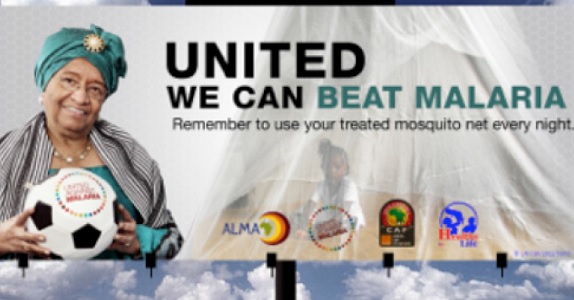
This 3-page case study discusses the experience of leveraging the passion and reach of football (soccer) to communicate messages about malaria prevention and treatment. Beginning during the 2012 World Cup, the United Against Malaria (UAM) partnership and the Voices project of the Johns Hopkins University Center for Communication Programs (JHU-CCP) have used pitch-side branding, football themed public service announcements (PSAs), player spokespeople, print and programme materials, and endorsements by influential thought leaders to reinforce malaria messages. According to the case study, this approach has strengthened the culture of net use around the continent.
The strategy "uses an evidence-based approach to malaria communication, employing a campaign strategy centred on the idea that a multitude of channels are necessary to reach large and diverse audiences across the spectrum of society." Football provided opportunities to reach people using multiple channels, from in stadium messages to multimedia endorsements by players. This has included participating in events such as the World Cup and Africa Cup of Nations (AFCON), through collaborations with over 20 African Football Federations, the Confederation of Africa Football, and the Unions of Professional Football Players.
The case study highlights several examples of "innovative messaging." Along with multi-media channels, the initiative has published more than 300,000 copies and nine versions of GOAL! magazine, a malaria educational tool designed for football fans which were distributed in key locations such as stadiums, fan parks, and clinics. Star football players Didier Drogba of Côte d’Ivoire, Samuel Et’o of Cameroon, and Steven Pienaar of South Africa have supported pan-African malaria control efforts, particularly net use, by endorsing UAM on billboards across several African countries. Public figures such as Côte d’Ivoire's President Alassane Ouattara, Liberian President Ellen Johnson Sirleaf, and Ugandan president Yoweri Museveni also lent their voices to the initiative.
In terms of impact, the case study says that "results from a number of omnibus media surveys suggest UAM’s messages have been well-received and have contributed to key changes in behaviour. The most notable changes were around reported preventive actions, impact and reach of the campaign, and building the proof-of-concept for the approach to utilize football as an effective way to convey important health information."
For example, the surveys found that after the 2012 AFCON games in Côte d’Ivoire, 90% of respondents in urban areas watched at least one match and 60% of those respondents recalled the UAM message to sleep under an insecticide treated net every night. In Ghana, there was high recall of messages featuring the national football team, and the survey found that Ghanaians with high exposure to UAM spots (on TV and in newspapers) during the AFCON 2013 games were far more likely to take preventive action than those with little or no exposure to spots. In Tanzania, media surveys estimated that 22 million people were exposed to at least one World Cup match in 2010, and omnibus survey results "showed that 64% of survey respondents recalled seeing a UAM spot. Of those respondents: 48% confirmed they had taken steps to ensure their families sleep under ITNs."
According to the case study, "the use of football as a platform for communicating malaria messages has allowed UAM to leverage the reach and momentum of football for public health goals. Football engages individuals of all ages, socio-economic, educational, political, and geographic backgrounds, enabling key malaria prevention messages, such as those on net use, to reach a considerable proportion of the population. Using multiple channels helps increase the likelihood of exposure to messages and increases the likelihood that messages will resonate and be motivating to the wide audiences of football fans across Africa. Building the culture of net use by using testimonials and calls to action by influential figures, and other targeted channels, has seamlessly reinforced the importance of net use across the continent."
Click here to download the case study in English.
Click here to download the case study in French.
Networks website on June 26 2014.
- Log in to post comments