










































"When You Live in Good Health with Your Husband, then Your Children Are in Good Health...". A Qualitative Exploration of How Households Make Healthcare Decisions in Maradi and Zinder Regions, Niger
Population Council (Dwyer, Mathur, Kirk, Dougherty); Conception Etudes Suivi Evaluation Appuis Formation (Dadi)
"These insights could help tailor SBC programming based on health topic and offer potential avenues to enhance gender considerations."
In Niger, culturally defined values and norms around women's lack of agency and resource access often limit positive health behaviours. Health and development programmes in Niger, including the United States Agency for International Development (USAID)'s Resilience in the Sahel Enhanced (RISE) II programme (2018-2023), are addressing gender norms through social and behaviour change (SBC) approaches. This study qualitatively explores household decision-making, especially spousal communication related to child health, nutrition, and family planning (FP) behaviours, and how community members perceive gender-specific RISE II SBC programming in the Maradi and Zinder regions of Niger.
RISE II partners are implementing integrated SBC development programming in conjunction with humanitarian assistance. They are using a variety of SBC approaches, including community engagement, interpersonal communication (IPC), and radio. For example, the husbands' schools bring together married men through peer group activities with health workers and cultural and religious leaders to discuss the importance of male involvement in household responsibilities, as well as couples' communication and joint decision-making related to maternal and child health. These activities also serve as a "hub" for interrelated community-wide activities, including agricultural assistance, savings and loan groups, youth theatre, and grandparent clubs.
Between December 2020 and February 2021, the study team conducted 40 in-depth interviews with 20 married men (ages 18-59) and 20 married women (ages 18-49) with at least one child, from both monogamous and polygamous households.
Results are organised into overarching themes related to pathways to healthcare decisions, spousal and others' communication, and perceived influence of SBC programmes. In brief:
- Male heads of household were central in health decisions, especially when external resources were required to address a health problem, yet women were also involved and expressed the ability to discuss health issues with their husbands. Most participants acknowledged the wife as the primary person who identified child health issues because the children were "always at her side", and, for FP in particular, respondents noted how women's voices and choices were important. Participants described three health decision-making pathways: (1st pathway) wife informs husband of health issue, and husband solely decides on the solution; (2nd pathway) wife informs husband of health issue, proposes the solution, and husband decides; and (3rd pathway) wife identifies the health issue, and both spouses discuss and jointly identify a solution.
- The role of spouses, family members, and others varied depending on the health topic: FP was generally discussed between spouses, whereas couples sought advice from others to address common childhood illnesses. Many participants expressed feelings of shame when asked about child malnutrition; they would not want many people to know because they would be viewed as negligent or unable to care for their children. These individuals would therefore only talk to parents, co-spouses, or close neighbours/friends who could offer advice and support to improve their child's health.
- SBC and health programming appear to influence health discussions and FP norms. Participants said they discussed health more frequently with their spouses following participation in RISE II activities, and some men who participated in husbands' schools reported that this activity influenced their approach to and involvement with household responsibilities. Thus, programme activities that encourage constructive spousal communication - more frequent and open communication, with empathy and support for each other, to discuss possible solutions and compromises - may influence relationship quality and potentially the decision-making pathways for couples in this context. However, it is unclear if programme activities influenced healthcare decision-making or women's autonomy.
These results highlight that different SBC strategies may need to be emphasised to address reproductive health versus child health and nutrition outcomes. For example:
- Most respondents in the study noted that discussions around FP use were initiated by women if they were interested and ready to use them (referring to the 2nd or 3rd decision-making pathway). Common justifications for FP use were women's well-being and the health/development of children being improved through adequate spacing. Thus, reaching couples for FP counseling could be an option in the region, as could interventions that provide men and women with FP information and build skills for effective couple communication and negotiation. A more positive framing of FP, rather than pregnancy avoidance, may be beneficial in the region.
- Community-level interventions may be needed around nutrition to destigmatise the issue of child malnutrition. These interventions also need to layer onto structural interventions that directly address food insecurity and increase women's access to and control over agricultural assets. In addition, given men's and women's roles in decision-making about child health care, education about nutritious foods for child health, for instance, are best directed not just at women, but men as well.
In conclusion, the study reveals that programme activities that focus on improving communication among spouses should be sustained to enhance women role in health decisionmaking. Male engagement strategies that emphasise spousal communication, provide health information, and discuss household labour may enhance couple communication in Niger. Additional examination is needed to ensure that gender-focused SBC programming is achieving the intended outcomes.
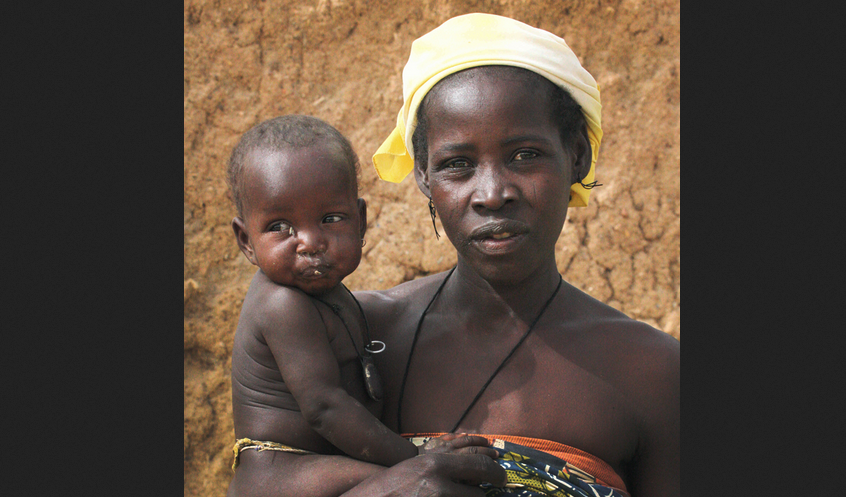
BMC Public Health (2022) 22:1350. https://doi.org/10.1186/s12889-022-13683-y. Image credit: ©CE/ECHO/Jean De Lestrange via Flickr (CC BY-NC-ND 2.0)
- Log in to post comments