










































How Implementing Communication Rights Might Contribute to Achieving the Millennium Development Goals

World Association for Christian Communication (WACC)
"Communicators have a significant role to play in...helping to empower people and communities. Access to relevant information, knowledge and tools will increase people's capacity to achieve development goals, strengthen networking, and enhance the cross-fertilization that comes from multiple sources of information and knowledge."
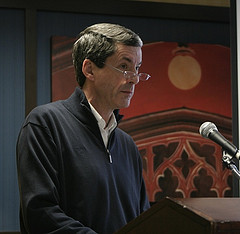
This report makes the case that communication rights and a well-designed communication strategy are essential in meeting targets set out in the Millennium Development Goals (MDGs), ratified by 189 United Nations (UN) countries in 2000. Why, however, is it unlikely that the targets will actually be met by the end-date for the goals (2015)? For Philip Lee, Deputy Director of Programmes at the World Association for Christian Communication (WACC), political and economic obstacles apart, the reason is the "astonishing" and "conspicuous" absence of attention to the role communication might play. Lee made this argument at the RCCongress 2010, a once-a-decade multi-faith forum of communicators of religion, held in Chicago, Illinois, United States (US), from April 7-10 2010.
Lee is convinced that "In practical terms, and in direct relation to the MDGs, recognizing, implementing, and building on communication rights will help create 'enabling environments' in which structural, political, economic, and cultural obstacles to social change can be identified, analyzed, and action taken to overcome them." What does Lee mean by communication rights, exactly? He explains that they have social, political, and cultural dimensions. They encompass freedom of expression, media democracy, cultural diversity, and access to information and knowledge. They include linguistic rights (e.g. the right to use, teach, and preserve one's mother tongue). In particular, communication rights empower the very marginalised people that the MDGs are working to help - women, refugees, displaced persons, migrant workers, people with disabilities and diseases, the economically poor and dispossessed - to express their hopes and needs in a manner and at a time of their own choosing. Communication rights affirm that people have the right to participate in the decisions that affect their lives, Lee explains.
But Lee stresses that "Unless we work to interpret and communicate the structures and inadequacies that enable oppression to persist, and unless we take action to change them, we are complicit with injustice." He says that governments, non-governmental organisations (NGOs), and media professionals, and social actors have roles to play in guaranteeing the communication and information rights of individuals and communities - for instance, he argues that those responsible for the mass media must actively sustain their public service role as critical monitors of government and society. He is concerned that, despite considerable socio-economic development in many countries, the challenge remains of people who have little or no access to information and communication technologies (ICTs). Religious communicators, who often have local and national platforms for social dialogue, are in a position to challenge the inequalities of a communications system whose values are political or economic rather than at the service of social justice and human dignity.
In concluding, Lee suggests that communicators - including those from faith communities - can help contribute to meeting the 2015 "deadline" in 3 key ways. They can:
- Provide increased space for and attention to the voices, perspectives, and contributions of those most affected by poverty and other development issues;
- Improve understanding of the world's cultural diversity by expanding public debate and dialogue on the issues that are a priority in international, national, and local contexts;
- Advocate for more open, participatory, and inclusive processes of policy development that emphasise the perspectives of those most affected by poverty and the absence of social justice.
Our apologies, but this document is no longer available online.
WACC - Media Action 299, April 16 2010; and "Creating Enabling Environments: Communication Rights and the MDGs", by Erin Green of the WACC North America Executive Committee.
- Log in to post comments