










































The Museum of the Person: A Global Network for Life Stories
"The memories of myself helped me to grasp the plots I was involved with." Paulo Freire
The Museum of the Person is a global network that links individuals and groups through authoring and sharing their life stories. Museum projects are located in Brazil, Portugal, the United States, and Canada, with online archives available for each national museum. According to the project organiser, the goal of collecting personal memories through life stories is to ensure a more just and democratised world.
The Museum of the Person network is based on using the methodology of collected life stories with authorship by the subjects/participants. The network encourages interested individuals, groups, organisations, corporations, and governmental sectors to consider developing an autonomous "Museum" to expand the global network.
Sites linked to each other and to a global internet portal include: the Museu da Pessoa (no longer online) based in São Paulo, Brasil, the Musée de la Personne, the Center for Digital Storytelling, the Museum of the Person in the United States, and the International Day of Sharing Life Stories.
For example, the Museu da Pessoa has developed a method for collecting and systematising personal testimonies and stories and has carried out numerous projects in the areas of business, memory, education, culture, and community development.
Dissemination of stories includes the following:
- "Publications: books, biographies, daily planners and almanacs
- Videos: documentaries and institutional videos
- Internet: virtual environments for projects, museums, and virtual reference centers
- Exhibitions
- Memory centers
- CD-ROMS: data banks for reference
- Organization of collections: historical and museum collections for companies and institutions
- Workshops, seminars and training programs
- Booths for recording personal stories"
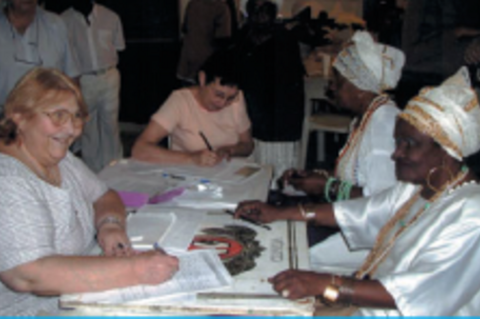
The Museu da Pessoa uses the São Paulo’s subway system as a recurrent place in the city where Museum of the Person recording booths are installed. A travelling museum has a mini-mobile studio equipped with digital video and audio recorders. Exhibitions have included: "Memory of neighborhoods - São Paulo on the tracks of time: Brás, Liberdade and Itaquera", with a publication on memories of commercial businesses in the Paraíba Valley region. "Program Local Memory" is a project aimed at allowing school and communities to make their own history. Community leadership training and training of teachers and paedagogy coordinators prepare schools and communities for collection and display of local memory-related archives.
Education
The network organisers state: "The members of the global network believe that:
- Every life story has value and should be part of social memory.
- Listening to others is a way to offer respect and act as a peer.
- Every person plays a role as an agent of historical change and an author of history.
- Memory is an instrument for social and cultural development
- Understanding through exchange will lead to peace."
Museu da Pessoa website, July 20 2012, and email from Philip Stafford to The Communication Initiative on July 20 2012.
- Log in to post comments