










































Gender Approaches in Climate Compatible Development: Lessons from Peru
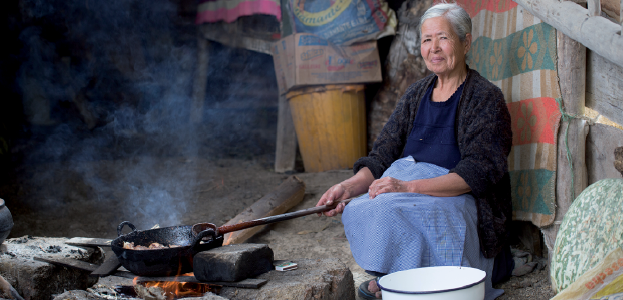
"Women who are empowered and assume leadership roles contribute to gender-based approaches and to the outcomes of climate compatible development interventions."
This case study examines how climate compatible development interventions in urban areas have integrated gender approaches by analysing the experiences of Risk Management and Climate Change Adaptation Networks in Peru (known locally as GRIDES), whose objectives are to: (i) strengthen the capacity of member organisations so that they incorporate risk management strategies; (ii) promote citizen participation and inclusion regarding children's and gender issues; and (iii) impact regional risk management policies. It is part of a global study commissioned by the Climate Development Knowledge Network (CDKN) and carried out by Practical Action Consulting (PAC), together with the Institute of Development Studies (IDS) in Latin America (Peru), Eastern Africa (Kenya), and South Asia (India). (See Related Summaries, below). These collaborators have observed that, despite the fact that marginalised and economically poor people, including women, are affected first and hardest by climate change, evidence indicates that women's views, needs, and participation are often excluded from the design and planning of climate change responses, including major policies. Moreover, women are often perceived primarily as victims, and not as equal contributors of knowledge and skills in disaster risk, adaptation, and mitigation strategies. Most research into gender and climate change has been carried out in rural contexts; significant knowledge gaps exist on these issues in urban settings.
The opening chapters of the report: introduce the concepts of gender equality and climate compatible development (which involves strategies and goals that integrate the threats and opportunities of a changing climate to simultaneously lower CO2 emissions, build resilience, and promote development); describe the Peruvian context - e.g., in 2014, the Peruvian Government made the ambitious decision to develop a National Action Plan on Gender and Climate Change (PAGCC), a single effort among South American countries; outline the research methodology; and examine the GRIDES approach. In brief, these inter-institutional networks emerged in the 1990s, with the support of international cooperation, in response to the disastrous effects of El Niño. GRIDES create opportunities to meet and exchange information among relevant actors. They aim toinfluence decision-makers in governments, especially at regional level, so that these can learn about and incorporate disaster risk management into their plans and policies. It was decided to choose 2 GRIDES for analysis (out of the 13 well-developed GRIDES) in the cities of Huaraz and Cajamarca. Although there has been no strategic planning to incorporate the gender approach, the work of GRIDES can be considered a gender-aware intervention, according to the case study.
The core research questions, with main findings for each, are summarised below:
- What does a gender-sensitive approach to climate compatible development mean in different urban contexts? - According to the report, in Peru in general, women's participation in development is viewed as constituting a gender approach. "Indeed, women's participation in GRIDES was pivotal because it enabled women to access knowledge, which is a source of empowerment. Women GRIDES members interviewed recognised that knowledge of climate change helped them to respond better in case of disaster, contributing more to their family and social group, thereby reducing their vulnerability." It was also observed that some development actors have a reasonable understanding of how climate change affects men and women in different ways, including how gender roles and power relations contribute to urban vulnerability to climate change. For the most part, development actors are open to improving their understanding of gender-based approaches. In the case of GRIDES, the gender approach was progressively integrated into actions as members received capacity-building on gender issues at the insistence of donors. For some GRIDES members, understanding that socially constructed roles and differences affect access to, and control over, resources by men and women – thereby limiting their capacity to respond and adapt to climate change and disasters – opened the door to a new spectrum of analysis and a greater diversity of potential interventions that embrace a more holistic approach. Through these processes, GRIDES members became more aware of what gender equality represents and requires.
- What is the evidence of the relevance of gender-sensitive programming in climate compatible development to promote and achieve people's empowerment? - GRIDES members and other key actors expressed a clear appreciation of gender-based approaches during discussions. For example, GRIDES members felt that integrating this approach into disaster risk management improved implementation, because women are authoritative and trustworthy sources of information who share useful, reliable, and precise data. The GRIDES networks demonstrate that gender sensitivity can empower and build the capacity of women involved in climate compatible development processes. For example, GRIDES members received training in various topics, including gender. A link can be seen between the training level and the degree of gender sensitivity of the proposals promoted by GRIDES members. It therefore seems likely that interventions considering gender training can achieve better outcomes in helping to mainstream the gender approach into climate compatible development processes.
- What socioeconomic, political, and cultural factors constrain or favour gender-sensitive approaches in the context of climate compatible development and the ability of men and women to tackle climate-related risks in urban contexts? - It is noted that, for gender-based approaches to have a real impact in climate compatible development interventions, strategic planning is fundamental. This challenge can be observed in the Peruvian public sector, as well as in the GRIDES networks. The effectiveness of including a gender approach in climate compatible development processes is still limited in Peru, given that few initiatives, including GRIDES, carry out a gender-differentiated vulnerability assessment. The relation between gender and climate compatible development in urban contexts is not widely understood among development actors working in these fields. For example, strengthening capacity and competencies among GRIDES members initially focused on disaster risk management and was broadened to include climate change. However, gender issues were not incorporated in the same way. As a result, GRIDES members still find it difficult to identify the links between climate compatible development and gender, even when considering a differentiated vulnerability analysis. Despite the complexity and quantity of constraints, it was possible to identify factors that favour gender-sensitive approaches in the context of climate compatible development. These include broad acknowledgement that men and women are equally capable of playing active roles in development. However, there is currently a lack of policy guidance and budget to build people's potential in this respect. During discussions, respondents asserted that projects incorporating a gender-based approach produce better outcomes.
- Does a gender-sensitive approach enable better climate compatible development outcomes and if so, in what way? - In the case of the GRIDES networks, women's participation has resulted in gender, as understood by GRIDES members, being included in the agenda for discussion and, in turn, integrated into local development plans. Had the gender approach not been discussed, even implicitly, by GRIDES networks, gender would not have been included in regional plans related to climate compatible development. In general, it is recognised that interventions with a gender-based approach achieve better outcomes than gender-blind processes. GRIDES members possess first-hand knowledge of this, since they believe that adopting a gender-based approach leads to more accurate assessment. They report that taking a gender-based approach has enabled them to consider the different roles played by men and women in disaster prevention. In addition, attention to gender allows for better analysis of the roles played by men and women and the respective physical, political, and economic causes of vulnerability and autonomy.
Selected recommendations shared in the case study that imply a role for communication for development practitioners include:
- Promote a more transformative gender approach that is not limited to including women in decision-making but that also aims to reduce distinct vulnerabilities and gender gaps.
- Include transforming power relations and reducing vulnerabilities and gender gaps, from the baseline study to the evaluation stage, within the design of climate compatible development initiatives.
- Strengthen climate compatible development initiatives in urban areas by mainstreaming a gender approach through better information and training on relations between gender and climate compatible development in urban areas, especially for practitioners and policymakers.
- Strengthen skills among civil servants to analyse, implement, and evaluate policies and strategies relating to climate compatible development and the impact on the lives of men and women living in urban areas.
- Rather than turn to special agencies for overseeing the integration of gender approaches into development initiatives, focus on improving access to and use of appropriate tools - e.g., conceptual frameworks and tools provided by the United Nations at the international level and national plans developed by the Peruvian Ministry for Women and Vulnerable Populations. Internal knowledge management practices should be promoted in order to maintain and increase institutional capacity relating to gender and social development.
- Create spaces for developing urban plans and projects, as they provide an opportunity to deliver training on the interlinkages between gender and climate compatible development issues - for example, those documented in existing literature on rural areas and the findings and recommendations of this research.
- Strengthen women's access to spaces for political participation in urban contexts, such as GRIDES. Likewise, participation of women's groups, such as the 'ronda feminina', should be encouraged in design, planning, decision-making, and evaluation processes related to urban policy and programmes.
- Include gender approaches in university courses and research agendas related to social and environmental sciences.
Areas for further research include: analysis of differential vulnerability in urban areas; identifying the characteristics of climate-vulnerable populations in peri-urban areas; post-disaster gender violence; the impact of climate compatible development projects on power relations between men and women and on gender gaps; impact analysis of female participation in local development planning and policy; and gender gap trends in cities that are highly vulnerable to climate change.
Click here to download the related 6-page policy brief, "How do gender approaches improve climate compatible development? Lessons from Peru, in PDF format (English).
Click here to download the related 6-page policy brief, "¿De qué manera los enfoques de género fortalecen el desarrollo compatible con el clima? Lecciones desde Perú (documento de politica)" in PDF format (Spanish).
Click here in order to download the 56-page technical report in PDF format (English).
Click here for the 56-page technical report in PDF format (Spanish).
CDKN website on October 4 2016. Image credit: Christian Vinces / Shutterstock.com
- Log in to post comments