











































Changing Gender and Social Norms, Attitudes and Behaviours
University of Birmingham
"What rigorous evidence is there on what types of programming interventions work to bring about changes in gender and social norms, and changes in wider attitudes and behaviours?"
This annotated bibliography presents studies of programmes that aim to bring about changes in gender and social norms, as well as changes in wider attitudes and behaviours. Much of the literature and some programme designs recognise the need to change social norms in order to change behaviours, such as HIV/AIDS prevention and better sanitation and hygiene. The report looks at interventions targeting: the individual and inter-relational levels (e.g., workshops); the community level (e.g., community dialogue, community mobilisation, and youth initiatives); and the wider societal level (e.g., mass media, edutainment, and social media). It highlights the effects of such interventions, focusing on rigorous evaluations. For each report, the full citation is provided, as is the URL.
The opening few items are "synthesis reports", which reveal key points including but not limited to the following:
- There is strong evidence from a review by the Overseas Development Institute of 61 programmes that communication programmes are an effective way to challenge gender discriminatory attitudes and practices. Integrated programmes (including non-communications activities) have overall been slightly more effective than stand-alone communications programmes.
- A look at Oxfam evaluations highlighted the power of creative and interactive means of communication through role plays, dramas and public hearings, rather than passive awareness-raising through leaflets or informational channels. Engaging influential community leaders, religious leaders, and duty bearers appeared to be effective in awareness-raising.
- A review of 142 articles and documents revealed 61 interventions, which aimed to prevent intimate partner violence (IPV) and sexual violence (SV) among adolescents found that programmes with longer term investments and repeated exposure to ideas delivered in different settings over time have better results than single awareness-raising or discussion sessions.
Subsequent interventions explore studies of strategies carried out at the individual and relationship level, at the community level, and at the societal level. Selected findings include:
- Changing individual attitudes may be insufficient to change behaviours. Greater efforts are often needed to engage the larger community in multi-component initiatives designed to change social norms.
- Community-level interventions often have components aimed at mobilising specific people (change agents) within a community to encourage others to change by fostering dialogue and diffusing messages to people beyond direct participants. There is some evidence that community-wide mobilisation approaches are effective and can have a wide reach.
- Interventions that involve group education with boys and men (sometimes in combination with women and girls) and adopt a gender transformative approach and intense community mobilisation are considered promising.
- The use of mass media and marketing approaches is an efficient way of reaching large numbers of people at relatively low cost. It is well-suited to: modelling and promoting new (non-violent) norms; promoting the benefits of new norms; changing attitudes towards harmful behaviours and norms at scale; and promoting stories of change. There is some evidence that multi-media communications can change attitudes and norms relating to violence and gender inequality among a large intended population.
Governance and Social Development Resource Centre (GSDRC) Knowledge, evidence, and learning for Development (K4D) helpdesk reports like this one are commissioned by the United Kingdom (UK) Department for International Development and other Government departments.
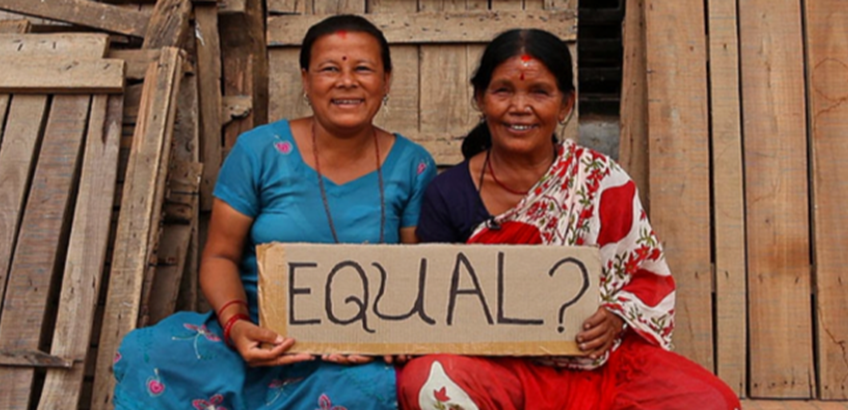
GSDRC website, May 9 2017. Image credit: DFID
- Log in to post comments