
























Development action with informed and engaged societies

After nearly 28 years, The Communication Initiative (The CI) Global is entering a new chapter. 

Following a period of transition, the global website has been transferred to the University of the Witwatersrand (Wits) in South Africa, where it will be administered by the Social and Behaviour Change Communication Division. Wits' commitment to social change and justice makes it a trusted steward for The CI's legacy and future. 

On the transfer, co-founder Victoria Martin expressed her pleasure to see this work continue under Wits' leadership, knowing that co-founder Warren Feek (1953–2024) would have felt deep pride in The CI Global's Africa-led direction. 

As Wits, we honour the team and partners who sustained The CI for decades and look forward building from that strong base. This includes co-founders Warren Feek (1953-2024) and Victoria Martin as well as La Iniciativa de Comunicación (CILA), which continues independently at lainiciativadecomunicacion.com with links to The CI Global site. We are also eager to forge new partnerships and entertain new ideas as we consider how best to contribute to social and behaviour change in our rapidly evolving environment.

If you are joining the International Social and Behaviour Change Communication (SBCC) Summit in Panama, please join Wits and CILA on Monday, 22 June, to share your thoughts and suggestion for the relaunch of the Communication Initiative. We will be in Pacifica 5 from 12-1:25 for the Refuel, Reflect, and Renew Lunch Series: The Communication Initiative: celebrating a driving force for Communication for Social Change and the way forward. We will reflect on the legacy of Warren Feek and family in creating the Communication Initiative, consider the contributions of CI over the years and then turn our attention towards the future in this dynamic session. 

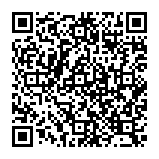
If you are unable to join us in Panama, we still want to hear from you. Please contribute your thoughts by following this link: https://redcap.link/CommunicationInitiative2026 or reaching out to ci_surveys@commint.com

You can also follow the QR Code:

 https://redcap.link/CommunicationInitiative2026

Time to read
1 minute
Read so far

The Strategic Framework for Malaria Social and Behaviour Change Communication 2018-2030
0 comments
Image
SummaryText

"Strategic communication to facilitate and sustain changes in social norms and behaviours is integral to malaria control programs."

In 2012, the Roll Back Malaria Partnership (RBM)'s Strategic Framework for Malaria SBCC: 2012-2017 [PDF] set forth an agenda to advocate for and strengthen technical capacity for social and behaviour change communication (SBCC); a number of developments have occurred that have informed this update and extension of the original framework. The Strategic Framework 2018-2030 offers guidance for member states and partners to ensure that SBCC is prioritised in the agendas of malaria policymakers and national malaria control strategies, in line with the Global Technical Strategy for Malaria 2016-2030 [PDF].

The document is divided into three major parts that address specific themes, featuring links to resources and illustrative figures:

  1. Advocacy - sections include:
    • Champion the critical role of malaria SBCC.
    • Share the malaria SBCC evidence base.
    • Ensure political commitment for SBCC.
    • Improve capacity and coordination.
    • Provide support at global and regional levels.
    • Grow the RBM SBCC Working Group.
    • Adapt to new SBCC challenges.
  2. Technical Guidance - sections include:
    • Characteristics of effective SBCC planning (it is: evidenced-, theory-, and systems-based)
    • Overview of process (Figure 3 is a model to uide the design, development, implementation, assessment, and adaptation of SBCC campaigns, programmes, and activities)
    • Elements of a malaria SBCC strategy (situation analysis, audience analysis, behaviour-specific communication plans, strategic communication approaches, implementation plan, monitoring and evaluation (M&E) plan)
    • Global changes (e.g., the role of new information and communication technologies, or ICTs)
  3. Toolkits and Resources: a list of resources that may be helpful to SBCC planners and National Malaria Control Programme (NMCP) managers.
Languages

English, French, Portuguese

Number of Pages

20 (English and Portuguese); 22 (French)

Source

President's Malaria Initiative (PMI) website and Compass, both accessed on October 29 2019.