










































Just Add Empathy: Making Circumcision Sexy to coloured males in Cape Town, South Africa
Summary:
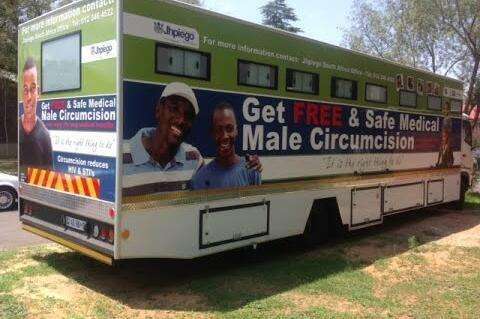
Voluntary Medical Male Circumcision (VMMC) is a key preventive strategy in the quest for HIV epidemic control; but certain populations remain difficult to influence particularly with an invasive intervention like circumcision. In Cape Town, the struggle is current: how do we get at-risk men to want this procedure? Inspired by human-centered design's (HCD) emphasis on empathy, the project team wanted to understand if the running ManUp! Campaign was resonating with men in Cape Town and to get a deeper understanding of Cape Town Men's lives to further refine it. The project team used direct immersion with three men, three women and three boys to better understand their lived realities. New insights and key themes were focus-grouped in three groups each representing a persona from the campaign: Craig (male 20-34 years old), Lizette (19-25 years old) and Wayne (15-19 years old). Feedback from the focus groups indicated the key message of the campaign focused on VMMC being the responsible thing to do the functional benefit from the procedure and was not motivation. Insights were used to refocus the key messages to VMMC providing sexual confidence rather than a social responsibility. The revised campaign tested with the target audience indicated that the message now resonated and more than 90% of the survey participants indicated that they would be interested in getting circumcised. The immersion identified how to position the communication to reach the target audience and expanded the social mobilizers' understanding of their audience.
Background/Objectives:
Voluntary Medical Male Circumcision (VMMC) is a key preventive strategy in the quest for HIV epidemic control, but certain populations remain difficult to influence. In Cape Town, South Africa, the struggle is current: how do we get at-risk coloured men to want this procedure? With the support of PEPFAR/CDC, a VMMC communications campaign, ManUp! based on nationally representative qualitative data and focus groups with at-risk men, had been rolled out in Western Cape over several years but VMMC uptake lags behind other regions. Is a change needed in Cape Town? Jhpiego and its communications partner CMT wanted to find out.
Description of Intervention and/or Methods/Design:
Inspired by human-centered design's (HCD) emphasis on empathy, the team wanted to better understand the lives of Western Cape's coloured men, many of whom are gang members, and use this understanding to update the ManUp! Campaign. In March 2019, the team spent a day immersed in the lives of three men (20-34 years), three teen boys (15-19) and three girlfriends (20-30), shadowing them in their daily activities. Afterwards, team members debriefed, identifying new communications channels, new insights, key themes about their lived realities, and building client personas for each segment. Using these insights, CMT made rough ManUp! posters of possible creative directions. A total of 7 chat sessions were held in informal venues with a total of 108 people (men 15-19, men 20-35 and women 20-30) who reacted to the mock-ups and discussed VMMC's relationship to sex, desirability and toughness.
Results/Lessons Learned:
Feedback from the chats indicated that while the existing ManUp! branding was memorable, its emphasis on being a responsible man and partner was neither relevant nor motivating to men who define social status through gang membership, expressions of toughness like tattoos, and time spent in prison. The personal time spent awakened empathy in the program team and helped the team to move past stereotypes and engage a positioning, campaign tone, and language that reflects the reality of Cape Town's at-risk men. These insights were used to reposition VMMC as a way to build sexual confidence (something men crave) rather than as a way to protect oneself and others from HIV (something public health professionals desire). Testing of the revised campaign indicated that more than 90% of the survey participants said that they would be interested in getting circumcised after seeing the revised materials.
Discussion/Implications for the Field:
As HCD becomes mainstream, many programmers are concerned about the cost and time required for a full HCD process. The combination of shadowing and chats proved to be a powerful and low-cost way to quickly build empathy and understand dynamics that were not revealed through traditional focus group research. In addition, immersive interaction helped the team better place messaging - for example in tuck shops which men visit many times a day, and pool halls, where couples hang out. Immersion not only changed a campaign--it changed the program team's orientation as they seek to delivery truly client-centered care.
Abstract submitted by:
Zolani Barnes - Jhpiego
Zodwa Jacob - Jhpiego
Wandile Sibisi - Jhpiego
Mehebub Mohomed - Jhpiego
Manya Dotson - Jhpiego
Voluntary Medical Male Circumcision (VMMC) is a key preventive strategy in the quest for HIV epidemic control; but certain populations remain difficult to influence particularly with an invasive intervention like circumcision. In Cape Town, the struggle is current: how do we get at-risk men to want this procedure? Inspired by human-centered design's (HCD) emphasis on empathy, the project team wanted to understand if the running ManUp! Campaign was resonating with men in Cape Town and to get a deeper understanding of Cape Town Men's lives to further refine it. The project team used direct immersion with three men, three women and three boys to better understand their lived realities. New insights and key themes were focus-grouped in three groups each representing a persona from the campaign: Craig (male 20-34 years old), Lizette (19-25 years old) and Wayne (15-19 years old). Feedback from the focus groups indicated the key message of the campaign focused on VMMC being the responsible thing to do the functional benefit from the procedure and was not motivation. Insights were used to refocus the key messages to VMMC providing sexual confidence rather than a social responsibility. The revised campaign tested with the target audience indicated that the message now resonated and more than 90% of the survey participants indicated that they would be interested in getting circumcised. The immersion identified how to position the communication to reach the target audience and expanded the social mobilizers' understanding of their audience.
Background/Objectives:
Voluntary Medical Male Circumcision (VMMC) is a key preventive strategy in the quest for HIV epidemic control, but certain populations remain difficult to influence. In Cape Town, South Africa, the struggle is current: how do we get at-risk coloured men to want this procedure? With the support of PEPFAR/CDC, a VMMC communications campaign, ManUp! based on nationally representative qualitative data and focus groups with at-risk men, had been rolled out in Western Cape over several years but VMMC uptake lags behind other regions. Is a change needed in Cape Town? Jhpiego and its communications partner CMT wanted to find out.
Description of Intervention and/or Methods/Design:
Inspired by human-centered design's (HCD) emphasis on empathy, the team wanted to better understand the lives of Western Cape's coloured men, many of whom are gang members, and use this understanding to update the ManUp! Campaign. In March 2019, the team spent a day immersed in the lives of three men (20-34 years), three teen boys (15-19) and three girlfriends (20-30), shadowing them in their daily activities. Afterwards, team members debriefed, identifying new communications channels, new insights, key themes about their lived realities, and building client personas for each segment. Using these insights, CMT made rough ManUp! posters of possible creative directions. A total of 7 chat sessions were held in informal venues with a total of 108 people (men 15-19, men 20-35 and women 20-30) who reacted to the mock-ups and discussed VMMC's relationship to sex, desirability and toughness.
Results/Lessons Learned:
Feedback from the chats indicated that while the existing ManUp! branding was memorable, its emphasis on being a responsible man and partner was neither relevant nor motivating to men who define social status through gang membership, expressions of toughness like tattoos, and time spent in prison. The personal time spent awakened empathy in the program team and helped the team to move past stereotypes and engage a positioning, campaign tone, and language that reflects the reality of Cape Town's at-risk men. These insights were used to reposition VMMC as a way to build sexual confidence (something men crave) rather than as a way to protect oneself and others from HIV (something public health professionals desire). Testing of the revised campaign indicated that more than 90% of the survey participants said that they would be interested in getting circumcised after seeing the revised materials.
Discussion/Implications for the Field:
As HCD becomes mainstream, many programmers are concerned about the cost and time required for a full HCD process. The combination of shadowing and chats proved to be a powerful and low-cost way to quickly build empathy and understand dynamics that were not revealed through traditional focus group research. In addition, immersive interaction helped the team better place messaging - for example in tuck shops which men visit many times a day, and pool halls, where couples hang out. Immersion not only changed a campaign--it changed the program team's orientation as they seek to delivery truly client-centered care.
Abstract submitted by:
Zolani Barnes - Jhpiego
Zodwa Jacob - Jhpiego
Wandile Sibisi - Jhpiego
Mehebub Mohomed - Jhpiego
Manya Dotson - Jhpiego
Source
Approved abstract for the postponed 2020 SBCC Summit in Marrakech, Morocco. Provided by the International Steering Committee for the Summit. Image credit: Jhpiego South Africa