










































COVID-19 Vaccine Communication Campaign - Vanuatu
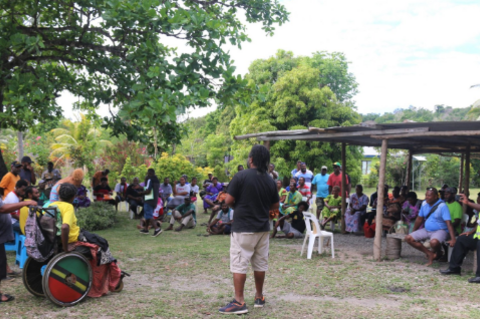
"Engaging with communities to explain the benefits of the COVID-19 vaccines and why they should take the vaccine is vital. It's important to listen to communities and respond to concerns and questions." - Eric Durpaire, UNICEF Pacific's Chief of the Vanuatu Field Office
In the context of the COVID-19 pandemic, the grassroots non-governmental organisation (NGO) Wan Smolbag Theatre undertook a communication initiative with the Vanuatu Ministry of Health (MOH) and the United Nations Children's Fund (UNICEF) to provide information on the COVID-19 vaccine, to dispel vaccine-related myths circulating in Vanuatu's communities, and, ultimately, to increase uptake of the vaccine. The campaign entailed workshops, comic books, videos, and TV/radio ads featuring the message/jingle "Protektem yu, famili, komuniti mo fiuja blong Vanuatu".
This initiative is grounded in the conviction that, while information saves lives, even more important is two-way communication that leads to individuals and communities being empowered to act. To that end, in March 2020, UNICEF asked Wan Smolbag Theatre to run workshops in the capital, Port Vila, and on islands in the south and north of the country in order to find out what people know or believe before launching the communication campaign. At that point, there was no medicine or vaccine. So, questions they sought to ask and understand included: What does COVID-19 do to you? Who is most at risk? How does it spread? What would happen if someone in the community got it - would communities on their own be able to deal with it?
Wan Smolbag's communications officer conceived of the workshop, testing its implementation over several workshops and reworking things where problems were encountered. The facilitators were all full-time Wan Smolbag Theatre actors who received extra training in how to run the workshops. The workshops were also observed by members of the MOH, the Vanuatu National Disaster Management Office (NDMO), and UNICEF. The workshops ran from about 9:30 in the morning until 3:30 or 4 pm; there was a shorter 2- to 3-hour evening workshop to accomodate working people.
Following these 2020 workshops, Wan Smolbag Theatre shared information about COVID-19, what it does and how it spreads, and how to avoid getting infected. This campaign was informed by the Wan Smolbag facilitators' reporting back from their workshops on the many questions about COVID-19 people had, such as: "Why do we say 1 metre out when some countries say 2?" and "Have black people died of COVID-19?" Participants were also enlightened by the experience: One group from near the Port Vila rubbish dump told Wan Smolbag they had been intending to stop rubbish trucks going to the dump, thinking they would contact COVID-19 from the rubbish, but they decided there was no reason to do that after the workshop.
The second series of workshops, in mid-2021, focused on the vaccine and looked at whether people knew what a vaccine was, what they thought it did, and what their prejudices against the COVID-19 vaccine were. Danny Marcel, Community Facilitator, Wan Smolbag, said: "It was good to spend time in communities and answer questions about people's fears and worries regarding the vaccine. Often someone from the community would use the workshop to tell others to get vaccinated. Because we'd had the vaccine, it was easy to show that it doesn't give you the mark of the beast! We could talk about side effects and say they do occasionally happen but it's far safer to get the vaccine than COVID-19."
UNICEF also funded Wan Smolbag to create some songs with the NGO's disability theatre group, Rainbow Theatre, about COVID-19. The words of the songs were sent in draft form to the risk communications team at the MOH, who made changes and checked that all information was in line with Ministry guidelines. Only after their approval did Wan Smolbag tour with the songs. The four songs written to date have been performed extensively around Efate (the island where the capital is) and on Santo, the largest island in the archipelago. Each song is followed by a set of questions that Wan Smolbag asks the audience to find out if they have understood the information in the songs. In 2021, a song was added about the importance of being vaccinated. In Luganville, Santo, Wan Smolbag also shared the songs with out-of-school youth from the NGO's centre there and ran the workshop with them. According to Wan Smolbag, many members of the group did not understand much about COVID-19 before joining the singing group.
As part of this initiative, in September 2021, Wan Smolbag and partners launched a comic book, videos, and TV/radio spots during a meeting that brought together all provincial health teams. (Click here for a YouTube playlist of 15 videos, with one example viewable below; click here to view additional vaccine-related videos on Facebook.) The comic books are designed for people who may not be strong readers, as well as youth. The first one is about COVID-19 and what it does to people, and the second comic [PDF] is about the vaccine. They both reflect what Wan Smolbag heard during the workshops, as do the vaccine ads. Again, they all went through the MOH approval process and were changed many times to make sure they provided correct information. The tools will support provincial teams as they undertake community engagement activities to educate people on the benefits of the COVID-19 vaccines.
The key message is that everyone must play their part to educate people on the benefits of the COVID-19 vaccines and spread the message "Protektem yu, famili, komuniti mo fiuja blong Vanuatu".
COVID-19, Immunisation and Vaccines
In the first three months of the country's vaccination drive, Vanuatu reached over 50% of the eligible population with the first dose of the COVID-19 vaccine and 18% of the eligible population with two doses in the Shefa province (about 92% of healthcare workers in Shefa province had received the first vaccine dose). Sanma province launched its vaccination campaign on August 25 2021. As the vaccination rollout is scaled out to reach the remaining four provinces, provincial teams will use the comic books and videos to communicate with communities on the importance of vaccination.
As of September 2021, 10,000 people so far had been reached with key COVID-19 messaging on Efate and Santo Islands. Twenty-three workshops completed on Santo have also involved almost 800 key influential leaders.
Wan Smolbag Theatre, the Vanuatu Ministry of Health, and UNICEF - with funding from the Asian Development Bank (ADB).
"Vanuatu Launches Innovative Communication Tools to Tackle Misinformation on COVID-19 Vaccines", by Pita Ligaiula, Pacific News Service, September 13 2021 - accessed on September 15 2021; and emails from Peter Walker and Jo Dorras to The Communication Initiative on September 14 2021 and September 15 2021, respectively. Image credit: Wan Smolbag - shared by UNICEF Pacific via Facebook
- Log in to post comments