










































Afghan Information Ecosystems: A Design Research Approach
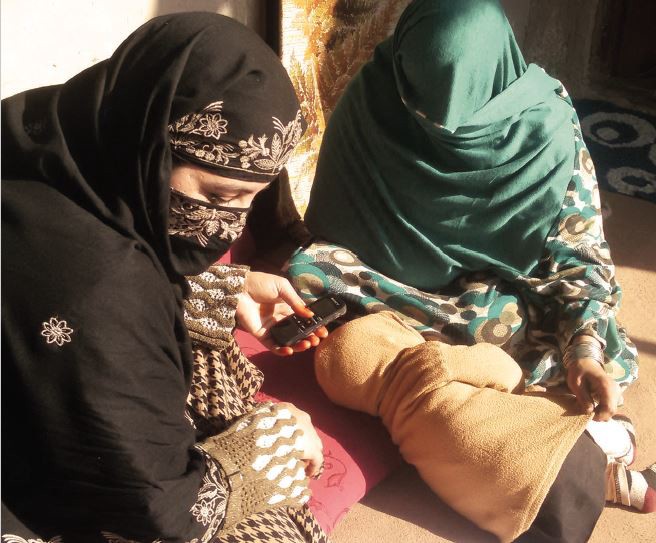
"[P]ractitioners should take steps to increase online security, online literacy, and inclusivity while keeping sight of the enduring value of face to face networks and conventional communication methods."
To inform work with the media and effectively enhance access to information in Afghanistan, Internews commissioned Sayara Research to map information ecosystems in 3 areas of Afghanistan: Macroyan, in Kabul; Rodat, in Nangarhar; and Jade Kaj, in Herat. An "information ecosystem" refers to the producers and consumers of various types of media, as well as the social and community structures through which information is accessed, consumed, influenced, trusted, and shared. The approach sees information of value - required to make decisions about everything from personal security to health, migration, and livelihoods as dynamic, always in motion. Information is also a relationship of exchange between people, and the acts of receiving and generating information require creativity and imagination. The information ecosystems research was conducted under the United States Agency for International Development (USAID)-funded Afghan Civic Engagement Program (ACEP), implemented by Internews, Counterpart International, The Aga Khan Foundation, and the International Center for Not-for-Profit Law (ICNL). ACEP seeks to promote civil society and media engagement to enable Afghan citizens to influence policy, monitor government accountability, and serve as advocates for political reform. For media and civil society practitioners seeking to understand, inform, and engage Afghan audiences, the report provides a snapshot of media use and citizen information needs.
As explained here, as most media and news outlets were banned during the Taliban years and then severely disrupted during the subsequent decades of civil conflict, Afghanistan's information ecosystem remains understudied and poorly understood. Since the fall of the Taliban in 2001, news outlets - private TV in particular - have grown exponentially throughout the country. Today, the Afghan media and information landscape is saturated with 400 print outlets, more than 250 radio stations, and over 100 TV stations, both state and privately owned. Similarly, internet use, and social media in particular, are quickly emerging as an alternative media and information outlet for Afghans, especially youth.
This study was completed over the course of 20 weeks. An intensive 5-day training introduced the field team to key concepts of information ecosystems and ethnographic research methods. They learned that design research is an approach that combines ethnographic and systems-thinking approaches to reveal the causes, relationships, and human dimensions of complex contexts. As empathy is a key principle of design research, ethnographic participant interaction and field immersion are central components, which yield narratives of human needs and user experience. Photographs, observations, interviews, and traditional desk work then combine in an iterative process of data analysis and synthesis. Data points are continuously evaluated, characterised, prioritised, and refined to inform fieldwork practices and insights for later design. Mapping relationships between stakeholders, users, and sources of information gives dimensionality to findings, which are then distilled into insights and translated into actionable formats and opportunities.
The findings are wide-ranging, from illustrating the significant influence of mobile phones, to how security affects journalism. Key findings:
- "Traditional Influencers: News and information is filtered through established social patterns and institutions, including longstanding practices of oral information sharing and complex dynamics of trust and information verification. Ethnographic studies show that individuals from respected families who hold positions of power at the local level - mullahs, Maliks, and elders - are important sources of information and highly influential in the formation of opinions within tribes and villages...
- Information Triangulation and Flow: ...Public spaces are...particularly important nodes in local information ecosystems because they provide venues for debate and collective information consumption....[M]any of the most important places for valuable exchange are characterized by mobility (e.g. bazaars, buses, and taxis), and therefore facilitate information exchange across different regions. Places of public information exchange are limited and different for women (discussed below.)....Questions of origin, history, and funding play important roles in shaping the contours of trust in radio and TV and play out in the way that people triangulate information. Similarly, while social media adds a potentially important, live, and participatory component to information access, people tend not to take media statements as fact until they have discussed those statements with trusted family, friends and respected community elders.
- Evolution of Trust and Influence: The increase in educational opportunities for youth in both rural and urban areas may be changing the dynamics of traditional information patterns. Secondary schooling was interrupted during the Taliban's reign for a large portion of the population. These individuals, now in their 30s, have teenage children who are growing up literate and in a world with far greater access to information via mobile phones and the Internet. A number of our respondents reported highly trusting the news they heard from their literate children, who receive it via Facebook and other social media sites. Youth's exposure to new technology and formal education brings them closer to the center of information ecosystems, as they play an important role in bringing new technologies to their families and communities.
- Lack of Local News Coverage: Security concerns, lack of infrastructure, and turnover in local staff limits the capacity for media outlets to make it out to certain villages....Traditional structures of information circulation provide the main channel for local information to flow between NGOs [non-governmental organisations], local government offices, and maliks [local leader who represents the community to government agencies and vice versa] to general consumers. In contrast, Jade Kaj and Macroyan, in particular, are hubs for media and information production....However, greater local news coverage does not necessarily mean that residents of these neighborhoods perceive that their needs or opinions are heard. In Macroyan, where media exposure is arguably the greatest and most consistent, residents were more likely to report a lack of government responsiveness and accountability.
- Social Media Constraints and Adaptations:...Access is fragmented geographically and economically and patterns of use demonstrate local adaptations to both cultural and educational constraints. For example, while illiteracy is indeed a barrier to robust internet and social media use, illiterate people nonetheless engage with social media, though in a specialized way, largely limited to posting and viewing photos or videos...
- Social Media and Online Security: Online security, particularly for women, appears to severely limit free and open online communication, and thus the capacity for social media to become a robust platform for social engagement....[A]dministrators of social media platforms, namely Facebook, have a poor understanding of both the cultural norms and the risks involved for women engaging in online activity in conservative places. Note: this research finds that when participants talk about social media in the Afghan context, they are almost always talking about Facebook...
- Gender: When asked how women access information, both men and women frequently report that women rely mainly on men, despite their widespread access to radios or TVs. Likewise, they site the lack of access to public spaces as women's main barriers to information flows....[T]hey have adapted in numerous ways, including observing and listening to the way men discuss information in their presence, even if men are not addressing them directly. Women also take advantage of the public places that are open to them....This study found that spaces that are exclusively female (for example, beauty parlors) are particularly important because they provide venues for women to discuss issues or complaints they have about their husbands and family life.
- Migration:...Youth get information about migration from all types of news sources, including international coverage. However, the most salient migration information has to do with the experiences of their friends, families, or community members. For this, they rely on word of mouth and internet apps, including Skype, Viber, and WhatsApp. Growth of access to these new information technologies is shaping how Afghan youth make decisions and represents an important area for future research and programmatic exploration.
- Persistence of Radio:...Outside of cities, radio is still the top source of news and information, particularly in areas with limited or inconsistent electricity. It is also in important medium for ensuring that access to information is inclusive of diverse socioeconomic groups and geographic locations..."
Based on these findings, the report identifies opportunities going forward:
- Social Media and Online Security: Practitioners and policy makers should view online security as central to the success and inclusivity of the Internet, and of social media in particular. At a policy level, and at a global scale, internet administrators need to be trained to recognize harassment and fraud in contexts similar to Afghanistan's. This means a greater level of sensitivity toward conservative values, as well as a more nuanced understanding of how different segments of the population (especially men and women) use social media.
- Inclusion and Social Media:...[F]uture research should explore the dynamics of adaptive, non-verbal social media use to promote the inclusion of illiterate individuals in the online community. Both the visual and social aspects of media use among illiterate people need to be better understood in order to develop relevant and innovative methods for online engagement and to ensure that online security measures are accessible to all users...Additionally, apps that enable communication through pictures or tactile patterns, such as swiping or clicking, could be developed to increase online inclusivity and could be tailored to specific information needs, such as health or vocational skills.
- Gender: Practitioners and policy makers should bolster support for spaces of public information exchange, particularly for women. Some of these spaces already exist (e.g. classrooms or mosques where women are allowed); others examples might include internet cafes only for women, or that offer specific times when only women are allowed. Such places would provide a safe space for women and to socialize more generally - skills and experiences that are central to the process of informed information consumption...While the value of places such as beauty parlors as 'safe havens' for women is widely acknowledged, their use as designated spaces for political, social, or personal debate merits further research in the context of Afghanistan's information ecosystems.
- Information, Objectivity, and the Diaspora: There is room for capacity building among journalists and other media professionals when it comes to covering migration and Afghan refugees. Programmers might take a focused look at the different ways Afghan media outlets are discussing migration to identify current models of innovative, balanced, and inclusive coverage, while also using migration as a platform for further training in objective reporting.
- Media Independence: While some analysts fear that the proliferation of television channels could fuel the polarization of Afghan society in the future, the plethora of outlets might also contribute to greater freedom and political independence. Media and information professionals should embrace the opportunity to bolster media independence and public debate while closely assessing the need for an increasing number of media outlets to understand and follow accepted standards for journalistic objectivity."
Various case studies included in the report "highlight the value of the social world in addition to the technological one – meaning that the people and places involved in information exchange exert at least as much influence over the shape and dynamics of local information ecosystems as do the technologies in them..." Reflecting on these and other lessons learned, the Sayara researchers describe this project's use of the design research approach as a success. They note that this type of ethnographic research uncovered a number of unexpected and adaptive ways that people access information or compensate for a lack of reliable information or exposure. For example, they say, the differences between how women are exposed to information and how they internalise it "would have been undiscoverable to quantitative methods, and very difficult to understand with conventional qualitative techniques." However, Sayara experienced a number of fieldwork and methodological challenges related to implementing a design research approach in Afghanistan - particularly in the context of information ecosystems research. Ethnographic research, in particular, is a specialised skill and, despite its value, is unconventional. "In addition to formal training, which Sayara provides prior to every research project, one of the most important ways to promote data collectors' skills should be to emphasize their expertise and demonstrate their contributions to final products and program innovations."
Mediated Information: How gender shapes information in Afghanistan, by Jeanne Bourgault, September 2 2016; and Internews website - both accessed on Septembed 27 2016. Image caption/credit: Interview with general information consumer, Rodat district, Nangarhar. Sayara Research
- Log in to post comments