










































Supporting Healthier Media Ecosystems: Our Approach
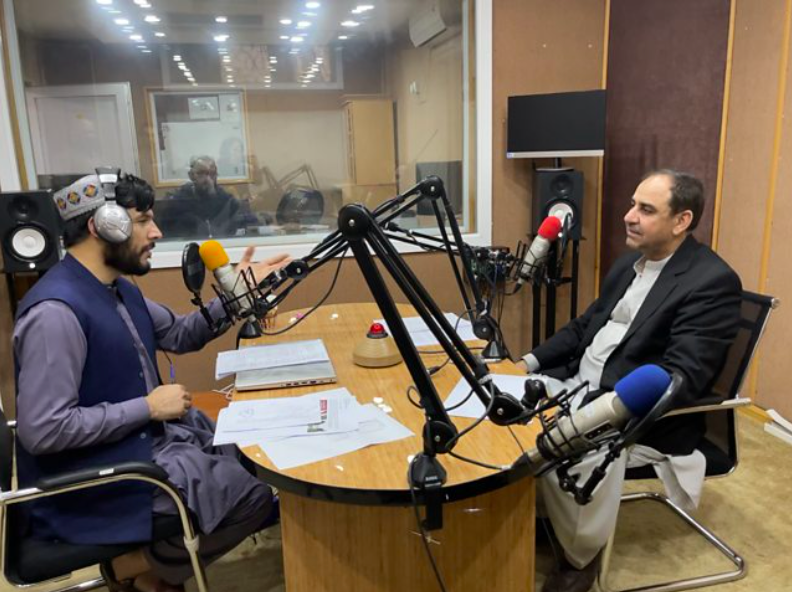
"Effective solutions need to be people-centred and firmly rooted in research and analysis. They require a long-term commitment that involves building an understanding of audiences, trust-based relations with diverse stakeholders and establishing local partnerships."
This paper presents BBC Media Action's approach to fostering the development of healthier media ecosystems in low-income and fragile countries. A healthy ecosystem is seen as one where people have equitable and sustained access to content that is in the public interest, as well as the skills and knowledge to navigate information critically and responsibly.
As explained in the paper, BBC Media Action's approach "is shaped by the understanding that efforts that tackle disparate problems in isolation have limited value, since the challenges inherent in media ecosystems are interconnected and interdependent. Effective solutions need to be people-centred and firmly rooted in research and analysis. They require a long-term commitment that involves building an understanding of audiences, trust-based relations with diverse stakeholders and establishing local partnerships. The approach is based primarily on the enduring need to support our partners to reach and engage people, especially those who are most vulnerable and marginalised, with public interest content that is ethical, accurate and non-partisan and that provides them with insight into the issues affecting their lives. This type of content serves the interests of the general public rather than those of political elites or the private sector. It enables dialogue across society and holds those in power to account."
The report begins by outlining some of the threats to media ecosystems that exist in many low- and middle-income countries. These threats include: the lack of viable economic models; the capture of media by political or economic actors; low levels of public trust; polarisation of views; a decline in media freedom; and the lack of equity, diversity, and inclusion in the media.
To address these threats, the BBC Media Action strategy is based on four main pillars:
- Supporting local media partners so they can populate the media ecosystem with public interest content that can reach and engage people, especially those who are most vulnerable;
- Enhancing media viability by adopting a system-wide approach that draws on rigorous research and assessments of risk and opportunity;
- Promoting media literacy and critical thinking in order to help people in all their diversity understand and navigate the information space; and
- Building collaborative partnerships with international, regional, and local partners from the development and private sectors.
The paper describes BBC Media Action's strategy of supporting healthier media ecosystems with the aid of a diagramme that outlines the rationale, the approach, the outcomes, and the desired impact.
In brief, the strategy is based on the following commitments, which focus on people, content, and operating environments:
- Upholding people's right to equal access to public interest content that can empower them to make informed decisions on issues affecting their lives;
- Increasing the provision of relevant, inclusive, engaging, and trusted public interest content that is widely available to all sectors of society and that has the potential to expand the civic space; and
- Supporting the development of legal, regulatory, and economic operating environments that enable media to serve their diverse audiences without political interference or financial impediment.
Based on these commitments, the approach seeks to work towards the following outcomes for people, professional practitioners, organisations, and wider enabling environments for the media:
- Public interest content: People have increased access to public interest content that enables public debate and dialogue across society and that holds duty bearers to account.
- Equity: Public interest content is accessible to all people regardless of their background.
- Media literacy: People and practitioners have the knowledge and skills to understand, use, generate, and navigate the information critically and responsibly.
- Professional skills: Media practitioners have the skills to produce accurate, trustworthy, and engaging content.
- Viability: Media organisations have the ability to produce public interest content in the long term.
- Media freedom: Professional networks and associations have the skills and confidence to defend and safeguard media freedom.
To explain how the approach works in practice, the paper describes BBC Media Action's activities in some of the countries the organisation works in. The activities are categorised into the three areas of commitment: people, content, and operating environment.
In relation to people, activities include:
- Strengthening understanding of audience needs through research;
- Improving equitable access to public interest content by helping organisations identify platforms and content formats that are suitable to the needs of people from different identity backgrounds; and
- Increasing media and digital literacy so that people have the skills to engage with media.
In relation to content, activities include:
- Increasing the provision of public interest content through a variety of models of support that are tailored to the opportunities and challenges of a country, including the network model, transformational model, incremental model, and start-up model) - with examples from countries such as Zambia, Myanmar, and Iraq;
- Establishing or enhancing editorial frameworks, which may involve helping develop editorial guidelines or ethical codes that provide a reference point for both programme-makers and audiences;
- Developing content strategies, which may involve, for example, ensuring that content is engaging, relevant, and inclusive;
- Boosting production skills through, amongst other activities, training; and
- Supporting organisational development by, for example, providing support to improve management practice and process, resource management, income generation, and business model planning.
In relation to improving the operating environment, activities include:
- Implementing a rigorous diagnostic process - e.g., one that includes a political economy analysis to understand the forces shaping a media ecosystem, ownership structures, regulation, and levels of political interference or media capture;
- Advancing non-market driven approaches as a way of supporting media viability - e.g., one that entails promoting public subsidies for public interest media;
- Creating an enabling environment for healthy media ecosystems - e.g., by providing advice and technical assistance to media, professional bodies, governments, and civil society networks who focus on areas such as media policy, media law, licensing, and the development of codes of conduct and media funding models; and
- Protecting the space for public interest media - e.g., by creating space that helps mediate and support discussion among networks of media practitioners, civil society, and government stakeholders in order to promote media development and freedom.
Finally, an important activity to achieve the envisaged outcomes is building partnerships, such as capacity-strengthening partnerships with local actors to ensure lasting change and collaborative partnerships with a range of development actors in order to ensure greater impact on the lives of people in the countries where BBC Media Action works.
BBC Media Action website on May 16 2022. Image credit: BBC Media Action
- Log in to post comments