










































Australian Caregivers' Perceptions of Influenza Vaccination in Pregnancy: A Mixed Methods Exploration
The Children's Hospital at Westmead (King, Leask); The University of Sydney (King, Chow, Leask, Wiley)
Healthcare workers (HCWs), including midwives, are in a position to assist pregnant women with vaccination decision-making, including about influenza vaccines. Pregnant women and their unborn children are at high risk from both pandemic and seasonal influenza. In an effort to inform future pandemic preparedness efforts, this study explored views about influenza vaccination during pregnancy among mothers and other carers of young children in Sydney, Australia. The study formed part of a wider study - the Paediatric Influenza Vaccine Outcome Trial (PIVOT) - investigating the views of parents in relation to preventive health beliefs, influenza, and influenza vaccination of children.
Pilot interviews (n = 5) were initially conducted between June 18 and 25 2009, early in the Australian experience of the H1N1 (swine flu) pandemic. These interviews formed the basis for the development of a quantitative survey, which was distributed to 16 childcare centres from November 16 to December 9 2009. The survey was supplemented by additional qualitative in-depth interviews (n = 35) in 5 childcare centres, conducted with caregivers between November 2009 and May 2011. This allowed for data collection during the pandemic, after the release of the freely available monovalent H1N1 vaccine in September 2009, and in the immediate and longer-term post-pandemic period.
The major, intersecting themes arising from the interview data include:
- Pregnancy as a "protected state" - Many women saw themselves as the gatekeepers of decisions to keep themselves - and, more particularly, their unborn child - safe. For some women, vaccination during pregnancy seemed counterintuitive, and they displayed a high degree of hesitancy and caution about the idea. A number of women were unaware that influenza vaccination was recommended in pregnancy. Of those women who were aware of the recommendation, many were concerned about the safety of the vaccine.
- Risk negotiation - Many considered the pandemic to be a special situation, in which the risks of the disease were seen to outweigh the possible vaccine risks.
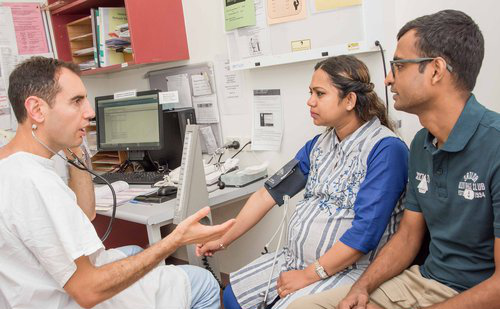
- Centrality of HCW interaction - One of the ways women tried to address and negotiate the perceived risk around influenza vaccine was via discussion with a HCW. The majority of women said they trusted HCWs to guide them in their decision-making. Four described influenza vaccination in pregnancy being actively discouraged by their doctor; 5 described a positive recommendation from a HCW; and 1 was advised that it was a personal decision.
The quantitative survey revealed that relatively few women in this group of parents reported having either the seasonal or pandemic influenza vaccines in pregnancy (8% and 2%, respectively). The survey results also suggest that the danger to the unborn child from influenza are less understood than the potential impact on the mother.
The researchers observe that vaccination decision-making in pregnancy can be complex and contextually driven. To increase clarity in communication, and given the finding that pregnant women in this study received conflicting advice from HCWs, further education emphasising vaccination as a preventive measure could be provided to antenatal care providers. Educative efforts for both HCWs and caregivers in pandemic and interpandemic periods could highlight the effects of influenza upon the unborn child. Further, the researchers suggest that future pandemic planning should incorporate the development of resources for both mothers and HCWs. Additional research could also be undertaken to determine the extent to which HCWs may be dissuading pregnant women from having an influenza vaccine.
Women and Birth, Volume 32, Issue 3, June 2019, Pages 240-45. https://doi.org/10.1016/j.wombi.2018.07.010. Image credit: Sydney Health Partners
- Log in to post comments