










































Civic Education Program for Underrepresented Groups (CEPURG)
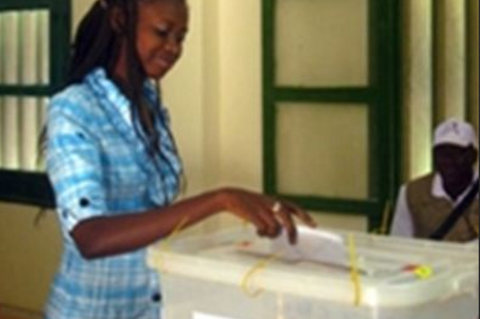
Launched ahead of the 2012 elections in Senegal, the Civic Education Program for Underrepresented Groups (CEPURG) is designed to mobilise underrepresented groups – especially civil society organisations representing youth, women, and persons with disabilities – to participate in the electoral process. Using the Electoral Violence Education and Resolution (EVER) method, the International Foundation for Electoral Systems (IFES) seeks to reduce electoral violence by leading community-based initiatives that train individuals to monitor and document incidents of violence.
The CEPURG project is working to mobilise underrepresented groups to engage in the electoral process by encouraging political representation of youth, women, and persons with disabilities. This includes: (1) working with civil society organisations to raise awareness and encourage voters to participate in the electoral cycle though grassroots outreach campaigns, and (2) conducting voter education sessions and supporting cultural events, debates, town hall meetings, and multimedia campaigns promoting civic participation. The second objective of the project is to promote peaceful and transparent presidential and legislative elections by: (1) training members of civil society organisations to monitor, document, and verify incidents of electoral violence and (2) establishing a database and mapping electoral violence incidents to create an early-warning system to reduce violence in vulnerable areas.
In order to promote peaceful elections, IFES uses the Electoral Violence Education and Resolution (EVER) method, which is based on a global project working to encourage civic participation. The EVER project has four component activities: (1) a global survey about the practices of civil society organisations that conduct electoral conflict monitoring; (2) electoral conflict monitoring assessments; (3) electoral conflict prevention and monitoring training tool kit and joint strategies template; (4) and a public web-enabled database that contains the data on electoral conflict collected through EVER monitoring.
The EVER methodology tailors a combination of research, on-the-ground monitoring, and relationship-building between stakeholders that best fits the context and conflict dynamics within a country. The EVER methodology consists of support and training to civil society organisations (CSOs) on monitoring/understanding election violence as well as on collaboration and dialogue with stakeholders to improve cooperation and capacity for prevention and/or mitigation. Through its training component, the EVER Project seeks to build electoral conflict prevention and monitoring capacity for indigenous CSOs so that the source data and methodologies employed in monitoring incidents have some consistency and benchmarking from country to country.
According to IFES, 60 electoral violence monitors were trained and deployed in the six focus regions of the CEPURG programme (Dakar, Thiès, Kolda, Kédougou, Sédhiou and Ziguinchor). A nationwide civic education campaign for women, youth, and persons with disabilities reached over 6 million Senegalese citizens and relayed messages about electoral processes; voter's rights and responsibilities; and non-violence and participation.
Governance
International Foundation for Electoral Systems (IFES)
IFES website and IFES EVER methodology on October 15 2012.
- Log in to post comments