










































Promoting Elections, Accountability and Civic Engagement in Chad (PEACE) Program
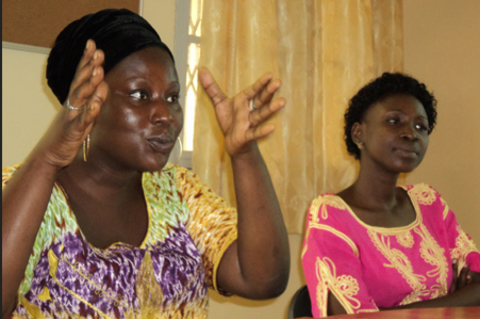
With funding from the U.S. Agency for International Development (USAID) and implemented by Counterpart, PEACE started in July 2010, spanned legislative elections in 2011and presidential elections in 2012. The programme assisted Chadian electoral institutions, civil society and media organisations to increase transparency, accountability, and outreach to citizens.
Some of the project work improved the mechanics of the voting process. In this, Counterpart and PEACE partners International Foundation for Electoral Systems (IFES) and Management Systems International (MSI) worked closely with the independent national electoral commission and the government’s election bureau.
The partners also improved the ability of civil society organisations to inform the public in advance of the elections and to keep the government accountable. In addition, they increased the ability of electoral and civic institutions to resolve disputes and defuse conflicts arising from the elections.
During the two years, collaboration increased between the government and civil society to encourage broad citizen participation and democratic governance. This included providing technical assistance and material support to the electoral commission and the election bureau to analyse data, increase public awareness, and strengthen mechanisms for resolving electoral disputes.
A key part of PEACE was building the capacity of Chadian civil society organisations through the establishment of a civil society forum and disbursement of grants. The grants allowed the groups to implement activities in civic and voter education, electoral dispute resolution, natural resource advocacy, and public procurement.
Another PEACE partner, IREX, led the effort to build media’s ability to report on elections and advance radio outlets’ capacity to produce election-related programming, including skills to report on elections-related conflict without heightening tensions. In addition, IREX worked to strengthen electoral institutions through consulting on media outreach policies and practices.
A song produced by the PEACE project featured the voices of 10 Chadian artists. The song, In Peace, was produced to use popular culture to manage and mitigate election-related conflict, particularly to reach rural and illiterate residents of Chad with messages about peaceful elections and the power of the youth vote.
More information on the PEACE project is available on the project website PEACE project website.
Elections, Governance
According to IREX, Chad has been plagued by political violence even prior to its independence in 1960. Uprisings, political coups, and civil war have deeply scarred the country and have chased away many hoping to invest in the country’s economy, democracy, and well-being. Despite a democratic constitution approved by Chadians in referendum in 1996, the subsequent elections held in 1996, 2001 and 2006 were seen as controversial, flawed and unfair. Further, in 1995, President Idriss Déby unilaterally modified the constitution to remove the two-term limit on the presidency which caused uproar among the general public, civil society, and opposition parties.
United States Agency for International Development, Global Civil Society Strengthening Leader with Associates, Counterpart International, IREX, International Foundation for Electoral Systems (IFES), Management Systems International (MSI), Commission Électorale Nationale Indépendante (CENI)
IREX website and Isango Ensemble website on May 26 2012.
- Log in to post comments