










































Hunger reduction programme promotes synergy between FAO priorities and the EU development agenda
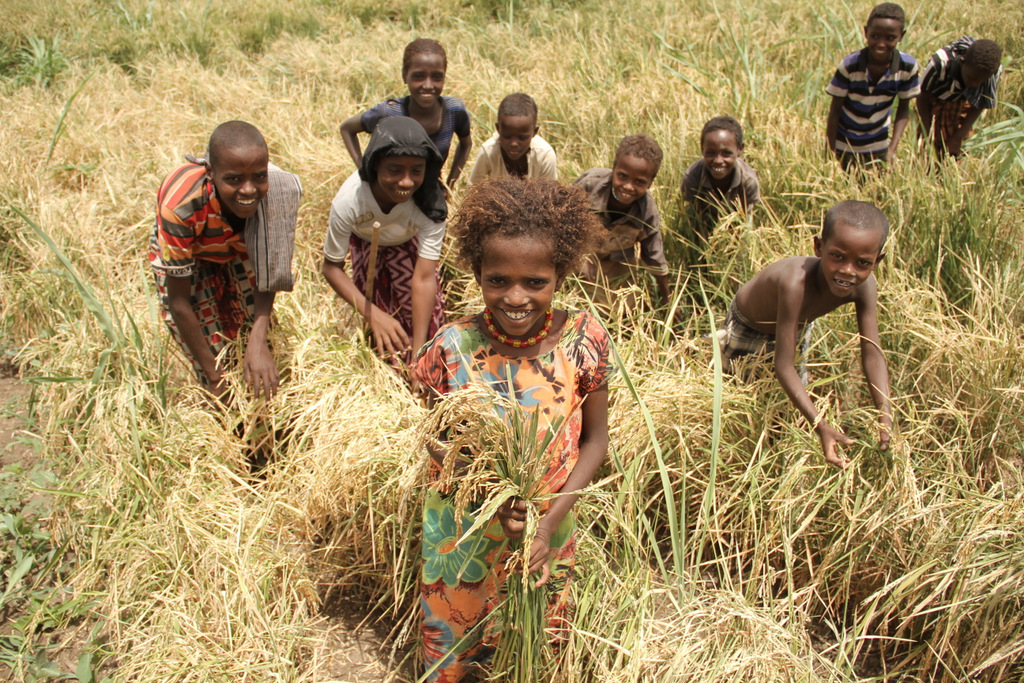
Author James Ayodele, September 19 2016 - The Improved Global Governance for Hunger Reduction Programme has helped create synergies between FAO priorities and the EU development agenda in many ways, but its coherence is less evident at the country level, says the report of a recent evaluation by the Office of Evaluation.
Conducted between October 2015 and April 2016, the evaluation assessed the catalytic role of the programme and its overall contribution to enhanced, coordinated and informed food security and nutrition governance at the global, regional and national levels.
According to the report, the programme has been very successful and has accomplished a great deal in four years. A systematic capacity plan developed at the inception has been very useful for strengthening capacity in nutrition-related governance at all levels. Many of the normative products have been successful, have led to vigorous field uptake and in some cases have been used for policy and programme interventions.
At the regional level, the programme has led to the integration of nutrition into national agriculture sector investment plans in Africa and linkage of the scaling up nutrition multi-sectoral process to national policies. At the country level, tools developed with support of the programme are being used to improve evidence base for nutrition in agriculture.
Some of the tools already adopted by multiple agencies and scaled up include the Integrated Food Security Phase Classification (IPC), Nutrition-Sensitive Agriculture Investments Checklist, Livestock Emergency Guidelines and Standards (LEGS) and Voluntary Guidelines on the Responsible Governance of Tenure of Land, Fisheries and Forests (VGGTs). The Minimum Dietary Diversity-Women (MDD-W), ADePT Food Security Statistics Module (ADePT) and Modelling System for Agricultural Impacts of Climate Change (MOSAICC) also show real promise for scaling up.
In 2012/2013, the programme responded to demands globally and by the EU to engage in resilience programming and measurement. Taking advantage of the renewed global concern for nutrition being promoted through the SUN initiative, it strengthened work on nutrition and agriculture and helped improve food security and nutrition measurement in national surveys.
It was instrumental in renewing the Committee on World Food Security as a credible, influential multi-stakeholder global governance mechanism. The Framework for Action for Food Security and Nutrition in Protracted Crises exemplifies how the committee can influence governance.
The e-learning component of the programme, which was generally well received, is already available to many users as evidenced at the Agriculture, Hydrology and Meteorology Research Centre in Niamey, Niger. The Integrated Food Security Phase Classification has helped build capacity and link information to decision making. The Resilience Index Measurement and Analysis approach supported by the programme has provided a mechanism for assessing and measuring resilience. It provided information for regional and country decision makers and implementing agencies.
In addition, the programme helped establish in Nairobi the Resilience Analysis Unit for Intergovernmental Authority on Development to build regional level capacity for resilience measurement and analysis in the Horn of Africa. It helped link these activities with potential donors, relevant institutions and partners and supported a resilience learning needs assessment in December 2014. It supported the preparation of fundraising proposals, development of a joint resilience strategy with UNICEF and WFP for Somalia, and production of progress reports. Similar support was also provided in West Africa to the Committee for Drought Control in the Sahel.
The evaluation notes that efforts to build country-level capacity to integrate nutrition into related plans in the Comprehensive Africa Agriculture Development Programme have been successful, but government follow-up in the 48 countries covered has not been as systematic as expected.
It recommends that the civil society mechanism of the Committee on World Food Security be strengthened through more inclusive and more systematic representation and regional and country-level consultations. It advises FAO to intensify efforts in harmonising its resilience measurement approaches, focusing on food and nutrition outcomes. It also recommends that the Food Security Information Network should continue to focus on resilience measurement and food security and nutrition indicators as a global leadership effort, and to continue strengthening country-owned information systems.
- The Improved Global Governance for Hunger Reduction Programme aims to achieve better coordinated and informed food security and nutrition governance at the global, regional and national levels.
As with all of the blogs posted on our website, the content above does not imply the endorsement of The CI or its Partners and is from the perspective of the writer alone. We do not check facts and strive to retain the writer's voice, as is detailed in our Editorial Policy.
- Log in to post comments